
Rare Earths Americas Identifies Large Rare Earth-Niobium Alkaline-Carbonatite System; Discovery Model Strengthens as 15,000m Drill Program Gets Underway at Homer
GOIÁS, Brazil–(BUSINESS WIRE)–Rare Earths Americas, Inc.(“REA” or the “Company”), today announced exploration results that strengthen the Company’s geological discovery model at its 100%-owned Homer-A project in Brazil’s Goiás Alkaline Province (See Figure 1). Multiple independent exploration programs—including airborne magnetics, soil geochemistry, gamma-radiometrics, geological mapping and initial drilling—now consistently support the interpretation of a large alkaline-carbonatite system prospective for rare earth elements (REE) and niobium (Nb) (See Appendix B). Initial exploration has defined a >35km² ring-shaped magnetic anomaly exceeding 6.5km along its major axis, while shallow drilling has confirmed rare earth and niobium mineralization across the target area (See Table 1 – Comparison of Mineralized Carbonatites).
This press release features multimedia. View the full release here: https://www.businesswire.com/news/home/20260707272259/en/
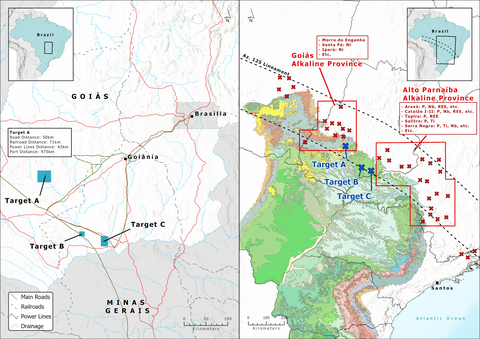
Figure 1: Location of the Homer-A targets within the Goiás Alkaline Province, Brazil.
Building Confidence in the Discovery Model —Carbonatite-hosted deposits represent a rare geological occurrence and are associated with some of the world’s significant rare earth and niobium deposits. Identifying a potential alkaline-carbonatite system is considered an important step in rare earths exploration, as this geological environment is associated with meaningful mineralization potential. At Homer, multiple independent datasets have returned results consistent with an alkaline-carbonatite system. Each phase of exploration has produced data supportive of this model. The convergence of these datasets supports advancing the project to systematic follow-up drilling.
It is noteworthy that initial auger drilling tested only the upper, chemically weathered portion of a deep weathering profile. Despite sampling this upper weathered horizon, drilling intersected meaningful rare earth and niobium mineralization (See Table 2), several holes demonstrated increasing grades with depth, and most terminated in mineralization. Select holes from subsequent reverse circulation (RC) drilling has confirmed more than 120 meters of continuous weathering, demonstrating that the mineralized system extends beyond the limits of the initial auger program and that only a small portion of the overall weathering profile has been evaluated to date.
Collectively, these results have strengthened REA’s geological discovery model and supported the decision to commence an expanded 15,000-meter RC and diamond drilling program in June, which will continue throughout the remainder of the year. The objective of this next phase is to determine the scale, continuity and grade of the underlying mineralized alkaline-carbonatite system. While exploration remains at an early stage and additional drilling is required to determine the extent and economic significance of mineralization, the combination of a large alkaline-carbonatite footprint, strong agreement across multiple independent exploration datasets, meaningful shallow mineralization, increasing grades with depth and mineralization remaining open at depth provides a compelling geological foundation for the next phase of discovery.
REA’s disclosed value is anchored by our three established material projects—the Shiloh monazite project in Georgia, and separately the Alpha and Constellation ionic clay deposits in Brazil, which together host over 460 million tonnes of inferred resources. The Homer project highlights the rapid advancement of our broader exploration pipeline. Originally categorized as an early-stage exploration prospect during the recent initial public offering, the initial drill results and the validation of the >35km² magnetic footprint are rapidly elevating Homer’s strategic profile.
In addition to its extensive rare earth’s potential, the niobium enrichment at Homer represents a strategic opportunity for REA. Niobium is a critical industrial metal with demand driven by infrastructure, advanced manufacturing, and aerospace applications, while global supply remains highly concentrated in Brazil. Against this backdrop, the Homer-A project has the potential to emerge as a meaningful new source of niobium supply within a tightly controlled market.
Rare Earths Americas’ CEO, Donald Swartz, commented:“Successful discoveries are built by systematically increasing confidence in a geological model. That’s exactly what we’re seeing at Homer. Each program we’ve completed—airborne magnetics, soil geochemistry, gamma-radiometrics, geological mapping and drilling—has independently strengthened the same interpretation of a large alkaline-carbonatite system.
What makes these initial results particularly encouraging is that we’ve only tested the upper, chemically weathered portion of a deep weathering profile, yet we’ve already confirmed meaningful rare earth and niobium enrichment, observed grades increasing with depth, and most drill holes ended in mineralization. Select RC drill holes have now confirmed more than 120 meters of continuous weathering, giving us confidence that we’ve evaluated only a small portion of the overall system.
While Homer remains an early-stage exploration project, the evidence gathered to date has strengthened our discovery model and justified accelerating into a 15,000-meter RC and diamond drilling program. We look forward to reporting results as that discovery story continues to unfold.”
Highlights: Why These Results Matter
Results are focused on Homer-A, one of three 100%-owned alkaline anomalies in Goiás, Brazil, defined as Homer A, B and C, that are consistent with alkaline-carbonatite-type geological models. These projects are along the highly prospective “Azimuth 125” lineament. This regional structural corridor is recognized for hosting alkaline-ultramafic and alkaline-carbonatite complexes associated with REE, Nb, phosphate and other critical minerals (Figure 1).
Discovery Model Strengthens: Large Alkaline-Carbonatite System Emerging
- 35km² alkaline-carbonatite target defined from airborne magnetics (Figure 2)
- Ring-shaped intrusive complex exceeding 6.5km along its major axis (Figure 2)
- Strong correlation between multiple independent exploration datasets identifying the same target area
- Geological model consistent with a large alkaline-carbonatite system
|
Carbonatite Complex |
Company |
Location |
Diameter (km) |
|
Exploration and Development |
|||
|
Homer-A |
Rare Earth Americas |
Brazil |
6.5 |
|
Luni |
WA1 |
Australia |
Ellipse 3 x 1 |
|
Producing |
|||
|
Mountain Pass |
MP Materials |
USA |
1.6 |
|
Mount Weld |
Lynas Rare Earths |
Australia |
3 |
|
Araxá |
CBMM / St. George / Mosaic |
Brazil |
5 |
|
Table 1 – Comparison of Mineralized Carbonatites |
|||
|
Source: https://stgm.com.au, Mt Weld, Western Australia – Lynas Rare Earths, Projects – WA1 Resources LTD, EX-96.1 |
|||
|
Note: Homer-A is not a producing asset and is still an early-stage exploration project. The asset does not have SK-1300 compliant reserves and resources. To date, there has been insufficient exploration and accompanying analysis to define a mineral resource and it is uncertain if further exploration will result in this REE-Nb system being delineated as a mineral resource. |
|||
Large Mineralized System Identified
- Auger drilling has intersected shallow REE-Nb mineralization across the target area
- Near surface intervals exceeded 2,000 ppm TREO and 400 ppm Nb₂O₅ in upper most chemically weathered profile
- Auger drilling terminated in mineralization, suggesting the system remains open at depth
Deep Weathering Profile Supports Significant Exploration Potential
- Select RC drill holes have confirmed more than 120 meters of continuous weathering, demonstrating that the mineralized system extends well beyond the depth tested by the initial auger program
- Initial auger drilling sampled only the upper, chemically weathered portion of the profile, with the underlying alkaline-carbonatite system now being evaluated through extensive RC and diamond drilling
15,000-Meter Drill Program Underway
- The combination of deep weathering, increasing grades with depth and mineralization remaining open provides strong geological support for continued systematic drilling
- Approximately 15,000-meters of RC and diamond drilling commenced on June 17, 2026, and will continue for the remainder of the year
- Program designed to test the scale, continuity and grade of the underlying alkaline-carbonatite system
- First RC and diamond drill assay results expected during Q3 2026
- Approximately US$5 million budgeted for Homer exploration during 2026
Technical Review
- 625 soil samples confirm strong TREO, Nb, and radiometric anomalies (Figure 4)
-
Auger soil drilling (See Appendix A for additional details):
- AAD0001: 7.9m at 1,030ppm TREO from 6.1 meters depth with 161ppm Nb2O5, including 0.6 meters at 2,049ppm TREO from 8.0 meters depth
- AAD0003: 14.8 meters at 1,165ppm TREO from 10.0 meters depth with 198ppm Nb2O5, including 0.8 meters at 2,111ppm TREO from 22.5 meters depth
- AAD0004: 3.3 meters at 1,298ppm TREO from 16.0 meters depth with 291ppm Nb2O5
- Reverse Circulation hole RC-TGA-0002 confirmed more than 120 meters of continuous clay/saprolite (assays pending), indicating an exceptionally deep weathering profile that significantly enhances confidence in the scale and fertility of the Homer-A alkaline-carbonatite system (See Table 1, Figure 3 & 4)
Detailed Drone-Airborne magnetometry work has refined the initial magnetic signatures, outlining a >35km² footprint with a ring-elliptical structure featuring a major axis wider than 6.5km (see Figure 2). It is important to note that alkaline complexes can host carbonatite magmatic phases, which are the primary geological environments for Tier-1 rare earth deposits, such as Mountain Pass and Mount Weld. Homer-A is one of the largest alkaline-carbonatite magnetic anomalies currently recognized in early-stage REE exploration globally (see Table 1).
Within this extensive magnetic signature, the Company has outlined prospective areas for initial subsurface exploration utilizing soil geochemistry, ground gamma-spectrometry and geologic field mapping. REA has completed a campaign of 625 soil samples over the area, which were assayed for niobium, TREO, and radiometric content (See Figure 4). The assay data across all three metrics showed a strong correlation with the target area’s elevated magnetic signature (See Figure 2), confirming the high REE and Nb potential at Homer-A.
In addition, the Company completed 133 meters of auger soil drilling distributed across 8 auger holes (See Appendix A). Full geochemical assays have now been completed for all 8 auger soil holes, four of which demonstrated TREO grades higher than 1,000ppm.
The initial auger soil drilling program was operationally restricted to depths of less than 25 meters, primarily due to the water table in saturated zones. Geochemical data from these intervals returned an average Chemical Index of Alteration (CIA) of 0.97, confirming a laterized and leached profile typical of the region’s high-rainfall, pediplaned environment, even at the deepest intervals of the auger holes.
Despite testing only this depleted upper horizon, results demonstrate a downward vector, as an example Auger hole AAD0003 recorded a strong downward enrichment trend, with TREO grades increasing from 321 ppm in the first meter to 2,011 ppm at 23 meters depth, a 526% increase. Auger drilling returned consistent REE mineralization across the soil and saprolite profile, with TREO, light rare earth oxide (LREO), magnetic rare earth oxide (MREO), and heavy rare earth oxide (HREO) grades (See Appendix A) generally increasing toward deeper intervals, showing associated fenitization (See Figure 5) in part of them (alkali metasomatism driven by late-stage fluids from alkaline-carbonatite complexes, indicating REE enrichment).
This vertical enrichment provides compelling evidence that the shallow saprolite represents only the depleted upper portion of the mineralized system, with grades continuing to strengthen toward the base of the weathering profile and remaining open at depth beyond the limits of the auger drilling. Furthermore, Reverse Circulation (RC) hole RC-TGA-0002 confirmed more than 120 meters of continuous clay/saprolite with fragments of carbonatite (assay pending), demonstrating a deep weathering profile that extends well beyond the limits of the auger drilling program and indicates that the mineralized system remains widely open at depth.
Magnetic inversion modeling was also completed to improve interpretation of Target A at depth and better constrain the subsurface geometry associated with mineralization (Figure 4). The inversion defines coherent low magnetic susceptibility domains spatially associated with key surface geochemical anomalies and mineralized auger drill intercepts, including AAD0003 and AAD0004, supporting the interpretation of a potentially continuous mineralized system extending below current drilling limits.
Given the success of this initial prospecting and exploration, the Company is extending its auger drilling program and commenced a diamond drilling and RC drilling program. The initial phase of drilling will include up to 10,000-meters of drilling across a 400m-by-400m grid, commenced on June 17, 2026 (See Figure 7 & 8). If successful, a second phase of drilling targeting up to 5,000-meters will commence to better define a potential mineral resource.
Note on SK 1300 Compliant Technical Reports
The conversion of drill results presented in this press release into SK 1300 compliant mineral resources and mineral reserves all require additional work and analysis that remains ongoing. To date, there has been insufficient exploration and accompanying analysis to define a mineral resource and it is uncertain if further exploration will result in this REE-Nb system being delineated as a mineral resource. Accordingly, the results herein may not be included in future SK 1300 compliant mineral resources or mineral reserves depending on the results of this additional work and analysis, and other technical and/or economic reasons.
Unlike the Company’s Alpha and Constellation projects, which have established inferred mineral resources, exploration activities at Homer are at an early stage. To date, there has been insufficient exploration and accompanying analysis to define a mineral resource at Homer, and it is uncertain if further exploration will result in this REE-Nb system being delineated as a mineral resource.
Quality Assurance & Quality Control (QA/QC)
Auger drilling operations between March and May 2026 were conducted by REA’s in-house team, with cores logged, photographed, and split at company facilities. Half-core samples were collected at one-meter intervals, unless when truncated by geological contacts, and sent to ALS Laboratory Group (ALS) in Goiânia (Brazil) for preparation under the PREP-31 protocol (crushing, splitting, and pulverizing). Subsequent geochemical assays were performed at ALS – Peru utilizing ICP-MS and ICP-AES methodologies.
The QA/QC program used blank samples (ITAK-BLK-QI) to check for contamination, and Certified Reference Materials (OREAS 460 and OREAS 100a) to monitor analytical precision at a rate of approximately 4%. All blank samples returned results below the lower limit of detection, confirming no evidence of contamination. Furthermore, 100% of the CRM results fell within the certified ±3 SD limits, with 95% of the rare earth oxide (REO) data within the ±2 SD performance gates, meeting strict industry standards for precision and reliability. Moving forward, pulp and coarse duplicates will be introduced in subsequent batches to evaluate analytical reproducibility.
Qualified Person Information
Leandro Coracini Ollita, Qualified Person registered with the Brazilian Commission for Resources and Reserves (CBRR), Registration No. 023160, who is a “qualified person” within the meanings of S-K 1300, has reviewed and approved the disclosure of technical information, including verification of the sampling, analytical and testing data in this press release. Quarterly reviews entail sampling and laboratory procedure review as well as verification of original assay certificates associated with a selection of samples from Company’s internal database included in this press release.
About Rare Earths Americas
Rare Earths Americas is an exploration stage company advancing a portfolio of critical minerals projects focused on high-grade heavy rare earth and niobium mineral assets in the United States and Brazil. REA’s core portfolio is anchored by three material projects: the Shiloh Project in the United States and the Alpha and Constellation Projects in Brazil, which are positioned to service the high-performance permanent magnet market. In addition to these foundational assets, REA is aggressively advancing a pipeline of highly prospective early-stage targets, led by the Homer REE-Nb alkaline-carbonatite system. We believe this multi-jurisdictional, multi-asset approach positions REA as a future cornerstone of non-Chinese critical mineral supply, aligning with Western industrial and national security priorities.
Forward-Looking Statements & Technical Notes
This communication contains forward-looking statements within the meaning of Section 27A of the Securities Act of 1933, as amended, and Section 21E of the Securities Exchange Act of 1934, as amended. When used in this communication, the words “plan,” “target,” “anticipate,” “believe,” “estimate,” “intend,” “potential,” “will” and “expect” and similar expressions are intended to identify such forward-looking statements. Any express or implied statements contained in this communication that are not statements of historical fact may be deemed to be forward-looking statements, including, without limitation: our expectations regarding additional drilling, metallurgy and modeling; anticipated exploration expenditures and budgets; the expected timing for the receipt and release of assay results; our expectations for the improvement and growth of the mineral resources and potential for conversion of mineral resources into reserves; or completion of a pre-feasibility study, a feasibility study, and/or permitting. These forward-looking statements are based on assumptions and expectations that may not be realized and are inherently subject to numerous risks and uncertainties, which could cause actual results to differ materially from these statements. These risks and uncertainties include, among others: the execution and timing of our planned exploration activities; delays in third-party laboratory analysis; the risk that initial magnetic or geochemical anomalies do not result in economically viable mineral deposits; the risk that early-stage comparisons to other geological formations may not prove accurate; our use and evaluation of historic data; our ability to achieve our strategic goals; the state of the economy and financial markets generally and the effect on our industry; and the market for our common stock. The foregoing list is not exhaustive. For additional information regarding factors that may cause actual results to differ materially from those indicated in our forward-looking statements, we refer you to the risk factors included in the Company’s Form S-1 filed April 13, 2026, as amended, which are available at www.sec.gov. We caution investors not to place undue reliance on the forward-looking statements contained in this communication. These statements speak only as of the date of this communication, and we undertake no obligation to update or revise these statements, whether as a result of new information, future events or otherwise, except as may be required by law. We do not give any assurance that we will achieve our expectations.
Appendix A
Individual sample lengths range from 0.5 meters to 1.5 meters and were defined according to geological logging, with sample boundaries established at lithological contacts and/or significant changes in color, texture, and weathering characteristics. Reported mineralized intervals were calculated using a nominal cut-off grade of 800 ppm TREO (0.08% TREO).
Key calculations used for composite generation:
Total Rare Earth Oxides (TREO), ppm = La_ppm * 1.1728 + Ce_ppm * 1.2284 + Pr_ppm * 1.2082 + Nd_ppm * 1.1664 + Sm_ppm * 1.1596 + Eu_ppm * 1.1579 + Gd_ppm * 1.1526 + Tb_ppm * 1.1762 + Dy_ppm * 1.1477 + Ho_ppm * 1.1455 + Er_ppm * 1.1435 + Tm_ppm * 1.1421 + Yb_ppm * 1.1387 + Lu_ppm * 1.1371 + Y_ppm * 1.2699 + Sc_ppm * 1.5338
Light Rare Earth Oxides (LREO), ppm = La_ppm * 1.1728 + Ce_ppm * 1.2284 + Sm_ppm * 1.1596 + Nd_ppm * 1.1664 + Pr_ppm * 1.2082
Heavy Rare Earth Oxides (HREO), ppm = Eu_ppm * 1.1579 + Gd_ppm * 1.1526 + Ho_ppm * 1.1455 + Er_ppm * 1.1435 + Tm_ppm * 1.1421 + Yb_ppm * 1.1387 + Lu_ppm * 1.1371 + Y_ppm * 1.2699 + Sc_ppm * 1.5338 + Dy_ppm * 1.1477 + Tb_ppm * 1.1762
LREO contribution to TREO, % = (LREO ppm / TREO ppm) * 100
HREO contribution to TREO, % = (HREO ppm / TREO ppm) * 100
Magnetic Rare Earth Oxides (MREO), ppm = Nd_ppm * 1.1664 + Pr_ppm * 1.2082 + Dy_ppm * 1.1477 + Tb_ppm * 1.1762
Appendix B
What are Rare Earths?
Rare earth elements are a group of 17 specialty metals critical to a wide range of advanced and everyday technologies. They are used in high-performance permanent magnets, particularly neodymium-iron-boron (NdFeB) magnets, which enable high strength and efficiency in applications such as robotics, electric vehicles, defense systems, wind turbines, and consumer electronics. In simple terms, motion generated by electricity is often powered by NdFeB magnets, making rare earths essential inputs in everyday items, from the motor that raises and lowers a car window to the motors used in drones and humanoid robots.
Of the 17 rare earth elements, neodymium (Nd), praseodymium (Pr), dysprosium (Dy), and terbium (Tb) are the key materials used in high-performance permanent magnets. Dy and Tb are particularly valuable due to their ability to enhance magnet performance at high temperatures.
According to Adamas Intelligence, China accounts for over 90% of global Dy and Tb production. This concentration has increased the strategic importance of developing new rare earth projects in other jurisdictions to support supply chain diversification and long-term demand growth.
What is Niobium?
Niobium (Nb) is a specialty metal primarily used as a microalloying element in high-strength low-alloy (HSLA) steels. Even small additions can significantly improve strength, toughness, and corrosion resistance while reducing overall steel weight. As a result, niobium is widely used in pipelines, construction materials, automotive components, and infrastructure. According to the U.S. Geological Survey (USGS), steel applications account for approximately 77% of domestic niobium consumption. Demand has remained relatively resilient because it is linked to long-cycle sectors such as infrastructure development, energy pipelines, and automotive lightweighting trends. Moreover, there is no readily available substitute that can deliver the same performance at a comparable cost.
The remainder of niobium demand comes from superalloys, typically in the form of high-purity ferroniobium and nickel-niobium. These materials are used in nickel-, cobalt-, and iron-based alloy systems for demanding applications such as jet engine components, rocket assemblies, and high-temperature, corrosion-resistant equipment.
On the supply side, global niobium mine production in 2025 was estimated at 112,000 tonnes, with Brazil accounting for roughly 93% of total output. This level of concentration means that niobium lacks the diversified, multi-country supply base characteristic of most industrial metals. Instead, it more closely resembles a single-country, limited-producer market, making any new and credible source of supply outside the established producers strategically significant. In this respect, the niobium market shares some similarities with the rare earths market and its historical dependence on China.
Taken together, a metal with highly specialized and difficult-to-replace industrial applications, demand driven by infrastructure and aerospace growth, and a supply base concentrated almost entirely within one country presents a compelling strategic proposition. This is the backdrop against which REA’s Homer-A project is positioning itself. Although Homer-A is also located in Brazil—and therefore does not represent geographic diversification in the way a non-Brazilian niobium deposit would—it nonetheless has the potential to emerge as a notable alternative source of supply within a highly concentrated market.
View source version on businesswire.com: https://www.businesswire.com/news/home/20260707272259/en/
Contact: [email protected]
KEYWORDS: Latin America North America United States Brazil South America
INDUSTRY KEYWORDS: Technology Defense Other Energy Other Science Environment Utilities Other Defense Alternative Energy Energy Automotive Robotics Semiconductor Other Natural Resources Mining/Minerals Natural Resources Science Other Manufacturing Other Technology General Automotive Sustainability Automotive Manufacturing Aerospace Manufacturing Consumer Electronics
MEDIA:
| Photo |
 |
| Figure 1: Location of the Homer-A targets within the Goiás Alkaline Province, Brazil. |
| Photo |
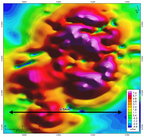 |
| Figure 2: Drone- airborne magnetic map of Target A highlighting a broad magnetic anomaly |
| Photo |
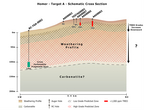 |
| Figure 3 -Schematic cross section showing the weathering profile and the maximum depth reached by auger holes. See bottom of Figure 4 for Schematic cross section area. |
| Photo |
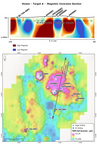 |
| Figure 4 -Top: Cross Section with magnetic inversion highlighting low-magnetic zones potentially associated with alkaline-carbonatite bodies. Bottom: Total Rare Earths Oxides (TREO) soil anomalies associated with alkaline-carbonatite bodies. |
| Photo |
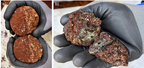 |
| Figure 5: Auger core from the deepest intercept to date in the Target A (hole AAD003 at ~23 meters) highlighting saprolitic material in (a) and fenitization (b). |
| Photo |
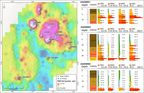 |
| Figure 6: Priority Prospectivity Index map and key auger drillholes at Target A. |
| Photo |
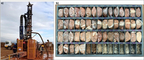 |
| Figure 7: (a) Reverse circulation (RC) drill rig used during the drilling campaign; (b) RC-TGA-0002 drill chip samples showing carbonatite rock chips. |
| Photo |
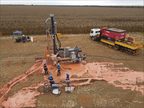 |
| Figure 8: Aerial view of an RC drill rig used during the drilling campaign |
| Photo |
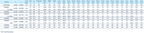 |
| Table 2. Rare earth element, thorium & uranium assay results from auger drilling. Note: for additional drilling information associated with this release, see the Supplemental Technical Data section of the REA investor website (https://ir.rareearthsamericas.com/news-events/supplemental-technical-data). |
| Logo |
 |