
PR Newswire
Plan gives customers time to prepare while continuing investments to strengthen electric system
HOLMDEL, N.J., Aug. 7, 2026 /PRNewswire/ — Jersey Central Power & Light (JCP&L) has filed a rate proposal with the New Jersey Board of Public Utilities (BPU).
The filing includes:
- Proposed offsets to prevent residential customers from feeling changes to base delivery rates in 2027;
- A proposed $253 million increase in base distribution rates, which would result in a bill increase of approximately 7% when offsets expire in 2028;
- The recovery of $476 million in previously deferred storm costs through a separate dedicated charge that goes into effect in January 2028, spreading recovery over a 10-year period rather than seeking recovery over a shorter timeframe.
If approved, the average JCP&L customer would see a total bill increase of about 8.5%, with residential customers seeing an impact of approximately 8.8%. For the typical residential customer using 767 kilowatt-hours (kWh) of electricity, currently paying $162.30 per month, that’s $14.23 a month.
While the new base distribution rates would be effective on May 6, 2027, the company will delay the impacts of new rates until January 2028, giving customers more time to prepare for the changes. If approved, proposed offsets would equal the change in base delivery rates for residential customers – the portion of the bill that pays for poles and wires, storm restoration and other delivery costs – in 2027.
Doug Mokoid, FirstEnergy President of New Jersey: “Customers shouldn’t have to choose between affordability and reliability. Our balanced approach puts both front-and-center simultaneously by minimizing the impact on bills today and giving customers time to plan, while continuing to invest in the infrastructure needed to deliver safe, reliable service for generations to come.”
Committed to Affordability
JCP&L’s approach to affordability combines cost discipline, bill protection and future opportunities for customers to save.
Teresa Reed, JCP&L’s Vice President, Rates & Regulatory: “We are listening to our customers and leading with affordability. By keeping our own costs down and taking an innovative approach, JCP&L is a responsible steward of our customers’ energy dollars.”
Base rate filings allow utilities to recover the cost of upgrading infrastructure and restoring customers after storms. Increasingly frequent severe storms pushed JCP&L’s deferred storm costs to $476 million before the July 3-6 storms.
Investing in Reliability
JCP&L’s $1.5 billion in capital investments over the past three years have brought measurable reliability improvements. In 2025, reliability improved 15%, compared to 2024. So far this year, reliability has improved 38%.
Patricia Mullin, JCP&L’s Vice President, Operations: “While we’ve made progress over the past two years, we still have more work to do. When we invest, our customers benefit. This means fewer interruptions for families, more time open for businesses and more investment in our communities and economy.”
JCP&L’s plan supports an additional $2.1 billion in base distribution investments, part of a larger five-year, $6.9 billion capital plan that includes:
- Modernizing the grid through focused investments in highest priority circuits;
- Increasing remote capability and control through EnergizeNJ;
- Upgrading transmission assets with a focus on long-term reliability and capacity planning;
- Continuing energy efficiency commitments to help meet state goals and customer needs.
Tree Trimming & Removal: Addressing a Leading Cause of Outages
Trees remain a leading cause of power outages in JCP&L’s 3,200-square-mile service territory.
With additional funding to trim vegetation and remove dead and diseased ash trees, the proposal gives the company more ability to mitigate hazard trees before they can cause service interruptions.
- Ash trees, which have been decimated by the Emerald Ash Borer, have been responsible for 60% of tree-related outages since 2020.
- JCP&L has already removed more than 74,000 dead or diseased ash trees since 2017.
Managing Energy Bills
Comprehensive programs can help customers manage their energy bills:
- Whole home energy solutions, HVAC and appliance rebates, energy saving rewards and more are part of JCP&L’s energy efficiency program. Visit https://www.firstenergycorp.com/save_energy.html for more information.
- Payment assistance programs are available for qualifying customers. For more information and special arrangements, visit https://www.firstenergycorp.com/billassist.
- JCP&L has proposed a no-risk time-of-use rate trial that would reward customers who use power during lower cost, off-peak periods.
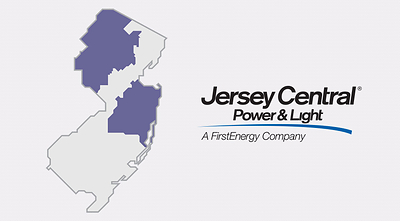
JCP&L, a FirstEnergy Corp. (NYSE: FE) electric company, serves 1.2 million customers in the counties of Burlington, Essex, Hunterdon, Mercer, Middlesex, Monmouth, Morris, Ocean, Passaic, Somerset, Sussex, Union and Warren. Follow JCP&L on X @JCP_L, on Facebook at facebook.com/JCPandL or online at jcp-l.com.
FirstEnergy is dedicated to integrity, safety, reliability and operational excellence. Its electric distribution companies form one of the nation’s largest investor-owned electric systems, serving customers in Ohio, Pennsylvania, New Jersey, West Virginia, Maryland and New York. The company’s transmission subsidiaries operate approximately 24,000 miles of transmission lines that connect the Midwest and Mid-Atlantic regions. Visit FirstEnergy online at firstenergycorp.com and follow FirstEnergy on X @FirstEnergyCorp.
Forward Looking Statements:
This press release includes forward-looking statements based on information currently available to management unless the context requires otherwise, references to “we,” “us,” “our” and “FirstEnergy” refers to FirstEnergy Corp. and its subsidiaries. Such statements are subject to certain risks and uncertainties and readers are cautioned not to place undue reliance on these forward-looking statements. These statements include declarations regarding management’s intents, beliefs and current expectations. These statements typically contain, but are not limited to, the terms “anticipate,” “potential,” “expect,” “forecast,” “target,” “will,” “intend,” “believe,” “project,” “estimate,” “plan” and similar words. Forward-looking statements involve estimates, assumptions, known and unknown risks, uncertainties and other factors that may cause actual results, performance or achievements to be materially different from any future results, performance or achievements expressed or implied by such forward-looking statements, which may include the following: the potential liabilities, increased costs and unanticipated developments resulting from government investigations and agreements, including those associated with compliance with or failure to comply with the Deferred Prosecution Agreement entered into July 21, 2021 and settlements with the U.S. Attorney’s Office for the Southern District of Ohio and the Securities and Exchange Commission (“SEC”); the risks and uncertainties associated with litigation, including the securities class action lawsuit, regulatory proceedings, arbitration, mediation and similar proceedings; changes in national and regional economic conditions affecting us and/or our customers and the vendors with which we do business, including geopolitical conflicts, recession, volatile interest rates, inflationary pressures, supply chain disruptions, higher fuel costs, and workforce impacts; variations in weather, such as mild seasonal weather variations and severe weather conditions (including events caused, or exacerbated, by climate change, such as wildfires, hurricanes, flooding, droughts, high wind events and extreme heat events) and other natural disasters, which may result in increased storm restoration expenses or material liability and negatively affect future operating results; the potential liabilities and increased costs arising from regulatory actions or outcomes in response to severe weather conditions and other natural disasters; legislative and regulatory developments, and executive orders, including, but not limited to, matters related to rates, generation resource adequacy, co-location of generation and large loads, and compliance and enforcement activity; the ability to access the public securities and other capital and credit markets in accordance with our financial plans, the cost of such capital and overall condition of the capital and credit markets, including the loss of FirstEnergy Corp.’s status as a well-known seasoned issuer; the risks associated with physical attacks, such as acts of war, terrorism, sabotage or other acts of violence, and cyber-attacks and other disruptions to our, or our vendors’, information technology systems, which may compromise our operations, and data security breaches of sensitive data, intellectual property and proprietary or personally identifiable information; the ability to accomplish or realize anticipated benefits through establishing a culture of continuous improvement and our other strategic and financial goals, including, but not limited to, executing Energize365, our transmission and distribution investment plan, executing on our rate filing strategy, controlling costs, improving credit metrics, maintaining investment grade ratings, strengthening our balance sheet and growing earnings; changing market conditions affecting the measurement of certain liabilities and the value of assets held in our pension trusts may negatively impact our forecasted growth rate, results of operations and may also cause it to make contributions to its pension sooner or in amounts that are larger than currently anticipated; changes in assumptions regarding factors such as economic conditions within our territories, the reliability of our transmission and distribution system, our generation resource planning in West Virginia, or the availability of capital or other resources supporting identified transmission and distribution investment opportunities; human capital management challenges, including among other things, attracting and retaining appropriately trained and qualified employees and labor disruptions by our unionized workforce; changes to environmental laws and regulations, including, but not limited to, federal and state rules related to climate change, coal combustion residuals, and potential changes to such laws and regulations; changes in customers’ demand for power, including, but not limited to, economic conditions, development of data centers, the impact of climate change and emerging technology, particularly with respect to electrification, energy storage, co-location of generation and large loads, and distributed sources of generation; future actions taken by credit rating agencies that could negatively affect either our access to or terms of financing or our financial condition and liquidity; the potential of non-compliance with debt covenants in our credit facilities; the ability to comply with applicable reliability standards and energy efficiency and peak demand reduction mandates; changes to significant accounting policies; any changes in tax laws or regulations, including, but not limited to, the Inflation Reduction Act of 2022, the One Big Beautiful Bill Act of 2025, as signed into law on July 4, 2025, or adverse tax audit results or rulings and potential changes to such laws and regulations; the ability to meet our publicly-disclosed goals relating to climate-related matters, opportunities, improvements, and efficiencies, including FirstEnergy’s greenhouse gas reduction goals; and the risks and other factors discussed from time to time in FirstEnergy Corp.’s SEC filings. Dividends declared from time to time on FirstEnergy Corp.’s common stock during any period may in the aggregate vary from prior periods due to circumstances considered by the FirstEnergy Corp. Board at the time of the actual declarations. A security rating is not a recommendation to buy or hold securities and is subject to revision or withdrawal at any time by the assigning rating agency. Each rating should be evaluated independently of any other rating. These forward-looking statements are also qualified by, and should be read together with, the risk factors included in FirstEnergy Corp.’s Form 10-K, Form 10-Q and in other filings with the SEC. The foregoing review of factors also should not be construed as exhaustive. New factors emerge from time to time, and it is not possible for management to predict all such factors, nor assess the impact of any such factor on FirstEnergy Corp.’s business or the extent to which any factor, or combination of factors, may cause results to differ materially from those contained in any forward-looking statements. FirstEnergy Corp. expressly disclaims any obligation to update or revise, except as required by law, any forward-looking statements contained herein or in the information incorporated by reference as a result of new information, future events or otherwise.

 View original content to download multimedia:https://www.prnewswire.com/news-releases/jcpl-rate-proposal-delays-bill-impact-for-residential-customers-until-2028-while-supporting-reliability-investments-302845382.html
SOURCE FirstEnergy Corp.
