
Acadia Pharmaceuticals Announces DAYBUE® STIX (trofinetide) is Now Broadly Available in the United States for the Treatment of Rett Syndrome
— DAYBUE STIX is a new powder formulation of trofinetide
— Recently published expert consensus recognizes trofinetide as part of the standard of care for Rett syndrome and highlights the importance of flexible, patient-centered treatment approaches
SAN DIEGO–(BUSINESS WIRE)–
Acadia Pharmaceuticals Inc. (Nasdaq: ACAD) today announced DAYBUE® STIX (trofinetide) for oral solution, a dye- and preservative-free powder formulation of trofinetide, is now broadly available in the United States for the treatment of Rett syndrome in adults and pediatric patients two years of age and older. The new formulation, approved by the U.S. Food and Drug Administration (FDA) in December 2025, is bioequivalent to the original DAYBUE® oral solution, delivering the same efficacy and safety profile, while offering children and adults living with Rett syndrome new flexibility and choice regarding the dose volume and taste of their DAYBUE treatment.1
This press release features multimedia. View the full release here: https://www.businesswire.com/news/home/20260407618433/en/
“Initial feedback from a small group of caregivers following the limited launch revealed that more than 80% of early users reported satisfaction with DAYBUE STIX, highlighting the added flexibility and portability of this new formulation,”2 said Tom Garner, Acadia’s Chief Commercial Officer. “We are hearing that the new formulation may allow for more customized care in real-world settings. Ongoing evaluation from patients and caregivers remains a priority; their perspectives are essential as we identify ways to better assist families managing this complex condition.”
The importance of flexible, patient-centered approaches was reinforced in a recent publication of expert recommendations for real-world use of trofinetide in Rett syndrome. A steering group comprised of experts based at International Rett Syndrome Foundation (IRSF)-designated centers of excellence (COEs) reached consensus recognizing trofinetide oral solution as part of the standard of care for individuals with Rett syndrome. They also aligned on key real-world considerations such as early initiation and sustained use over time. The recommendations also reflect shared perspectives on the need for individualized decision making in clinical practice to help optimize outcomes for patients, families, and caregivers.3
“The availability of DAYBUE STIX gives us an additional, flexible way to administer trofinetide, which allows us more options to address unique patient and caregiver needs,” said Arthur Beisang, M.D., Department of Pediatrics, Gillette Children’s Specialty Healthcare, Saint Paul, Minn. “This patient-centered approach aligns with recently published expert consensus recommendations, which advocate for the integration of trofinetide as part of the standard of care and comprehensive Rett syndrome management. This new option provides additional customization, supporting individualized care for people with Rett syndrome.”
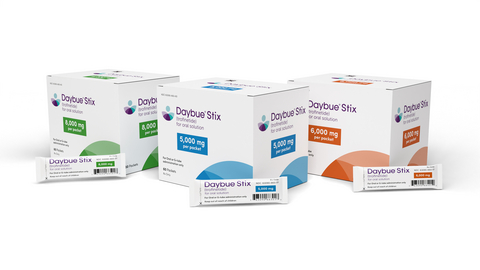
DAYBUE STIX is a for oral solution powder that caregivers can mix with a variety of water-based liquids such as juice, tea, lemonade, limeade, or liquid hydration so that caregivers have the ability to customize to their loved ones’ taste.4 The product comes in individual packets that are easily portable.
The efficacy and safety of DAYBUE STIX is based on the results of the pivotal Phase 3 LAVENDER™ study with DAYBUE oral solution in patients with Rett syndrome.4 The approval of this new formulation was informed by the results of a bioequivalence study, which demonstrated that both original DAYBUE oral solution and the new DAYBUE STIX for oral solution powder formulation provide comparable exposure.1
Families interested in exploring this new option should speak with their healthcare provider. Acadia also offers families access to Acadia Connect®, a multi-faceted support program that offers a dedicated, experienced support team assisting with financial resources and prescription support to patients and caregivers throughout the DAYBUE treatment journey. The original oral solution formulation approved by the U.S. Food and Drug Administration in 2023 will remain available.
About Rett Syndrome
Rett syndrome is a rare, complex, neurodevelopmental disorder that may occur over four stages and occurs in approximately one of every 10,000 to 15,000 female births worldwide.5-7 In the U.S., 6,000 to 9,000 patients are affected.8 A child with Rett syndrome exhibits an early period of apparently normal development until six to 18 months, when their skills seem to slow down or stagnate. This is typically followed by a duration of regression when the child loses acquired communication skills and purposeful hand use. The child may then experience a plateau period in which they show mild recovery in cognitive interests, but body movements remain severely diminished. As they age, those living with Rett may continue to experience a stage of motor deterioration, which can last the rest of the patient’s life.6 Rett syndrome is typically caused by a genetic mutation on the MECP2 gene.9 In preclinical studies, deficiency in MeCP2 function is thought to lead to impairment in synaptic communication, and the deficits in synaptic function may be associated with Rett manifestations.9-11
Symptoms of Rett syndrome may also include development of hand stereotypies, such as hand wringing and clapping, and gait abnormalities.12 Most Rett patients typically live into adulthood and require round-the-clock care.5,13
About DAYBUE® (trofinetide) and DAYBUE® STIX (trofinetide)
Trofinetide is a synthetic analog of the N-terminal tripeptide of insulin-like growth factor-1. The mechanism by which trofinetide exerts therapeutic effects in patients with Rett syndrome is unknown. In animal studies, trofinetide has been shown to increase branching of dendrites and synaptic plasticity signals.14
Indication and Important Safety Information for DAYBUE® (trofinetide) and DAYBUE® STIX (trofinetide)
Indication
DAYBUE and DAYBUE STIX are indicated for the treatment of Rett syndrome in adults and pediatric patients 2 years of age and older.
Important Safety Information
- Warnings and Precautions
- Diarrhea: In a 12-week study and in long-term studies, 85% of patients treated with DAYBUE experienced diarrhea. In those treated with DAYBUE, 49% either had persistent diarrhea or recurrence after resolution despite dose interruptions, reductions, or concomitant antidiarrheal therapy. Diarrhea severity was mild or moderate in 96% of cases. In the 12-week study, antidiarrheal medication was used in 51% of patients treated with DAYBUE.
Advise patients to stop laxatives before starting DAYBUE or DAYBUE STIX. If diarrhea occurs, patients should notify their healthcare provider, consider starting antidiarrheal treatment, and monitor hydration status and increase oral fluids, if needed. Interrupt, reduce dose, or discontinue DAYBUE or DAYBUE STIX if severe diarrhea occurs or if dehydration is suspected. - Vomiting: In a 12-week study, vomiting occurred in 29% of patients treated with DAYBUE and in 12% of patients who received placebo.
Patients with Rett syndrome are at risk for aspiration and aspiration pneumonia. Aspiration and aspiration pneumonia have been reported following vomiting in patients being treated with DAYBUE. Interrupt, reduce dose, or discontinue DAYBUE or DAYBUE STIX if vomiting is severe or occurs despite medical management. - Weight Loss: In the 12-week study, 12% of patients treated with DAYBUE experienced weight loss of greater than 7% from baseline, compared to 4% of patients who received placebo. In long-term studies, 2.2% of patients discontinued treatment with DAYBUE due to weight loss. Monitor weight and interrupt, reduce dose, or discontinue DAYBUE or DAYBUE STIX if significant weight loss occurs.
- Diarrhea: In a 12-week study and in long-term studies, 85% of patients treated with DAYBUE experienced diarrhea. In those treated with DAYBUE, 49% either had persistent diarrhea or recurrence after resolution despite dose interruptions, reductions, or concomitant antidiarrheal therapy. Diarrhea severity was mild or moderate in 96% of cases. In the 12-week study, antidiarrheal medication was used in 51% of patients treated with DAYBUE.
- Adverse Reactions: The common adverse reactions (≥5% for DAYBUE-treated patients and at least 2% greater than in placebo) reported in the 12-week study were diarrhea (82% vs 20%), vomiting (29% vs 12%), fever (9% vs 4%), seizure (9% vs 6%), anxiety (8% vs 1%), decreased appetite (8% vs 2%), fatigue (8% vs 2%), and nasopharyngitis (5% vs 1%).
- Drug Interactions: Effect of DAYBUE and DAYBUE STIX on other Drugs
-
Trofinetide, a weak inhibitor of CYP3A and an inhibitor of P-gp, can increase the plasma concentrations of CYP3A and/or P-gp substrates (e.g., loperamide), which may increase the risk of adverse reactions associated with these substrates.
Closely monitor patients when DAYBUE or DAYBUE STIX is administered concomitantly with sensitive CYP3A and/or P-gp substrates for which a minimal increase in substrate plasma concentration (i.e., drugs with a narrow therapeutic index) may lead to serious adverse reactions.
-
Trofinetide, a weak inhibitor of CYP3A and an inhibitor of P-gp, can increase the plasma concentrations of CYP3A and/or P-gp substrates (e.g., loperamide), which may increase the risk of adverse reactions associated with these substrates.
- Use in Specific Population: Renal Impairment
- DAYBUE and DAYBUE STIX are not recommended for patients with severe renal impairment.
DAYBUE is available as an oral solution (200 mg/mL).
DAYBUE STIX for oral solution powder is available in 5,000 mg, 6,000 mg, and 8,000 mg packets.
Please read the full Prescribing Information also available at DAYBUEhcp.com.
About Acadia Pharmaceuticals
Acadia is committed to turning scientific promise into meaningful innovation that makes the difference for underserved neurological and rare disease communities around the world. Our commercial portfolio includes the first and only FDA-approved treatments for Parkinson’s disease psychosis and Rett syndrome. We are developing the next wave of therapeutic advancements with a robust and diverse pipeline that includes mid- to late-stage programs in Alzheimer’s disease psychosis and Lewy body dementia psychosis, along with earlier-stage programs that address other underserved patient needs. At Acadia, we’re here to be their difference. For more information, visit us at acadia.com and follow us on LinkedIn and X.
Forward-Looking Statements
This press release contains forward-looking statements within the meaning of the Private Securities Litigation Reform Act of 1995. Forward-looking statements include all statements other than statements of historical fact and can be identified by terms such as “may,” “will,” “should,” “expects,” “anticipates,” and similar expressions (including the negative thereof) intended to identify forward-looking statements. Forward-looking statements contained in this press release, include, but are not limited to, statements about: (i) the efficacy and safety profile of DAYBUE and DAYBUE STIX and anticipated Rett syndrome symptom improvements, (ii) the flexibility in administration and allowance for customized care provided by DAYBUE STIX, (iii) the use of DAYBUE and DAYBUE STIX as the standard of care for patients with Rett syndrome and (iv) potential future use of DAYBUE and DAYBUE STIX. Forward-looking statements are subject to known and unknown risks, uncertainties, assumptions and other factors that may cause our actual results, performance or achievements to differ materially and adversely from those anticipated or implied by our forward-looking statements. Such risks, uncertainties, assumptions and other factors include, but are not limited to: our ability to continue to successfully commercialize DAYBUE and DAYBUE STIX and our ability to continue to stay in compliance with applicable laws and regulations. Given the risks and uncertainties, you should not place undue reliance on these forward-looking statements. For a discussion of these and other risks, uncertainties, assumptions and other factors that may cause our actual results, performance or achievements to differ, please refer to our annual report on Form 10-K for the year ended December 31, 2025 filed with the Securities and Exchange Commission on February 26, 2026, as well as our subsequent filings with the Securities and Exchange Commission from time to time. The forward-looking statements contained herein are made as of the date hereof, and we undertake no obligation to update them after this date, except as required by law.
References
|
1 |
Mona D, Yamamoto A, Adegbenle Y, et al. A Phase 1, Randomized, Open-Label Study to Assess the Bioequivalence of Trofinetide as a Ready-to-Use Oral Solution and Constituted Powder for Oral Solution in Healthy Adults. Adv Ther. 2026. |
|
|
2 |
Acadia Pharmaceuticals Inc., Data on file. |
|
|
3 |
Prange EO, Beisang A, Pehlivan D, et al. Expert Consensus on Real-World Use of Trofinetide for Rett Syndrome Using a Modified Delphi Method. Ann Child Neurol. 2026; 4:38-51 |
|
|
4 |
Acadia Pharmaceuticals Inc. DAYBUE® [package insert]. San Diego, CA; 2025 |
|
|
5 |
Fu C, Armstrong D, Marsh E, et al. Consensus guidelines on managing Rett syndrome across the lifespan. BMJ Paediatrics Open. 2020; 4:1-14. |
|
|
6 |
Kyle SM, Vashi N, Justice MJ. Rett syndrome: a neurological disorder with metabolic components. Open Biol. 2018; 8:170216. |
|
|
7 |
May DM, Neul JL, Satija A, et al. Real-world clinical management of individuals with Rett syndrome: a physician survey. J of Med Econ. 26(1), 1570–1580. |
|
|
8 |
Acadia Pharmaceuticals Inc., Data on file. RTT US Prevalence. March 2022. |
|
|
9 |
Amir RE, Van den Veyver IB, Wan M, et al. Rett syndrome is caused by mutations in X-linked MECP2, encoding methyl-CpG-binding protein 2. Nat Genet. 1999; 23(2):185-188. |
|
|
10 |
Fukuda T, Itoh M, Ichikawa T, et al. Delayed maturation of neuronal architecture and synaptogenesis in cerebral cortex of Mecp2-deficient mice. J Neuropathol Exp Neurol. 2005; 64(6):537-544. |
|
|
11 |
Asaka Y, Jugloff DG, Zhang L, et al. Hippocampal synaptic plasticity is impaired in the Mecp2-null mouse model of Rett syndrome. Neurobiol Dis. 2006; 21(1):217-227. |
|
|
12 |
Neul JL, Kaufmann WE, Glaze DG, et al. Rett syndrome: revised diagnostic criteria and nomenclature. Ann Neurol. 2010; 68(6):944-950. |
|
|
13 |
Tarquinio DO, Hou W, Neul JL, et al. The changing face of survival in Rett syndrome and MECP2-related disorders. Pediatr Neurol. 2015; 53(5):402-411. |
|
|
14 |
Acadia Pharmaceuticals Inc., Data on file. Study Report 2566-026. 2010. |
View source version on businesswire.com: https://www.businesswire.com/news/home/20260407618433/en/
Investor Contact:
Acadia Pharmaceuticals Inc.
Al Kildani
(858) 261-2872
[email protected]
Acadia Pharmaceuticals Inc.
Jessica Tieszen
(858) 261-2950
[email protected]
Media Contact:
Acadia Pharmaceuticals Inc.
Deb Kazenelson
(818) 395-3043
[email protected]
KEYWORDS: California United States North America
INDUSTRY KEYWORDS: Biotechnology Pharmaceutical Health Neurology
MEDIA:
| Photo |
 |
| Photo |
 |
| Logo |
 |