
Snowflake Research Reveals AI-Driven Job Creation Outpaces Job Loss, with 77% Reporting Workforce Gains
- AI’s workforce impact is more nuanced than headlines suggest, with 77% of organizations reporting AI-driven job creation compared to 46% reporting job losses, and among those experiencing both, 69% say the net impact of AI on jobs has been positive
- AI is delivering strong returns — organizations report earning roughly $1.49 for every dollar invested — yet 96% still face significant challenges with data quality and quantity, employee skills, integration with legacy systems, and more, underscoring that measurable return on investments (ROI) does not eliminate operational and data hurdles
- Among early adopters, 92% report positive ROI, fueling plans to allocate 22% of technology budgets to AI as it becomes embedded in daily operations, with nearly half (48%) of all code now AI-generated
MENLO PARK, Calif.–(BUSINESS WIRE)–Snowflake (NYSE: SNOW), the AI Data Cloud company, in collaboration with Omdia by Informa TechTarget, today released “The ROI of Gen AI and Agents”, a global research report surveying 2,050 business and technology leaders across 10 different countries, all of whom influence their organization’s current and future AI purchases. The findings reveal that AI’s impact on the workforce is more nuanced than headlines suggest, with 77% of organizations experiencing increased hiring compared to 46% experiencing role reductions. Of the organizations that have seen both hiring and cuts, 69% say the overall effect of AI on the workforce has been positive, signaling that as adoption accelerates, AI is driving overall job growth rather than consolidation.
This press release features multimedia. View the full release here: https://www.businesswire.com/news/home/20260310850721/en/

“The ROI of Gen AI and Agents” report reveals that 77% of organizations report AI-driven job creation, compared to 46% reporting job loss
“AI’s impact won’t be uniform — some roles will dramatically amplify their influence and productivity, while others risk being left behind. The difference comes down to how effectively it’s used: breaking down problems with first-principles thinking and guiding AI agents like high-performing teams,” said Anahita Tafvizi, Chief Data Analytics Officer, Snowflake. “The strongest ROI isn’t coming from experimentation alone, it’s coming from embedding AI into core operations while strengthening data readiness and governance policies. The future of work will be shaped by companies that pair AI ambition with trusted infrastructure, and the right skills to turn it into lasting impact.”
AI Drives Job Loss and Creation, with a Net Positive Impact on Technical Roles
As organizations scale AI across the enterprise, its impact on the workforce is becoming more clear. While AI is driving both job growth and role reductions, the overall trend is positive, particularly on technical teams.
Among respondents, 42% say AI has created jobs across their organizations, 11% say it has eliminated roles, and 35% report a mix of both — netting to 77% reporting job creation versus 46% reporting job loss. The data also shows that maturity matters: 75% of organizations with multiple AI use cases report a net positive workforce impact, compared to 56% of those still in the early stages of adoption. In other words, the more embedded AI becomes, the more likely organizations are to see overall employment gains.
Workforce outcomes such as employee productivity and operational efficiency also strengthen as AI adoption matures. 75% percent of organizations deploying AI across many use cases report a net positive impact on their jobs, compared to 56% of those using AI in more limited, early-stage deployments.
The functions benefiting from these workforce outcomes are also those seeing the greatest job growth, primarily within technical roles. The strongest net gains are concentrated in:
- IT operations: 56% report job gains
- Cybersecurity: 46% report gains
- Software development: 38% report gains
Notably, the teams furthest along in AI deployment are also seeing the most workforce change: both gains and reductions. This suggests that as productivity increases, organizations aren’t simply cutting roles, they’re restructuring teams, automating certain tasks while adding new capabilities in other areas. In other words, AI is reshaping these functions rather than uniformly expanding or shrinking them. This is seen through IT operations, which saw both the highest amount of job gains and losses. The teams most impacted from AI-driven job loss include:
- IT operations: 40% report job losses
- Customer service and support: 37% report job losses
- Data analytics: 37% report job losses
AI’s Bottleneck is Data Readiness and Governance
As AI adoption accelerates, organizations are quickly finding that their primary constraint to deploying AI at scale is not the technology itself, but the state of their data. While AI is delivering strong returns — organizations report earning roughly $1.49 gained for every dollar invested — 96% say they continue to face significant challenges in scaling their initiatives.
When asked about the specific challenges preventing AI from scaling, nearly eight in 10 respondents report experiencing technical or data-related challenges, with data emerging as the primary barrier to scaling AI initiatives. In particular:
- 65% say it is challenging to break down AI data siloes
- 62% say it is challenging to measure and monitor AI data quality
- 62% say it is challenging to prep data to be AI-ready
Only 7% say more than half of their unstructured data is actually AI-ready. Among the 10 countries surveyed, India leads, with 14% reporting that the majority of their unstructured data is AI-ready, followed by Australia and New Zealand at 12%, and Canada at 10%. The United States comes in at 8%, close to the global average of 7%.
Governance is emerging as an equally pressing concern. 57% of employees, including 66% of C-level leaders, report using nonapproved AI tools, while 60% say their organizations need greater investment in data infrastructure and monitoring software. Additionally, 22% of middle managers and individual contributors cite data governance as “very challenging” to enforce, and 19% of C-suite share the same view. Together, the findings indicate that while AI’s value is increasingly clear, data readiness and governance will determine how effectively organizations can scale it.
AI Delivers Real Returns and Rewires Operations
While some widely cited studies1 claim that AI pilots fail to deliver value, this research tells a different story. As AI moves from pilot programs into production, organizations are seeing measurable value. Among early AI adopters, 92% report positive ROI, and businesses plan to allocate 22% of their technology budgets to AI in the coming year. This signals that investment is accelerating, not slowing, and that organizations are leaning into AI as a proven driver of measurable business impact, rather than treating it as a speculative experiment.
According to the respondents, AI is already embedded in core enterprise functions:
- 62% of IT operations teams report active AI use
- 59% of data analytics teams report active AI use
- 53% of cybersecurity teams report active AI use
- 50% of software development teams report active AI use
By contrast, functions such as procurement, sales, and marketing are the slowest to adopt AI, with around 30% of each reporting active use. At the industry level, advertising and media leads, with 42% of organizations reporting AI in production today, followed by healthcare and life sciences at 34%, and both manufacturing and technology at 32%.
Additionally, nearly half of all code, approximately 48%, is reported to be AI-generated, highlighting how deeply the technology is embedded in day-to-day workflows. Organizations are also seeing measurable benefits from AI coding tools and apps, with 82% reporting improvements in code testing, bug detection, and resolution, and 80% citing gains in overall code quality. As AI-generated code becomes embedded in everyday workflows, enterprises will increasingly look towards coding agents that operate on trusted enterprise data, capabilities Snowflake is advancing through Cortex Code, Snowflake’s AI coding agent.
“The data shows that AI is delivering tangible returns, but scaling it successfully requires a strong data foundation and governance framework,” said Adam DeMattia, Senior Director of Research, Omdia by Informa TechTarget. “Organizations that can unify their data, improve quality, and operationalize AI responsibly will be best positioned to sustain ROI and workforce gains. With its focus on secure, governed data and AI integration at scale, Snowflake is well positioned to help enterprises move from experimentation to enterprise-wide impact.”
Learn More:
- Read the full research report, “The ROI of Gen AI and Agents,” and double click into the findings in this blog post.
- Stay on top of the latest news and announcements from Snowflake on LinkedIn and X.
1MIT Nanda (July 2025) “The GenAI Divide: The State of AI in Business 2025.” Available at the following link. MIT Nanda.
Methodology
The ROI of Gen AI and Agents is based on responses from 2,050 respondents from 10 countries (Australia/New Zealand, Canada, France, Germany, India, Japan, Singapore, United Kingdom, United States) that are influential in their organization’s future AI purchases. The survey was conducted in collaboration with Omdia by Informa TechTarget between August 13, 2025, and September 17, 2025. All figures are rounded to the nearest whole number, with values below .5 rounded down and .5 and above rounded up.
About Snowflake
Snowflake is the platform for the AI era, making it easy for enterprises to innovate faster and get more value from data. More than 13,300 customers around the globe, including hundreds of the world’s largest companies, use Snowflake’s AI Data Cloud to build, use and share data, applications and AI. With Snowflake, data and AI are transformative for everyone. Learn more at snowflake.com (NYSE: SNOW).
View source version on businesswire.com: https://www.businesswire.com/news/home/20260310850721/en/
Media Contact:
Daria Bianchini
Product PR Specialist, Snowflake
[email protected]
KEYWORDS: California United States North America Canada
INDUSTRY KEYWORDS: Data Management Technology Professional Services Business Security Apps/Applications Data Analytics Software Artificial Intelligence Internet Human Resources
MEDIA:
| Photo |
 |
| “The ROI of Gen AI and Agents” report reveals that 77% of organizations report AI-driven job creation, compared to 46% reporting job loss |
| Photo |
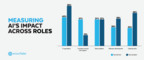 |
| IT operations, cybersecurity, and software development report the strongest AI-driven job growth, while IT operations, customer service and support, and data analytics experience the largest workforce reductions |
| Logo |
 |