Best Buy Reports Third Quarter Results

Best Buy Reports Third Quarter Results

Enterprise Comparable Sales Increased 23%

Domestic Comparable Online Sales Increased 174%

GAAP Diluted EPS Increased 35% to $1.48

Non-GAAP Diluted EPS Increased 82% to $2.06

MINNEAPOLIS–(BUSINESS WIRE)–
Best Buy Co., Inc. (NYSE: BBY) today announced results for the 13-week third quarter ended October 31, 2020 (“Q3 FY21”), as compared to the 13-week third quarter ended November 2, 2019 (“Q3 FY20”).


Q3 FY21

Q3 FY20

Revenue ($ in millions)


Enterprise

$

11,853


$

9,764


Domestic segment

$

10,850


$

8,964


International segment

$

1,003


$

800


Enterprise comparable sales % change1


23.0

%


1.7

%

Domestic comparable sales % change1


22.6

%


2.0

%

Domestic comparable online sales % change1


173.7

%


15.0

%

International comparable sales % change1


27.3

%


(1.9)

%

Operating Income


GAAP operating income as a % of revenue


4.7

%


4.0

%

Non-GAAP operating income as a % of revenue


6.1

%


4.2

%

Diluted Earnings per Share (“EPS”)


GAAP diluted EPS

$

1.48


$

1.10


Non-GAAP diluted EPS

$

2.06


$

1.13


For GAAP to non-GAAP reconciliations of the measures referred to in the above table, please refer to the attached supporting schedule.

“Today, we are once again reporting strong quarterly results in the midst of unprecedented times,” said Corie Barry, Best Buy CEO. “Our comparable sales grew a remarkable 23% as we leveraged our unique capabilities, including our supply chain expertise, flexible store operating model and ability to shift quickly to digital, to meet what is clearly elevated demand for products that help customers work, learn, cook, entertain and connect in their homes. The current environment has underscored our purpose to enrich lives through technology, and the capabilities we are flexing and strengthening now will benefit us going forward as we execute our strategy.”

Barry continued, “Our teams showed empathy, ingenuity and extraordinary execution throughout the quarter. I am very proud of the way our teammates are helping not only our customers, but each other and their communities.”

“From a profitability standpoint, our better-than-expected sales resulted in significant operating income rate expansion and earnings growth,” Barry continued. “This strong financial performance is allowing us to share our success with the community, our shareholders, and, importantly, our employees. We recently made a $40 million donation to the Best Buy Foundation to accelerate the progress towards our goal to reach 100 Teen Tech Centers across the U.S. In addition, we plan on resuming our share repurchase program during Q4 of this fiscal year.”

Barry continued, “For our employees, we raised our starting wage to $15 per hour, paid recognition bonuses to field employees and reinstated our short-term incentive compensation. In the early days of the pandemic, we established an employee hardship fund that continues to provide emergency funds to our employees who are sick, have loved ones who are sick or are experiencing financial hardship. In addition, in recent weeks, we have resumed our 401(k) employer match and invested significantly in our employee well-being benefits.”

Best Buy CFO Matt Bilunas said, “While the demand for the products and services we sell remains at elevated levels as we start the fourth quarter, it is very difficult for us to predict how sustainable these trends will be due to the significant uncertainty related to the various impacts of the pandemic. Thus, similar to the last two quarters, we are not providing financial guidance today.”

Domestic Segment Q3 FY21 Results

Domestic Revenue

Domestic revenue of $10.85 billion increased 21.0% versus last year. The increase was primarily driven by comparable sales growth of 22.6%, which was partially offset by the loss of revenue from permanent store closures in the past year.

From a merchandising perspective, the company generated comparable sales growth across most of its categories, with the largest drivers being computing, home theater and appliances. These growth drivers were partially offset by a decline in mobile phone sales.

Domestic online revenue of $3.82 billion increased 173.7% on a comparable basis, and as a percentage of total Domestic revenue, online revenue increased to approximately 35.2% versus 15.6% last year.

Domestic Gross Profit Rate

Domestic gross profit rate was 24.0% versus 24.3% last year. The gross profit rate decrease of approximately 30 basis points was primarily driven by higher supply chain costs as a result of the increased mix of online revenue and lower profit-sharing revenue from the company’s private-label and co-branded credit card arrangement. These pressures were partially offset by a more favorable promotional environment.

Domestic Selling, General and Administrative Expenses (“SG&A”)

Domestic GAAP SG&A was $1.95 billion, or 18.0% of revenue, versus $1.80 billion, or 20.1% of revenue, last year. On a non-GAAP basis, SG&A was $1.93 billion, or 17.8% of revenue, versus $1.78 billion, or 19.9% of revenue, last year. Both GAAP and non-GAAP SG&A increased primarily due to: (1) increased incentive compensation expense; (2) increased variable expense related to the higher sales growth, including items such as credit card processing fees; and (3) a $40 million donation to the Best Buy Foundation. These items were partially offset by lower store payroll expense.

International Segment Q3 FY21 Results

International Revenue

International revenue of $1.0 billion increased 25.4% versus last year. This increase was primarily driven by comparable salesgrowth of 27.3%, which was partially offset by the impact of approximately 140 basis points of negative foreign currency exchange rates.

International Gross Profit Rate

International GAAP gross profit rate was 19.0% versus 22.5% last year. On a non-GAAP basis, the gross profit rate was 22.6% versus 22.5% last year. The lower GAAP gross profit was primarily due to $36 million of inventory markdowns associated with the company’s decision to exit its operations in Mexico.

International SG&A

International SG&A was $175 million, or 17.4% of revenue, versus $173 million, or 21.6% of revenue, last year. SG&A increased primarily due to higher incentive compensation in Canada.

Restructuring Charges

Restructuring charges of $111 million in Q3 FY21 primarily related to charges associated with the company’s decision this quarter to exit operations in Mexico and actions to better align its organizational structure with its strategic focus.

Dividends and Share Repurchases

In Q3 FY21, the company returned a total of $142 million to shareholders through dividends. On a year-to-date basis, the company has returned a total of $488 million to shareholders through dividends of $426 million and share repurchases of $62 million. The company suspended share repurchases last March in order to conserve liquidity in light of the COVID-related uncertainties and plans to resume share repurchases during Q4 FY21.

Today, the company announced its board of directors has authorized the payment of a regular quarterly cash dividend of $0.55 per common share. The quarterly dividend is payable on January 5, 2021, to shareholders of record as of the close of business on December 15, 2020.

Bond Offering

In Q3 FY21, the company completed a public bond offering for $650 million in 1.95% notes due in October 2030. The net proceeds from the sale will be used to replace the $650 million in 5.5% notes that mature in March 2021, which the company expects to retire during Q4 FY21 by exercising its option to redeem the 5.5% notes at par.

Conference Call

Best Buy is scheduled to conduct an earnings conference call at 8:00 a.m. Eastern Time (7:00 a.m. Central Time) on November 24, 2020. A webcast of the call is expected to be available at www.investors.bestbuy.com, both live and after the call.

Notes:

(1) Comparable sales include revenue from all stores that were temporarily closed or operating an enhanced curbside-only operating model in Q3 FY21 as a result of COVID-19. The method of calculating comparable sales varies across the retail industry, including the treatment of store closures as a result of COVID-19. As a result, our method of calculating comparable sales may not be the same as other retailers’ methods. For additional information on comparable sales, please see our most recent Annual Report on Form 10-K, and any subsequent Quarterly Reports on Form 10-Q, filed with the Securities and Exchange Commission, and available at www.investors.bestbuy.com.

Forward-Looking and Cautionary Statements:

This release contains forward-looking statements within the meaning of the Private Securities Litigation Reform Act of 1995 as contained in Section 27A of the Securities Act of 1933 and Section 21E of the Securities Exchange Act of 1934 that reflect management’s current views and estimates regarding future market conditions, company performance and financial results, operational investments, business prospects, new strategies, the competitive environment and other events. You can identify these statements by the fact that they use words such as “anticipate,” “believe,” “assume,” “estimate,” “expect,” “intend,” “foresee,” “project,” “guidance,” “plan,” “outlook,” and other words and terms of similar meaning. These statements involve a number of risks and uncertainties that could cause actual results to differ materially from the potential results discussed in the forward-looking statements. Among the factors that could cause actual results and outcomes to differ materially from those contained in such forward-looking statements are the following: the duration and scope of the COVID-19 pandemic and its resurgence and the impact on demand for our products and services, levels of consumer confidence and our supply chain; the effects and duration of steps we have taken and will continue to take in response to the pandemic, including the implementation of our interim and evolving operating model; actions governments, businesses and individuals have taken and will continue to take in response to the pandemic and their impact on economic activity and consumer spending; the pace of recovery when the COVID-19 pandemic subsides; general economic uncertainty in key global markets and a worsening of global economic conditions or low levels of economic growth; competition (including from multi-channel retailers, e-commerce business, technology service providers, traditional store-based retailers, vendors and mobile network carriers), our expansion strategies, our focus on services as a strategic priority, our reliance on key vendors and mobile network carriers, our ability to attract and retain qualified employees, changes in market compensation rates, risks arising from statutory, regulatory and legal developments, macroeconomic pressures in the markets in which we operate, failure to effectively manage our costs, our reliance on our information technology systems, our ability to prevent or effectively respond to a privacy or security breach, our ability to effectively manage strategic ventures, alliances or acquisitions, our dependence on cash flows and net earnings generated during the fourth fiscal quarter, susceptibility of our products to technological advancements, product life cycle preferences and changes in consumer preferences, economic or regulatory developments that might affect our ability to provide attractive promotional financing, interruptions and other supply chain issues, catastrophic events, health crises, pandemics, our ability to maintain positive brand perception and recognition, product safety and quality concerns, changes to labor or employment laws or regulations, our ability to effectively manage our real estate portfolio, constraints in the capital markets or our vendor credit terms, changes in our credit ratings, any material disruption in our relationship with or the services of third-party vendors, risks related to our exclusive brand products and risks associated with vendors that source products outside of the U.S., including trade restrictions or changes in the costs of imports (including existing or new tariffs or duties and changes in the amount of any such tariffs or duties) and risks arising from our international activities.

A further list and description of these risks, uncertainties and other matters can be found in the company’s annual report and other reports filed from time to time with the Securities and Exchange Commission (“SEC”), including, but not limited to, Best Buy’s Annual Report on Form 10-K filed with the SEC on March 23, 2020 and its Quarterly Reports on Form 10-Q filed with the SEC on May 27, 2020 and August 31, 2020. Best Buy cautions that the foregoing list of important factors is not complete, and any forward-looking statements speak only as of the date they are made, and Best Buy assumes no obligation to update any forward-looking statement that it may make.


BEST BUY CO., INC.

CONDENSED CONSOLIDATED STATEMENTS OF EARNINGS

($ and shares in millions, except per share amounts)

(Unaudited and subject to reclassification)


Three Months Ended


Nine Months Ended


October 31, 2020


November 2, 2019


October 31, 2020


November 2, 2019

Revenue

$

11,853


$

9,764


$

30,325


$

28,442


Cost of sales


9,058


7,403


23,295


21,629


Gross profit


2,795


2,361


7,030


6,813


Gross profit %


23.6

%


24.2

%


23.2

%


24.0

%

Selling, general and administrative expenses

2,123


1,973


5,560


5,730


SG&A %


17.9

%


20.2

%


18.3

%


20.1

%

Restructuring charges


111


(7

)


112


41


Operating income


561


395


1,358


1,042


Operating income %


4.7

%


4.0

%


4.5

%


3.7

%

Other income (expense)


Gain on sale of investments


1


1


Investment income and other


5


9


19


33


Interest expense


(11

)


(16

)


(43

)


(50

)

Earnings before income tax expense


555


389


1,334


1,026


Income tax expense


164


96


352


230


Effective tax rate


29.6

%


24.8

%


26.4

%


22.5

%

Net earnings

$

391


$

293


$

982


$

796


Basic earnings per share

$

1.50


$

1.11


$

3.79


$

2.99


Diluted earnings per share

$

1.48


$

1.10


$

3.74


$

2.96


Weighted-average common shares outstanding


Basic


259.8


263.2


259.3


266.0


Diluted


263.7


265.2


262.5


269.1


BEST BUY CO., INC.

CONDENSED CONSOLIDATED BALANCE SHEETS

($ in millions)

(Unaudited and subject to reclassification)


October 31, 2020


November 2, 2019

Assets


Current assets


Cash and cash equivalents

$

5,136


$

1,205

Short-term investments


545


Receivables, net


1,028


1,056

Merchandise inventories


7,459


7,569

Other current assets


383


345

Total current assets


14,551


10,175

Property and equipment, net


2,265


2,359

Operating lease assets


2,692


2,751

Goodwill


986


982

Other assets


708


659

Total assets

$

21,202


$

16,926


Liabilities and equity


Current liabilities


Accounts payable

$

9,110


$

7,232

Unredeemed gift card liabilities


278


271

Deferred revenue


788


445

Accrued compensation and related expenses


446


351

Accrued liabilities


968


769

Current portion of operating lease liabilities


685


644

Current portion of long-term debt


670


14

Total current liabilities


12,945


9,726

Long-term operating lease liabilities


2,117


2,200

Long-term liabilities


798


636

Long-term debt


1,256


1,239

Equity


4,086


3,125

Total liabilities and equity

$

21,202


$

16,926


BEST BUY CO., INC.

CONDENSED CONSOLIDATED STATEMENTS OF CASH FLOWS

($ in millions)

(Unaudited and subject to reclassification)


Nine Months Ended


October 31, 2020


November 2, 2019

Operating activities


Net earnings

$

982


$

796


Adjustments to reconcile net earnings to total cash provided by operating activities:


Depreciation and amortization


628


607


Restructuring charges


112


41


Stock-based compensation


107


109


Deferred income taxes


19


20


Other, net


10


16


Changes in operating assets and liabilities, net of acquired assets and liabilities:


Receivables


106


(36

)

Merchandise inventories


(2,300

)


(2,159

)

Other assets


(60

)


(2

)

Accounts payable


3,824


1,984


Income taxes


121


(147

)

Other liabilities


358


(292

)

Total cash provided by operating activities


3,907


937


Investing activities


Additions to property and equipment


(534

)


(586

)

Purchases of investments


(620

)


(319

)

Sales of investments


322


Acquisitions, net of cash acquired


(145

)

Other, net


1


1


Total cash used in investing activities


(1,153

)


(727

)


Financing activities


Repurchase of common stock


(62

)


(696

)

Issuance of common stock


28


45


Dividends paid


(426

)


(398

)

Borrowings of debt


1,892


Repayments of debt


(1,261

)


(11

)

Other, net


(1

)


Total cash provided by (used in) financing activities


170


(1,060

)


Effect of exchange rate changes on cash and cash equivalents


(8

)


(2

)

Increase (decrease) in cash, cash equivalents and restricted cash


2,916


(852

)

Cash, cash equivalents and restricted cash at beginning of period


2,355


2,184


Cash, cash equivalents and restricted cash at end of period

$

5,271


$

1,332


BEST BUY CO., INC.

SEGMENT INFORMATION

($ in millions)

(Unaudited and subject to reclassification)


Three Months Ended


Nine Months Ended

Domestic Segment Results

October 31, 2020


November 2, 2019


October 31, 2020


November 2, 2019

Revenue

$

10,850


$

8,964


$

27,893


$

26,266


Comparable sales % change


22.6

%


2.0

%


7.5

%


1.8

%

Comparable online sales % change


173.7

%


15.0

%


191.4

%


15.6

%

Gross profit

$

2,604


$

2,181


$

6,509


$

6,303


Gross profit as a % of revenue


24.0

%


24.3

%


23.3

%


24.0

%

SG&A

$

1,948


$

1,800


$

5,087


$

5,233


SG&A as a % of revenue


18.0

%


20.1

%


18.2

%


19.9

%

Operating income

$

612


$

388


$

1,377


$

1,029


Operating income as a % of revenue


5.6

%


4.3

%


4.9

%


3.9

%


Domestic Segment Non-GAAP Results1


Gross profit

$

2,604


$

2,181


$

6,509


$

6,303


Gross profit as a % of revenue


24.0

%


24.3

%


23.3

%


24.0

%

SG&A

$

1,928


$

1,782


$

5,027


$

5,177


SG&A as a % of revenue


17.8

%


19.9

%


18.0

%


19.7

%

Operating income

$

676


$

399


$

1,482


$

1,126


Operating income as a % of revenue


6.2

%


4.5

%


5.3

%


4.3

%


Three Months Ended


Nine Months Ended

International Segment Results

October 31, 2020


November 2, 2019


October 31, 2020


November 2, 2019

Revenue

$

1,003


$

800


$

2,432


$

2,176


Comparable sales % change


27.3

%


(1.9

)%


15.1

%


(1.7

)%

Gross profit

$

191


$

180


$

521


$

510


Gross profit as a % of revenue


19.0

%


22.5

%


21.4

%


23.4

%

SG&A

$

175


$

173


$

473


$

497


SG&A as a % of revenue


17.4

%


21.6

%


19.4

%


22.8

%

Operating income (loss)

$

(51

)


$

7


$

(19

)


$

13


Operating income (loss) as a % of revenue


(5.1

)%


0.9

%


(0.8

)%


0.6

%


International Segment Non-GAAP Results1


Gross profit

$

227


$

180


$

557


$

510


Gross profit as a % of revenue


22.6

%


22.5

%


22.9

%


23.4

%

SG&A

$

175


$

173


$

473


$

497


SG&A as a % of revenue


17.4

%


21.6

%


19.4

%


22.8

%

Operating income

$

52


$

7


$

84


$

13


Operating income as a % of revenue


5.2

%


0.9

%


3.5

%


0.6

%

(1)

For GAAP to non-GAAP reconciliations, please refer to the attached supporting schedule titled Reconciliation of Non-GAAP Financial Measures.


BEST BUY CO., INC.

REVENUE CATEGORY SUMMARY

(Unaudited and subject to reclassification)


Revenue Mix


Comparable Sales


Three Months Ended


Three Months Ended

Domestic Segment

October 31, 2020


November 2, 2019


October 31, 2020


November 2, 2019

Computing and Mobile Phones

47

%


47

%


21.5

%


3.0

%

Consumer Electronics

29

%


30

%


21.1

%


%

Appliances

14

%


12

%


39.3

%


12.5

%

Entertainment

5

%


5

%


17.5

%


(20.8

)%

Services

5

%


6

%


12.7

%


12.9

%

Other

%


%


N/A


N/A


Total

100

%


100

%


22.6

%


2.0

%


Revenue Mix


Comparable Sales


Three Months Ended


Three Months Ended

International Segment

October 31, 2020


November 2, 2019


October 31, 2020


November 2, 2019

Computing and Mobile Phones

53

%


51

%


35.7

%


(0.3

)%

Consumer Electronics

27

%


29

%


13.3

%


1.2

%

Appliances

9

%


8

%


40.1

%


(1.5

)%

Entertainment

5

%


5

%


35.6

%


(31.1

)%

Services

5

%


6

%


4.3

%


11.5

%

Other

1

%


1

%


22.0

%


(28.2

)%

Total

100

%


100

%


27.3

%


(1.9

)%

BEST BUY CO., INC.

RECONCILIATION OF NON-GAAP FINANCIAL MEASURES

($ in millions, except per share amounts)

(Unaudited and subject to reclassification)

The following information provides reconciliations of the most comparable financial measures presented in accordance with accounting principles generally accepted in the U.S. (GAAP financial measures) to presented non-GAAP financial measures. The company believes that non-GAAP financial measures, when reviewed in conjunction with GAAP financial measures, can provide more information to assist investors in evaluating current period performance and in assessing future performance. For these reasons, internal management reporting also includes non-GAAP financial measures. Generally, presented non-GAAP financial measures include adjustments for items such as restructuring charges, goodwill impairments, gains and losses on investments, intangible asset amortization, certain acquisition-related costs and the tax effect of all such items. In addition, certain other items may be excluded from non-GAAP financial measures when the company believes this provides greater clarity to management and investors. These non-GAAP financial measures should be considered in addition to, and not superior to or as a substitute for, the GAAP financial measures presented in this earnings release and the company’s financial statements and other publicly filed reports. Non-GAAP financial measures as presented herein may not be comparable to similarly titled measures used by other companies.


Three Months Ended


Three Months Ended


October 31, 2020


November 2, 2019


Domestic


International


Consolidated


Domestic


International


Consolidated

Gross profit

$

2,604


$

191


$

2,795


$

2,181


$

180


$

2,361


% of revenue


24.0

%


19.0

%


23.6

%


24.3

%


22.5

%


24.2

%

Restructuring – inventory markdowns1


36


36


Non-GAAP gross profit

$

2,604


$

227


$

2,831


$

2,181


$

180


$

2,361


% of revenue


24.0

%


22.6

%


23.9

%


24.3

%


22.5

%


24.2

%


SG&A

$

1,948


$

175


$

2,123


$

1,800


$

173


$

1,973


% of revenue


18.0

%


17.4

%


17.9

%


20.1

%


21.6

%


20.2

%

Intangible asset amortization2


(20

)


(20

)


(18

)


(18

)

Non-GAAP SG&A

$

1,928


$

175


$

2,103


$

1,782


$

173


$

1,955


% of revenue


17.8

%


17.4

%


17.7

%


19.9

%


21.6

%


20.0

%


Operating income (loss)

$

612


$

(51

)


$

561


$

388


$

7


$

395


% of revenue


5.6

%


(5.1

)%


4.7

%


4.3

%


0.9

%


4.0

%

Restructuring – inventory markdowns1


36


36


Intangible asset amortization2


20


20


18


18


Restructuring charges3


44


67


111


(7

)


(7

)

Non-GAAP operating income

$

676


$

52


$

728


$

399


$

7


$

406


% of revenue


6.2

%


5.2

%


6.1

%


4.5

%


0.9

%


4.2

%


Effective tax rate


29.6

%


24.8

%

Intangible asset amortization2


(1.5

)%


0.1

%

Restructuring charges3


(3.2

)%


(0.1

)%

Non-GAAP effective tax rate


24.9

%


24.8

%


Three Months Ended


Three Months Ended


October 31, 2020


November 2, 2019


Pretax Earnings


Net of Tax4


Per Share


Pretax Earnings


Net of Tax4


Per Share

GAAP diluted EPS


$

1.48


$

1.10


Restructuring – inventory markdowns1

$

36


$

36


0.14


$


$


Intangible asset amortization2


20


15


0.06


18


14


0.05


Restructuring charges3


111


100


0.38


(7

)


(5

)


(0.02

)

Gain on investments, net


(1

)


(1

)


Non-GAAP diluted EPS


$

2.06


$

1.13


Nine Months Ended


Nine Months Ended


October 31, 2020


November 2, 2019


Domestic


International


Consolidated


Domestic


International


Consolidated

Gross profit

$

6,509


$

521


$

7,030


$

6,303


$

510


$

6,813


% of revenue


23.3

%


21.4

%


23.2

%


24.0

%


23.4

%


24.0

%

Restructuring – inventory markdowns1


36


36


Non-GAAP gross profit

$

6,509


$

557


$

7,066


$

6,303


$

510


$

6,813


% of revenue


23.3

%


22.9

%


23.3

%


24.0

%


23.4

%


24.0

%


SG&A

$

5,087


$

473


$

5,560


$

5,233


$

497


$

5,730


% of revenue


18.2

%


19.4

%


18.3

%


19.9

%


22.8

%


20.1

%

Intangible asset amortization2


(60

)


(60

)


(53

)


(53

)

Acquisition-related transaction costs2


(3

)


(3

)

Non-GAAP SG&A

$

5,027


$

473


$

5,500


$

5,177


$

497


$

5,674


% of revenue


18.0

%


19.4

%


18.1

%


19.7

%


22.8

%


19.9

%


Operating income (loss)

$

1,377


$

(19

)


$

1,358


$

1,029


$

13


$

1,042


% of revenue


4.9

%


(0.8

)%


4.5

%


3.9

%


0.6

%


3.7

%

Restructuring – inventory markdowns1


36


36


Intangible asset amortization2


60


60


53


53


Acquisition-related transaction costs2


3


3


Restructuring charges3


45


67


112


41


41


Non-GAAP operating income

$

1,482


$

84


$

1,566


$

1,126


$

13


$

1,139


% of revenue


5.3

%


3.5

%


5.2

%


4.3

%


0.6

%


4.0

%


Effective tax rate


26.4

%


22.5

%

Intangible asset amortization2


(1.1

)%


0.1

%

Restructuring charges3


(0.8

)%


%

Non-GAAP effective tax rate


24.5

%


22.6

%


Nine Months Ended


Nine Months Ended


October 31, 2020


November 2, 2019


Pretax Earnings


Net of Tax4


Per Share


Pretax Earnings


Net of Tax4


Per Share

GAAP diluted EPS


$

3.74


$

2.96


Restructuring – inventory markdowns1

$

36


$

36


0.13


$


$


Intangible asset amortization2


60


45


0.17


53


40


0.15


Acquisition-related transaction costs2


3


2


Restructuring charges3


112


101


0.39


41


32


0.12


Gain on investments, net


(1

)


(1

)


Non-GAAP diluted EPS


$

4.43


$

3.23


(1)

Represents inventory markdowns recorded within cost of sales associated with the decision to exit operations in Mexico.

(2)

Represents charges associated with acquisitions, including: (1) the non-cash amortization of definite-lived intangible assets, including customer relationships, tradenames and developed technology; and (2) acquisition-related transaction costs primarily comprised of professional fees.

(3)

Represents charges related to asset impairments and termination benefits associated with the decision to exit operations in Mexico and other actions to better align the company’s organizational structure with its strategic focus for the periods ended October 31, 2020, and charges and subsequent adjustments related to termination benefits associated with U.S. retail operating model changes for the periods ended November 2, 2019.

(4)

The non-GAAP adjustments relate to the U.S. and Mexico. As such, the income tax charge is calculated using the statutory tax rate of 24.5% for all U.S. non-GAAP items for all periods presented. There is no income tax charge for the Mexico non-GAAP items, as there was no tax benefit recognized on these expenses in the calculation of GAAP income tax expense.

Return on Assets and Non-GAAP Return on Investment

The tables below provide calculations of return on assets (“ROA”) (GAAP financial measure) and non-GAAP return on investment (“ROI”) (non-GAAP financial measure) for the periods presented. The company believes ROA is the most directly comparable financial measure to ROI. Non-GAAP ROI is defined as non-GAAP adjusted operating income after tax divided by average invested operating assets. All periods presented below apply this methodology consistently. The company believes non-GAAP ROI is a meaningful metric for investors to evaluate capital efficiency because it measures how key assets are deployed by adjusting operating income and total assets for the items noted below. This method of determining non-GAAP ROI may differ from other companies’ methods and therefore may not be comparable to those used by other companies.


Return on Assets (“ROA”)

October 31, 20201


November 2, 20191

Net earnings

$

1,727


$

1,531


Total assets


17,571


15,219


ROA


9.8

%


10.1

%


Non-GAAP Return on Investment (“ROI”)

October 31, 20201


November 2, 20191

Numerator


Operating income – total operations

$

2,325


$

2,020


Add: Non-GAAP operating income adjustments2


227


113


Add: Operating lease interest3


112


112


Less: Income taxes4


(653

)


(550

)

Add: Depreciation


754


757


Add: Operating lease amortization5


665


653


Adjusted operating income after tax

$

3,430


$

3,105


Denominator


Total assets

$

17,571


$

15,219


Less: Excess cash6


(3,164

)


(855

)

Add: Capitalized operating lease assets7


720


Add: Accumulated depreciation and amortization8


7,056


6,640


Less: Adjusted current liabilities9


(8,724

)


(7,940

)

Average invested operating assets

$

12,739


$

13,784


Non-GAAP ROI


26.9

%


22.5

%

(1)

Income statement accounts represent the activity for the trailing 12 months ended as of each of the balance sheet dates. Balance sheet accounts represent the average account balances for the trailing 12 months ended as of each of the balance sheet dates.

(2)

Non-GAAP operating income adjustments include continuing operations adjustments for restructuring charges, intangible asset amortization and acquisition-related transaction costs. Additional details regarding these adjustments are included in the Reconciliation of Non-GAAP Financial Measures schedule within the company’s quarterly earnings releases.

(3)

Operating lease interest represents the add-back to operating income to approximate the total interest expense that the company would incur if its operating leases were owned and financed by debt. For periods prior to FY20, the add-back is approximated by using a multiple of 15% of total rent expense. For periods beginning on or after FY20, the add-back is approximated by multiplying average operating lease assets by 4%, which approximates the interest rate on the company’s operating lease liabilities.

(4)

Income taxes are approximated by using a blended statutory rate at the Enterprise level based on statutory rates from the countries in which the company does business, which primarily consists of the U.S. with a statutory rate of 24.5% for the periods presented.

(5)

Operating lease amortization represents operating lease cost less operating lease interest. Operating lease cost includes short-term leases, which are immaterial, and excludes variable lease costs as these costs are not included in the operating lease asset balance.

(6)

Excess cash represents the amount of cash, cash equivalents and short-term investments greater than $1 billion, which approximates the amount of cash the company believes is necessary to run the business and may fluctuate over time.

(7)

Capitalized operating lease assets represent the estimated net assets that the company would record if the company’s operating leases were owned. For periods prior to FY20, the asset is approximated by using a multiple of four times total rent expense. For periods beginning on or after FY20, capitalized operating lease assets are included within Total assets and therefore no adjustment is necessary.

(8)

Accumulated depreciation and amortization represents accumulated depreciation related to property and equipment and accumulated amortization related to definite-lived intangible assets.

(9)

Adjusted current liabilities represent total current liabilities less short-term debt and the current portions of operating lease liabilities and long-term debt.


Investor Contact:

Mollie O’Brien

[email protected]

Media Contact:

Carly Charlson

[email protected]

KEYWORDS: Minnesota United States North America

INDUSTRY KEYWORDS: Consumer Electronics Office Products Online Retail Technology Specialty Department Stores Other Technology Retail Home Goods Mobile/Wireless Hardware

MEDIA:

Logo
Logo

Antibe Therapeutics Strengthens Governance and U.S. Capital Markets Expertise With Appointment of Two Independent Directors

Antibe Therapeutics Strengthens Governance and U.S. Capital Markets Expertise With Appointment of Two Independent Directors

TORONTO–(BUSINESS WIRE)–
Antibe Therapeutics Inc (TSX: ATE, OTCQB: ATBPF), a clinical stage company leveraging its unique hydrogen sulfide platform to develop safer medicines for pain and inflammation, today announced the appointment of Robert E. Hoffman and Jennifer McNealey to its Board of Directors.

“We are delighted to welcome Jennifer and Robert to our team,” said Walt Macnee, Chair of Antibe’s Board of Directors. “Both are highly accomplished biotechnology executives, with significant experience in U.S. capital markets, public company governance and financial operations – all of which will be invaluable to Antibe as we move toward a potential listing on a senior U.S. exchange in parallel with large market partnering efforts.”

Until his retirement last month, Mr. Hoffman was Chief Financial Officer of San Diego-based Heron Pharmaceuticals, a NASDAQ-listed commercial stage drug developer with a pipeline of acute pain therapeutics. During his tenure at Heron, the company raised more than $650 million and launched its second commercial drug product. His career in the sector began in 1997 at Arena Pharmaceuticals, where he rose to become CFO, holding that position for ten years. While at Arena, he was involved with its IPO and financings raising more than $1.5 billion. Mr. Hoffman is currently a member of the boards of three NASDAQ-listed pharmaceutical companies: Kura Oncology, Kintara Therapeutics (as Chairman) and ASLAN Pharmaceuticals; he previously served as a board member for three other publicly listed biotechnology companies. Trained as a Certified Public Accountant, he is a longstanding member of the Small Business Advisory Committee of the Financial Accounting Standards Board (FASB). Mr. Hoffman is also a founding board member of Day for Change, which has funded charities serving underprivileged and abused children in the San Diego area for 20 years.

Mr. Hoffman commented, “I’m excited to join Antibe’s board. The market opportunity for safer, non-opioid pain therapeutics has never been greater. And with otenaproxesul moving into its Phase III program, the company’s strategic opportunities are also expanding. It’s a great time to work with Antibe’s impressive team to capture the full potential of a uniquely promising drug pipeline and platform.”

Ms. McNealey is a senior financial and strategy executive with a considerable breadth of experience in the biotechnology sector, as an analyst, portfolio manager, information provider and expert in corporate communications and investor relations. She is currently Vice President, Investor Relations and Strategy for South San Francisco-based Calithera Biosciences, a clinical stage developer of small molecule oral therapies targeting a range of cancers and other life-threatening diseases. Ms. McNealey began her career as a healthcare equity analyst, transitioning to management of biopharmaceutical-focused investment funds for Morgan Stanley Dean Witter Advisors, Amerindo Investment Advisors and latterly at Franklin Templeton, where she co-managed the Franklin Biotechnology Discovery Fund. She subsequently founded Laurient LLC, an independent equity research and competitive intelligence platform analyzing publicly traded biopharmaceutical companies. Since 2013, Ms. McNealey has served on the board of Enzon Pharmaceuticals. She earned her B.A. and Master of Health Administration degrees from Cornell University.

Ms. McNealey remarked, “The severe shortcomings of today’s pain medications constitute one of the world’s most pressing medical needs. Patients deserve better. Antibe’s novel drug platform is a promising way forward – I am delighted to be a part of it.”

About Antibe Therapeutics Inc.

Antibe is leveraging its proprietary hydrogen sulfide platform to develop next-generation, safer nonsteroidal anti-inflammatory drugs (“NSAIDs”) for pain and inflammation arising from a wide range of medical conditions. Antibe is developing three assets that seek to overcome the gastrointestinal (“GI”) ulcers and bleeding associated with NSAIDs. Antibe’s lead drug, otenaproxesul (ATB-346), is entering Phase III for osteoarthritis pain. Additional assets under development include a safer alternative to opioids for peri-operative pain, and a GI-safe alternative to low-dose aspirin. Learn more at antibethera.com.

Forward Looking Information

This news release includes certain forward-looking statements under applicable securities laws, which include, but are not limited to, statements about listing on a senior U.S. exchange, large market partnering and the expansion of strategic opportunities. Any statements contained herein that are not statements of historical facts may be deemed to be forward-looking, including those identified by the expressions “will”, “anticipate”, “believe”, “plan”, “estimate”, “expect”, “intend”, “propose”, “promises”, “move toward”, “look forward” and similar wording. Forward-looking statements involve known and unknown risks and uncertainties that could cause actual results, performance, or achievements to differ materially from those expressed or implied in this news release. Factors that could cause actual results to differ materially from those anticipated in this news release include, but are not limited to, the Company’s ability to meet all of the quantitative and qualitative listing criteria to list on a US securities exchange; the Company’s ability to successfully arrange large market partnerships; the Company’s ability to capitalize on strategic opportunities; the Company’s ability to capture the full potential of its drug pipeline and platform, and the other risks identified in the Company’s public filings made in Canada. The Company assumes no obligation to update the forward-looking statements or to update the reasons why actual results could differ from those reflected in the forward-looking statements except as required by applicable law.

Antibe Therapeutics Inc.

Christina Cameron

VP Investor Relations

+1 416-922-3460

[email protected]

Stern Investor Relations

Courtney Turiano

+1 212-362-1200

[email protected]

KEYWORDS: North America Canada

INDUSTRY KEYWORDS: Biotechnology Pharmaceutical Health

MEDIA:

Logo
Logo

Penn National Gaming Names Marla Kaplowitz to Board of Directors

Penn National Gaming Names Marla Kaplowitz to Board of Directors

Kaplowitz Brings 30 Years of Experience in Business Management, Strategic Planning and Marketing and Communications

WYOMISSING, Pa.–(BUSINESS WIRE)–
Penn National Gaming, Inc. (NASDAQ: PENN) (“the Company” or “Penn National”) announced today that the Company’s Board of Directors has appointed Marla Kaplowitz to the Board, subject to customary regulatory approvals. Ms. Kaplowitz’s appointment will expand the size of the Board to eight members, six of whom satisfy the standards for director independence under the current Listing Rules of the NASDAQ Stock Market.

Ms. Kaplowitz is President and Chief Executive Officer of the American Association of Advertising Agencies (4A’s), a trade association serving more than 600 member agencies across 1,200 offices throughout the U.S., who are responsible for more than 85% of total domestic advertising spend. Since joining 4A’s in 2017, Ms. Kaplowitz has modernized the 100-year old association and significantly reduced member attrition through a comprehensive range of offerings that reinforce member value, including diversity, equity and inclusion initiatives.

David Handler, Chairman of Penn National Gaming, commented, “Marla is an innovator and a proven leader in marketing and digital transformation, which will serve us well as Penn National continues its evolution into the nation’s leading omnichannel provider of retail and interactive gaming, sports betting and entertainment. We’re delighted to have her unique talents on the Board.”

From 2011 to 2017, Ms. Kaplowitz served as Chief Executive Officer of North America of MEC Global (now Wavemaker Global). During her time there, she led MEC to become a major disruptor in the area of talent management with its innovative approaches to attracting, nurturing and retaining the industry’s top executives.

Prior to joining MEC, Ms. Kaplowitz spent 12 years at MediaVest, where she led Procter & Gamble communications planning for North America and worked with brands including Avon, Denny’s, Heineken and Norelco. She began her career at DMB&B, where she worked with clients such as Burger King, Merck and P&G and later joined Ammirati Puris Lintas, where she managed the agency’s Labatt, Nickelodeon Networks and Unilever accounts.

Ms. Kaplowitz earned a BA in Sociology from the University of California, Santa Barbara and is a Graduate of two WPP Executive Programs – Maestro and the X-Factor-Global Executive Female Coaching. Her high-level strategy expertise is highlighted with Membership of the Boards of the 4A’s Foundation, The Ad Council, and the Better Business Bureau National Programs where she serves on two committees (Audit & Investment and the National Advertising Review Board). She is a Director on Industry Boards and Executive Committees for Ad-ID (for-profit), Digital Advertising Alliance and Trustworthy Accountability Group – a global effort to eradicate cyber fraud in the digital supply chain.

About Penn National Gaming

With the nation’s largest and most diversified regional gaming footprint, including 41 properties across 19 states, Penn National continues to evolve into a highly innovative omni-channel provider of retail and online gaming, live racing and sports betting entertainment. The Company’s properties feature approximately 50,000 gaming machines, 1,300 table games and 8,800 hotel rooms, and operate under various well-known brands, including Hollywood, Ameristar, and L’Auberge. Our wholly-owned interactive division, Penn Interactive, operates retail sports betting across the Company’s portfolio, as well online social casino, bingo, and iCasino products. In February 2020, Penn National entered into a strategic partnership with Barstool Sports, whereby Barstool is exclusively promoting the Company’s land-based and online casinos and sports betting products, including the Barstool Sportsbook mobile app, to its national audience. The Company’s omni-channel approach is bolstered by the myChoice loyalty program, which rewards and recognizes its over 20 million members for their loyalty to both retail and online gaming and sports betting products with the most dynamic set of offers, experiences, and service levels in the industry.

Eric Schippers

Sr. Vice President, Public Affairs

Penn National Gaming

610/373-2400

Joseph N. Jaffoni, Richard Land

JCIR

212/835-8500 or [email protected]

KEYWORDS: United States North America Pennsylvania

INDUSTRY KEYWORDS: Other Retail Vacation Specialty Security Technology Other Sports Retail Mobile Entertainment Supply Chain Management Online Retail Luxury Other Communications General Sports Other Entertainment Marketing Advertising Communications Other Travel General Entertainment Electronic Games Lodging Casino/Gaming Destinations Travel Equestrian Entertainment Other Technology Sports

MEDIA:

Logo
Logo

Clinigen Expands Partnership With Accord Healthcare in Clinical Services Into France

Clinigen Expands Partnership With Accord Healthcare in Clinical Services Into France

  •  Expands operations of exclusive ‘on-demand’ supply service beyond the UK into France
  • Enables continuity of supply for global clinical trial customers wanting EU product
  • Long term partnerships between Accord Healthcare and both Clinical Services and Global Access, demonstrating strong position serving both pharma and HCPs’ needs

BURTON UPON TRENT, England–(BUSINESS WIRE)–
Clinigen Group plc (AIM: CLIN, ‘Clinigen’), the global pharmaceutical and services company, announces that its Clinical Services (CS) business has expanded its exclusive ’on-demand’ supply service with Accord Healthcare (‘Accord’) into France. Through this arrangement, Clinigen’s CS customers will continue to access the Accord portfolio – both UK and EU packs of product – for their clinical trials worldwide.

Clinigen’s CS business and Accord have been partners since 2012 in the delivery of oncology Injectable Products, which are the most widely used products in clinical trials. The partnership was extended in 2019 to cover Accord’s European Solid Dose Products, and to establish an ‘on-demand’ supply service to Accord’s products, a first for the industry. The ‘on-demand’ supply service will now be operational in France as well as the UK, to service Clinigen’s global client base.

The CS team will be the sole point of contact for all on-demand clinical trial supply enquiries. In this way, Clinigen can provide a fast, flexible and secure supply chain for the distribution of Accord’s European product portfolio to pharmaceutical manufacturers, contract research organisations (CROs), clinical trial contract packagers and other specialist service providers. Customers can gain instant access to key products from Accord’s generic oncology Injectable Product and solid dose product portfolio.

Earlier this year, Clinigen’s Global Access business also extended its partnership with Accord for a further five years. This enabled Clinigen to continue to service Health Care Professionals and their patients across the globe in the event of a supply chain disruption or drug shortage, through providing unlicensed access to Accord’s extensive portfolio.

Shaun Chilton, Group Chief Executive Officer of Clinigen, said:

“Expanding our ‘on-demand’ supply operations in Europe builds on our strong partnership with Accord. Having service operations in both the UK and in France enables us to service clients more efficiently across geographies. We know from experience that clients appreciate our ability to supply and distribute medicines across borders on an ‘on demand’ basis, in a timely manner. Being able to supply both UK and European packs of Accord products provides even more flexibility to our clients running their clinical trials on a global basis.”

He added, The span of the Accord partnership across two of our divisions is a good demonstration of the Clinigen business model and the synergies between divisions. It demonstrates how Clinigen can meet the needs of both pharma clients and healthcare professional customers on a global basis.”

Phill Semmens, Senior Vice President Commercial, Accord Healthcare, EMENA, said:

“We have a strong partnership in place with Clinigen which continues to go from strength to strength. When we first established the ‘on demand’ service, it was the first of its kind for the pharma industry. By expanding its UK operations into France, Clinigen can ensure our products are even more accessible for use as comparator, co-therapy, rescue and adjunctive drugs in clinical trials. We look forward to continuing our work with the Clinigen team to serve our goal of benefitting treatment options for patients and broadening medical knowledge.”

– Ends –

Notes to Editors

About Clinigen Group

Clinigen Group plc (AIM: CLIN) is a global pharmaceutical and services company with a unique combination of businesses focused on providing ethical access to medicines. Its mission is to deliver the right medicine to the right patient at the right time through three areas of global medicine supply; clinical trial, unlicensed and licensed medicines. The Group has sites in North America, Europe, Africa and the Asia Pacific.

Clinigen now has over 1,150 employees across five continents in 14 countries, with supply and distribution hubs and operational centres of excellence in key long-term growth regions. The Group works with 21 of the top 25 pharmaceutical companies; interacting with over 18,000 registered users across over 115 countries, shipping approximately 6.5 million units in the year.

For more information on Clinigen, please visit www.clinigengroup.com

Clinigen Group plc

Shaun Chilton, Group Chief Executive Officer

Nick Keher, Group Chief Financial Officer

Tel: +44 (0) 1283 495 010

Instinctif Partners

Melanie Toyne Sewell / Phillip Marriage / Nathan Billis

Tel: +44 (0)20 7457 2020

Email: [email protected]

KEYWORDS: Europe United Kingdom France

INDUSTRY KEYWORDS: Biotechnology Pharmaceutical Health Clinical Trials

MEDIA:

Logo
Logo

REX American Resources to Report Fiscal 2020 Q3 Results and Host Conference Call and Webcast on Thursday, December 3

REX American Resources to Report Fiscal 2020 Q3 Results and Host Conference Call and Webcast on Thursday, December 3

DAYTON, Ohio–(BUSINESS WIRE)–
REX American Resources Corporation (NYSE American: REX), a leading ethanol company, announced today that it will report its fiscal 2020 third quarter financial results on Thursday, December 3, pre-market and will host a conference call and webcast at 11:00 a.m. ET that morning to review the results.

To access the conference call, interested parties may dial 212-231-2912 (domestic and international callers). Participants can also listen to a live webcast of the call on the REX website at www.rexamerican.com/Corp/Page4.aspx. A webcast replay will be available for 30 days following the live event at www.rexamerican.com/Corp/Page4.aspx.

About REX American Resources Corporation

REX American Resources has interests in six ethanol production facilities, which in aggregate shipped approximately 576 million gallons of ethanol over the twelve-month period ended July 31, 2020. REX’s effective ownership of the trailing twelve-month gallons shipped (for the twelve months ended July 31, 2020) by the ethanol production facilities in which it has ownership interests was approximately 194 million gallons. In addition, the Company acquired a refined coal operation in August 2017. Further information about REX is available at www.rexamerican.com.

Douglas Bruggeman

Chief Financial Officer

937/276‑3931

Joseph Jaffoni, Norberto Aja

JCIR

212/835-8500

[email protected]

KEYWORDS: Ohio United States North America

INDUSTRY KEYWORDS: Alternative Energy Energy Other Energy Oil/Gas

MEDIA:

Logo
Logo

Rockwell Automation Announces Next Evolution of its OEM Partner Program

Rockwell Automation Announces Next Evolution of its OEM Partner Program

Enhanced Program Offers Manufacturers Increased Co-Marketing Opportunities, Better Market Planning, and Improved Customer Engagement

MILWAUKEE–(BUSINESS WIRE)–
Rockwell Automation, Inc. (NYSE: ROK), the world’s largest company dedicated to industrial automation and digital transformation, today announced the next evolution of its global Original Equipment Manufacturer (OEM) Partner Program. The enhanced offering now provides increased market access opportunities, simplification, and standardized product alignment for manufacturers, enabling participants to fully leverage Rockwell Automation technology.

Rockwell Automation works with OEMs (also referred to as Machine and Equipment Builders) across the globe to design, develop, and deliver innovative equipment with Rockwell Automation solutions. Those OEMs that show a commitment to use Rockwell Automation offerings across their portfolio, and then effectively partner to create innovative solutions for their customers are recognized as OEM Partners. The OEM Partner Program is designed to better align customers to partners and foster increased innovation through Rockwell Automation’s technology and domain expertise.

First established in 2010, the OEM Partner Program now includes almost 3,300 manufacturers worldwide. The latest evolution of the program builds on the successful technical-driven relationship between Rockwell Automation and its member companies, and now incorporates even greater alignment to better position OEMs as delivery partners of Rockwell Automation products.

“The right OEM is critical to the success of a manufacturing operation,” said Dan Throne, OEM manager for North America at Rockwell Automation.“Customers need innovative machines that easily integrate into their operations. They require flexible and efficient equipment that increases business agility, optimizes productivity, and can turn mined data into working information capital. OEM Partners embrace this thinking and use Rockwell Automation technology and expertise to bring it to life.”

Aagard, an American-based engineering company that builds custom packaging automation systems, has been an OEM Partner for eight years.

“Rockwell Automation’s OEM Program has opened up many strategic opportunities, both from a technology perspective as well as identifying new unfilled niches with end-users.” said Jason Norlien, vice president of technical sales at Aagard. “Rockwell Automation has proven to be a true partner and our brand association has positioned ourselves as a premier player in the packaging sector offering real value to customers.”

Throne notes that the OEM Partner Program has continued to evolve based on both the evolving needs of customers and program participant feedback. Enhancements to the program include:

  • Co-Marketing & Information Sharing. A robust co-marketing platform for OEM customers to utilize information, industry case studies, and successes with products to benefit the community at large. Training and key industry plays have been added to increase the value of the co-marketing between OEM Partners and their customers, further formalizing business alignment.
  • Elevated Level of Support. Increased technical resources and supply chain alignment, in addition to discounts and rebates that enable OEM Partners to create differentiation and overcome business challenges.

The enhanced OEM Partner Program is now open for enrollment in North America, Asia, Europe, the Middle East, and Africa. Enrollment for the Latin America region will be available in the first quarter of 2021.

For more information, visit the Original Equipment Manufacturer (OEM) Partner Program site.

About Rockwell Automation

Rockwell Automation, Inc. (NYSE: ROK), is a global leader in industrial automation and digital transformation. We connect the imaginations of people with the potential of technology to expand what is humanly possible, making the world more productive and more sustainable. Headquartered in Milwaukee, Wisconsin, Rockwell Automation employs approximately 23,000 problem solvers dedicated to our customers in more than 100 countries. To learn more about how we are bringing The Connected Enterprise to life across industrial enterprises, visit www.rockwellautomation.com.

Marci Pelzer

Global External Communications

414.382.5679

[email protected]

KEYWORDS: Wisconsin United States North America

INDUSTRY KEYWORDS: Electronic Design Automation Data Management Technology Manufacturing Software Other Manufacturing Hardware

MEDIA:

Logo
Logo

Alnylam Announces U.S. Food and Drug Administration (FDA) Approval of OXLUMO™ (lumasiran), the First and Only Treatment Approved for Primary Hyperoxaluria Type 1 to Lower Urinary Oxalate Levels in Pediatric and Adult Patients

Alnylam Announces U.S. Food and Drug Administration (FDA) Approval of OXLUMO™ (lumasiran), the First and Only Treatment Approved for Primary Hyperoxaluria Type 1 to Lower Urinary Oxalate Levels in Pediatric and Adult Patients

– First RNAi Therapeutic Approved in U.S. for Use in Both Children and Adults, and Third RNAi Medicine to Receive FDA Approval in Less than Three Years –

– Approval Based on Results from Both ILLUMINATE-A and ILLUMINATE-B Phase 3 Studies, Demonstrating Clinically Significant Reductions in Urinary Oxalate and Encouraging Safety and Tolerability Across a Broad Spectrum of Patient Ages

– Alnylam to Host Conference Call Today at 8:00 a.m. ET –

CAMBRIDGE, Mass.–(BUSINESS WIRE)–Alnylam Pharmaceuticals, Inc. (Nasdaq:ALNY), the leading RNAi therapeutics company, announced today that the U.S. Food and Drug Administration (FDA) approved OXLUMO™ (lumasiran) injection for subcutaneous use, the first-ever therapy available for the treatment of primary hyperoxaluria type 1 (PH1) to lower urinary oxalate levels in pediatric and adult patients. PH1 is an ultra-rare genetic disease characterized by oxalate overproduction. The excess production of oxalate results in the deposition of calcium oxalate crystals in the kidneys and urinary tract and can lead to the formation of painful and recurrent kidney stones, nephrocalcinosis, progression to kidney failure, and systemic organ dysfunction. In ILLUMINATE-A – the largest controlled Phase 3 study ever conducted in PH1 – OXLUMO was shown to significantly reduce levels of urinary oxalate relative to placebo, with the majority of patients achieving normal1 or near-normal2 levels. OXLUMO demonstrated an encouraging safety and tolerability profile, with injection site reactions (ISRs) as the most common drug-related adverse reaction. In the ILLUMINATE-B pediatric Phase 3 study, the safety and efficacy of OXLUMO were demonstrated in patients under the age of six, and results showed reduction of urinary oxalate and an overall safety and tolerability profile consistent with that demonstrated in ILLUMINATE-A.

This press release features multimedia. View the full release here: https://www.businesswire.com/news/home/20201124005407/en/

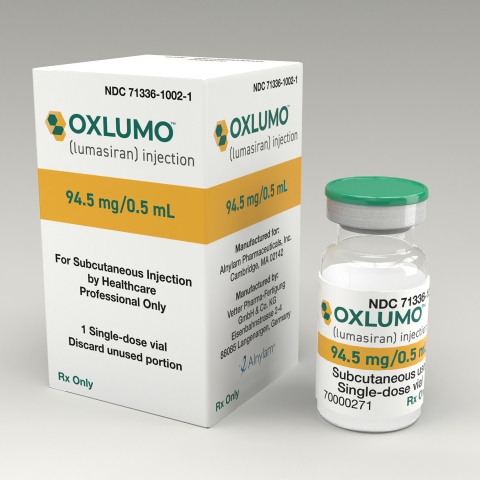
OXLUMO™ (lumasiran) packaging and product vial (Photo: Business Wire)

OXLUMO™ (lumasiran) packaging and product vial (Photo: Business Wire)

“The approval of OXLUMO is a further testament to the impact RNAi therapeutics can have in transforming the treatment of severe, life-threatening diseases like PH1. Results from the ILLUMINATE-A and ILLUMINATE-B studies demonstrate that OXLUMO addresses the underlying pathophysiology of PH1 in adults, children and infants, and we believe this newly approved medicine has the potential to change the course of this progressive disease,” said Akshay Vaishnaw, M.D., Ph.D., President of R&D at Alnylam. “OXLUMO marks our third FDA approval in less than three years, positioning us to meet or exceed our Alnylam 2020 strategy and goals, and further highlighting the productivity of our RNAi platform and the speed at which we can bring innovative medicines to patients. For patients and families impacted by PH1, this is an historic moment, as OXLUMO represents the first, targeted therapeutic option available to them. We are grateful to all the investigators, staff and patients who participated in the ILLUMINATE clinical studies, and to their families, caregivers and patient advocates. This moment is what we all had hoped for.”

The FDA approval of OXLUMO was primarily based on positive results from the randomized, double-blind, placebo-controlled ILLUMINATE-A Phase 3 study, with results presented in June 2020 at the 57th European Renal Association – European Dialysis and Transplant Association Virtual Congress. The FDA also took into consideration positive interim results from the single-arm, open-label ILLUMINATE-B Phase 3 pediatric study. Primary analysis results from the ILLUMINATE-B study were presented in October 2020 at the virtual American Society of Nephrology Annual Congress.

In ILLUMINATE-A, the efficacy and safety of OXLUMO were evaluated in 39 patients ages six and older with relatively preserved renal function (estimated glomerular filtration rate [eGFR] at or above 30 mL/min/1.73m2) and a documented diagnosis of PH1. The study, conducted in eight countries around the world, is the largest interventional study conducted specifically in PH1. Patients were randomized 2:1 to receive three monthly doses of OXLUMO or placebo at 3 mg/kg followed by a quarterly dosing regimen. The study showed that OXLUMO met its primary endpoint, percent change in 24-hour urinary oxalate (corrected for body surface area and averaged from months three to six). Specifically, treatment with OXLUMO resulted in a 65 percent mean reduction in urinary oxalate relative to baseline versus 12 percent reduction reported in response to placebo, resulting in a mean treatment difference of 53 percent relative to placebo (p=1.7×10⁻¹⁴). In addition, OXLUMO achieved statistically significant results for all six tested secondary endpoints, including the proportion of patients achieving urinary oxalate levels at or below upper limit of normal1 (13/25 patients or 52 percent; p=0.001) and at or below 1.5x upper limit of normal2 (21/25 patients or 84 percent; p=8.3 x 10⁻⁷), compared with none (0/13) of the patients receiving placebo. During the primary analysis period, OXLUMO demonstrated an encouraging safety and tolerability profile, with no serious or severe adverse events. The most common adverse reaction was ISRs (reported in at least 20 percent of patients); ISRs occurred at various time points during the study period and included erythema, pain, pruritus, and swelling. These symptoms were generally mild and resolved within one day of the injection and did not lead to discontinuation of treatment.

In ILLUMINATE-B, a study in PH1 patients under the age of six with relatively preserved renal function (eGFR above 45 mL/min/1.73m2), OXLUMO was evaluated in 18 patients during the primary analysis, including infants as young as three months old. It was administered according to a weight-based dosing regimen across three body weight categories (less than 10 kg; 10 to less than 20 kg, and 20 kg or higher). In the primary analysis, OXLUMO demonstrated a 72 percent mean reduction in spot urinary oxalate:creatinine ratio from baseline to month six (averaged from months three to six) – the primary endpoint of the study. The reduction of oxalate was consistent across all three body weight categories. In addition, OXLUMO demonstrated positive results across secondary endpoints, including additional measures of oxalate. There were no serious or severe adverse events related to study drug, and the overall safety and tolerability profile of OXLUMO was consistent with that observed in the ILLUMINATE-A pivotal study.

“PH1 patients experience progressive and often inevitable decline in kidney function. As the disease advances, so does the risk of end-stage kidney disease and systemic spread of oxalate beyond the kidneys endangering other organs, including the eyes, bones, skin and heart. This condition, systemic oxalosis, leads to multi-organ dysfunction and death. The age of onset, rate of disease progression, and associated clinical manifestations can vary significantly from patient to patient, even among members of the same family, making PH1 a particularly challenging condition to diagnose and treat. Until today, there had been no approved nonsurgical treatment options available that curb oxalate overproduction in patients with PH1, with liver transplantation being the only preemptive treatment approach to address the underlying metabolic defect in these patients,” said Jeffrey M. Saland, M.D., Professor and Chief, Pediatric Nephrology and Hypertension, Jack and Lucy Clark Department of Pediatrics, Mount Sinai Kravis Children’s Hospital, New York City and Investigator on the ILLUMINATE-A trial. “The consistent efficacy and safety profile of OXLUMO demonstrated in the ILLUMINATE-A and -B trials both in adults and children from as young as a few months old, combined with an infrequent dosing regimen that leads to rapid and sustained reduction of oxalate production, make OXLUMO an attractive therapeutic option to reduce the oxalate burden responsible for the severe clinical manifestations that individuals suffer due to PH1.”

“Many people impacted by PH1 face persistent anxiety related to the unpredictable nature of their condition, in terms of the uncertainty of how quickly their disease may progress, and the prospect of needing intensive dialysis and a kidney/liver transplant that threaten their physical, emotional and financial health,” said Kim Hollander, Executive Director of the Oxalosis and Hyperoxaluria Foundation. “The FDA approval of OXLUMO represents a new path forward for many, providing an effective treatment option and a sense of hope.”

“PH1 has had a profound impact on my son’s life from a physical, emotional and social standpoint. As a young boy, it has been draining for him to be constantly in pain, live through countless kidney stones – experiencing them on a regular basis – have limited control of his body, miss out on school and not be able to participate in sports,” said Amy Bowders, the mother and caregiver of a 12-year old boy diagnosed with PH1. “With the approval of OXLUMO, we are truly hopeful and optimistic about the future for patients affected by PH1.”

OXLUMO is expected to be available for shipment to healthcare providers in the U.S. by year-end. HCPs can initiate the process now by visiting www.AlnylamAssist.com and completing and submitting a Start Form.

OXLUMO was reviewed by the FDA under Priority Review and had previously been granted Breakthrough Therapy, Orphan Drug, and Rare Pediatric Disease Designations. With the approval of OXLUMO, the FDA has granted Alnylam a pediatric rare disease priority review voucher that entitles the Company to designate a single new drug application to qualify for a priority review in the future. On November 19, the European Commission granted marketing authorization for OXLUMO for the treatment of PH1 in all age groups, following a positive opinion from the Committee for Medicinal Products for Human Use (CHMP). Lumasiran was previously granted Priority Medicines (PRIME) Designation by the European Medicines Agency (EMA) as well as Orphan Designation in the European Union. Lumasiran was also granted an Accelerated Assessment by the EMA, which is awarded to medicines deemed to be of major public health interest and therapeutic innovation and is designed to bring new treatments to patients more quickly.

The safety and efficacy of OXLUMO are also being evaluated in the ongoing ILLUMINATE-C Phase 3 clinical trial in patients of all ages with advanced PH1, including patients on dialysis. Together, the ILLUMINATE studies comprise a comprehensive clinical development program intended to demonstrate the safety and efficacy of OXLUMO across the full spectrum of patients diagnosed with PH1.

Visit OXLUMO.com for more information, including full Prescribing Information.

Conference Call Information:

Alnylam management will discuss the FDA approval via conference call today, November 24, 2020 at 8:00 a.m. ET. A webcast presentation will also be available on the Investors page of the Company’s website, www.alnylam.com. To access the call, please dial 800-239-9838 (domestic) or +1-323-794-2551 (international) five minutes prior to the start time and refer to conference ID 6976021. A replay of the call will be available beginning at 11:00 a.m. ET on the day of the call. To access the replay, please dial 888-203-1112 (domestic) or +1-719-457-0820 (international) and refer to conference ID 6976021.

Footnotes:

1Normal is defined as urinary oxalate levels at or below the upper limit of normal (ULN; ≤ 0.514 mmol/24 hr/1.73 m2). 2Near-normal is defined as urinary oxalate levels at or below 1.5 x ULN (≤ 0.771 mmol/24 hr/1.73 m2)

IMPORTANT SAFETY INFORMATION

Adverse Reactions

The most common adverse reaction that occurred in patients treated with OXLUMO was injection site reaction (38%). Symptoms included erythema, pain, pruritus, and swelling.

Pregnancy and Lactation

No data are available on the use of OXLUMO in pregnant women. No data are available on the presence of OXLUMO in human milk or its effects on breastfed infants or milk production. Consider the developmental and health benefits of breastfeeding along with the mother’s clinical need for OXLUMO and any potential adverse effects on the breastfed child from OXLUMO or the underlying maternal condition.

For additional information about OXLUMO, please see the full Prescribing Information.

About OXLUMO™ (lumasiran)

OXLUMO is an RNAi therapeutic targeting hydroxyacid oxidase 1 (HAO1) for the treatment of primary hyperoxaluria type 1 (PH1) to lower urinary oxalate levels in pediatric and adult patients. HAO1 encodes glycolate oxidase (GO), an enzyme upstream of the disease-causing defect in PH1. OXLUMO works by degrading HAO1 messenger RNA and reducing the synthesis of GO, which inhibits hepatic production of oxalate – the toxic metabolite responsible for the clinical manifestations of PH1. In the pivotal ILLUMINATE-A study, OXLUMO was shown to significantly reduce levels of urinary oxalate relative to placebo, with the majority of patients reaching normal or near-normal levels. Injection site reactions (ISRs) were the most common drug-related adverse reaction. In the ILLUMINATE-B pediatric Phase 3 study, OXLUMO demonstrated an efficacy and safety profile consistent to that observed in ILLUMINATE-A. OXLUMO utilizes Alnylam’s Enhanced Stabilization Chemistry (ESC)-GalNAc conjugate technology designed to increase potency and durability. OXLUMO is administered via subcutaneous injection once monthly for three months, then once quarterly thereafter at a dose based on actual body weight. For patients who weigh less than 10 kg, ongoing dosing remains monthly. OXLUMO should be administered by a healthcare professional. For more information about OXLUMO, visit OXLUMO.com.

About Primary Hyperoxaluria Type 1 (PH1)

PH1 is an ultra-rare genetic disease that affects an estimated one to three individuals per million in the United States and Europe. PH1 is characterized by oxalate overproduction in the liver. The excess oxalate results in the deposition of calcium oxalate crystals in the kidneys and urinary tract and can lead to the formation of painful and recurrent kidney stones and nephrocalcinosis. Renal damage is caused by a combination of tubular toxicity from oxalate, calcium oxalate deposition in the kidneys, and urinary obstruction by calcium oxalate stones. PH1 is associated with a progressive decline in kidney function, which exacerbates the disease as the excess oxalate can no longer be effectively excreted, resulting in subsequent accumulation and deposition of oxalate in bones, eyes, skin, and heart, leading to severe illness and death. Management options to date were limited to hyperhydration, crystallization inhibitors and, in a minority of patients with a specific genotype, pyridoxine (vitamin B6). These measures do not adequately address oxalate overproduction but instead help to delay inevitable progression to kidney failure and the need for intensive dialysis as a bridge to a dual or sequential liver/kidney transplant. Liver transplantation is the only intervention that addresses the underlying metabolic defect, but is associated with high morbidity and mortality, and life-long immunosuppression. Until today, there were no approved pharmaceutical therapies for PH1.

About RNAi

RNAi (RNA interference) is a natural cellular process of gene silencing that represents one of the most promising and rapidly advancing frontiers in biology and drug development today. Its discovery has been heralded as “a major scientific breakthrough that happens once every decade or so,” and was recognized with the award of the 2006 Nobel Prize for Physiology or Medicine. By harnessing the natural biological process of RNAi occurring in our cells, a new class of medicines, known as RNAi therapeutics, is now a reality. Small interfering RNA (siRNA), the molecules that mediate RNAi and comprise Alnylam’s RNAi therapeutic platform, function upstream of today’s medicines by potently silencing messenger RNA (mRNA) – the genetic precursors – that encode for disease-causing or disease pathway proteins, thus preventing them from being made. This is a revolutionary approach with the potential to transform the care of patients with genetic and other diseases.

About Alnylam Pharmaceuticals

Alnylam (Nasdaq:ALNY) is leading the translation of RNA interference (RNAi) into a whole new class of innovative medicines with the potential to transform the lives of people afflicted with rare genetic, cardio-metabolic, hepatic infectious, and central nervous system (CNS)/ocular diseases. Based on Nobel Prize-winning science, RNAi therapeutics represent a powerful, clinically validated approach for the treatment of a wide range of severe and debilitating diseases. Founded in 2002, Alnylam is delivering on a bold vision to turn scientific possibility into reality, with a robust RNAi therapeutics platform. Alnylam’s commercial RNAi therapeutic products are ONPATTRO® (patisiran), GIVLAARI® (givosiran), and OXLUMO™ (lumasiran). Alnylam has a deep pipeline of investigational medicines, including six product candidates that are in late-stage development. Alnylam is executing on its “Alnylam 2020” strategy of building a multi-product, commercial-stage biopharmaceutical company with a sustainable pipeline of RNAi-based medicines to address the needs of patients who have limited or inadequate treatment options. Alnylam is headquartered in Cambridge, MA. For more information about our people, science and pipeline, please visit www.alnylam.com and engage with us on Twitter at @Alnylam or on LinkedIn.

Alnylam Forward Looking Statements

Various statements in this release concerning Alnylam’s future expectations, plans and prospects, including, without limitation, Alnylam’s views with respect to the safety and efficacy of OXLUMO as demonstrated in the ILLUMINATE-A and ILLUMINATE-B Phase 3 studies and the potential for OXLUMO to address the underlying pathophysiology of PH1 in adults, children and, infants and change the course of this progressive disease, the potential for OXLUMO to be an attractive therapeutic option that can reduce the oxalate burden responsible for the severe clinical manifestations associated with PH1, Alnylam’s expectation regarding the timing for commercial availability of OXLUMO in the U.S. and Alnylam’s plans, assuming additional regulatory approvals, to bring lumasiran to patients with PH1 around the world, and expectations regarding the potential for Alnylam to meet or exceed its “Alnylam 2020” guidance for the advancement and commercialization of RNAi therapeutics, constitute forward-looking statements for the purposes of the safe harbor provisions under The Private Securities Litigation Reform Act of 1995. Actual results and future plans may differ materially from those indicated by these forward-looking statements as a result of various important risks, uncertainties and other factors, including, without limitation: the direct or indirect impact of the COVID-19 global pandemic or any future pandemic, such as the scope and duration of the outbreak, government actions and restrictive measures implemented in response, material delays in diagnoses of rare diseases, initiation or continuation of treatment for diseases addressed by Alnylam products, or in patient enrollment in clinical trials, potential supply chain disruptions, and other potential impacts to Alnylam’s business, the effectiveness or timeliness of steps taken by Alnylam to mitigate the impact of the pandemic, and Alnylam’s ability to execute business continuity plans to address disruptions caused by the COVID-19 or any future pandemic; Alnylam’s ability to discover and develop novel drug candidates and delivery approaches and successfully demonstrate the efficacy and safety of its product candidates; the pre-clinical and clinical results for its product candidates, which may not be replicated or continue to occur in other subjects or in additional studies or otherwise support further development of product candidates for a specified indication or at all; actions or advice of regulatory agencies, which may affect the design, initiation, timing, continuation and/or progress of clinical trials or result in the need for additional pre-clinical and/or clinical testing; delays, interruptions or failures in the manufacture and supply of its product candidates or its other marketed products, including OXLUMO; obtaining, maintaining and protecting intellectual property; intellectual property matters including potential patent litigation relating to its platform, products or product candidates; obtaining regulatory approval for its product candidates, and maintaining regulatory approval and obtaining pricing and reimbursement for its products, including ONPATTRO, GIVLAARI, and OXLUMO; progress in continuing to establish an ex-United States infrastructure; successfully launching, marketing and selling its approved products globally, including ONPATTRO, GIVLAARI, and OXLUMO, and achieving net product revenues for ONPATTRO within its revised expected range during 2020; Alnylam’s ability to successfully expand the indication for ONPATTRO in the future; competition from others using technology similar to Alnylam’s and others developing products for similar uses; Alnylam’s ability to manage its growth and operating expenses within the ranges of guidance provided by Alnylam through the implementation of further discipline in operations to moderate spend and its ability to achieve a self-sustainable financial profile in the future without the need for future equity financing; Alnylam’s ability to establish and maintain strategic business alliances and new business initiatives; Alnylam’s dependence on third parties, including Regeneron, for development, manufacture and distribution of certain products, including eye and CNS products, and Vir for the development of ALN-COV and other potential RNAi therapeutics targeting SARS-CoV-2 and host factors for SARS-CoV-2; the outcome of litigation; the risk of government investigations; and unexpected expenditures; as well as those risks more fully discussed in the “Risk Factors” filed with Alnylam’s most recent Quarterly Report on Form 10-Q filed with the Securities and Exchange Commission (SEC) and in other filings that Alnylam makes with the SEC. In addition, any forward-looking statements represent Alnylam’s views only as of today and should not be relied upon as representing its views as of any subsequent date. Alnylam explicitly disclaims any obligation, except to the extent required by law, to update any forward-looking statements.

Alnylam Pharmaceuticals, Inc.

Christine Regan Lindenboom

(Investors and Media)

+1-617-682-4340

Josh Brodsky

(Investors)

+1-617-551-8276

KEYWORDS: Massachusetts United States North America

INDUSTRY KEYWORDS: Health FDA Clinical Trials Research Science Biotechnology

MEDIA:

Logo
Logo
Logo
Logo
Photo
Photo
OXLUMO™ (lumasiran) packaging and product vial (Photo: Business Wire)

Senet’s Dave Kjendal Receives Lifetime Achievement Award from the LoRa Alliance®

Technology Executive Recognized for Leadership and Outstanding Contribution to the Development and Delivery of LoRaWAN® Standard and Networking Solutions

PORTSMOUTH, N.H., Nov. 24, 2020 (GLOBE NEWSWIRE) — Senet, Inc., a leading provider of cloud-based software and services platforms that enable global connectivity and on-demand network build-outs for the Internet of Things (IoT), today announced CTO and COO, Dave Kjendal has been recognized with a Lifetime Achievement Award for his contribution to the LoRa Alliance®. Regarded as one of the leading technologists in the Low-Power Wide-Area Network (LPWAN) market, Kjendal has been a highly active leader within the LoRa Alliance since its inception in 2015, advancing both the technical capabilities and business value of the LoRaWAN® standard.

Earlier this year, Kjendal was named to the LoRa Alliance Board of Directors and currently holds positions as the Chair of the Regional Parameters Working Group and Chair of the Risk Mitigation Task Force. Kjendal has chaired the Strategy Committee and held leadership positions on the Technical Committee, Certification Committee, Regulatory Working Group, Security Working Group, FUOTA Working Group, and the Roadmap Working Group. In these roles, Kjendal has helped define the technical direction of the LoRa Alliance, executed strategies contributing to critical aspects of the definition and timely output of LoRaWAN specifications, and led large multiyear technology projects.

“It is a great honor to receive this award and to be recognized by my peers in this dynamic and rapidly growing market,” said Dave Kjendal, CTO and COO at Senet. “I am very appreciative of the opportunity I’ve had to contribute to the growth of the LoRa Alliance and to help drive the global adoption of the LoRaWAN standard. I look forward to continuing to build on the organization’s success and tackle the technical and business challenges in today’s evolving network landscape.”

Kjendal’s leadership has also contributed significantly to the adoption of LoRaWAN throughout the IoT ecosystem. At Senet, Kjendal has driven the architecture of key technological innovations, including the company’s cloud-based network operating system and highly differentiated deployment and management models for how IoT services are delivered and monetized at mass scale. These innovations are implemented today to manage the largest public carrier-grade LoRaWAN network in the United States and Senet’s Low Power Wide Area Virtual Network (LVN™), a network architecture that supports the rapid build out of pervasive and unified LoRaWAN connectivity for global device connectivity. Earlier this year, Kjendal was awarded patents in the telecommunications infrastructure market for IoT Network Controller / Server and System architecture and the Senet LVN.

“I am proud to honor Dave with this year’s lifetime achievement award,” said Donna Moore, CEO and chairwoman of the LoRa Alliance. “He has been contributing to the LoRa Alliance since the beginning and continues to serve in a variety of roles, making numerous contributions to advance the LoRaWAN standard. I am excited to congratulate him on this well-earned recognition and look forward to his continued guidance as a member of our Board of Directors.”

Operating as the global association of companies backing the open LoRaWAN standard for low-power wide-area networks, the LoRa Alliance is one of the largest and fastest-growing alliances in the technology sector. According to industry research firm IoT Analytics, LoRaWAN has become the most adopted LPWAN technology to date, representing more than one third of all deployments globally. The market is expected to grow at an annualized rate of 42% over the coming 5 years.

About Senet, Inc.

Senet develops cloud-based software and services used by Network Operators, Application Developers, and System Integrators for the on-demand deployment of Internet of Things (IoT) networks. In addition to industrial and commercial applications, Senet has designed smart meter networks for many municipal water utility districts across North America, representing millions of households. With a multi-year head start over competing Low Power Wide Area Network technologies, Senet offers technology in over eighty countries and owns and operates the largest publicly available LoRaWAN network in the United States. Our disruptive go-to-market models and critical technical advantages have helped us become a leading connectivity provider with recognized expertise in building and operating global IoT networks. For additional information, visit www.senetco.com.

LoRa Alliance® and LoRaWAN® are marks used under license from the LoRa Alliance®.

Senet Contact:
Betsey Rogers                                
BridgeView Marketing                
603-821-0809
[email protected]

A photo accompanying this announcement is available at https://www.globenewswire.com/NewsRoom/AttachmentNg/5b40be2f-e65f-42aa-bd6a-bb88b28d8399


Bicycle Therapeutics to Present at the 2020 Piper Sandler Healthcare Conference

Bicycle Therapeutics to Present at the 2020 Piper Sandler Healthcare Conference

CAMBRIDGE, England & BOSTON–(BUSINESS WIRE)–Bicycle Therapeutics plc (NASDAQ: BCYC), a biotechnology company pioneering a new and differentiated class of therapeutics based on its proprietary bicyclic peptide (Bicycle®) technology, today announced that management will participate in a fireside chat at the 2020 Piper Sandler Healthcare Conference, which is scheduled to take place from December 1 – 3, 2020. The conference will be held in a virtual meeting format.

A recording of the fireside chat will be accessible in the Investors & Media section of Bicycle’s website at www.bicycletherapeutics.coma at 9:00 a.m. ET on Tuesday, December 1. An archived replay of the webcast will be available for 90 days following the fireside chat date.

About Bicycle Therapeutics

Bicycle Therapeutics (NASDAQ: BCYC) is a clinical-stage biopharmaceutical company developing a novel class of medicines, referred to as Bicycles®, for diseases that are underserved by existing therapeutics. Bicycles are fully synthetic short peptides constrained with small molecule scaffolds to form two loops that stabilize their structural geometry. This constraint facilitates target binding with high affinity and selectivity, making Bicycles attractive candidates for drug development. Bicycle’s lead product candidate, BT1718, a Bicycle Toxin Conjugate (BTC) that targets MT1-MMP, is being investigated in an ongoing Phase I/IIa clinical trial in collaboration with the Centre for Drug Development of Cancer Research UK. Bicycle is also evaluating BT5528, a second-generation BTC targeting EphA2, in a Company-sponsored Phase I/II study. BT8009 is a BTC targeting Nectin-4, a well-validated tumor antigen, and is also currently being evaluated a Company-sponsored Phase I/II trial. Bicycle is headquartered in Cambridge, UK with many key functions and members of its leadership team located in Lexington, MA. For more information, visit bicycletherapeutics.com.

Investor and Media Contact:

Argot Partners

Maeve Conneighton or Eleanor Barisser

[email protected]

+1-212-600-1902

KEYWORDS: Massachusetts Europe United States United Kingdom North America

INDUSTRY KEYWORDS: Biotechnology Health Pharmaceutical Clinical Trials Oncology

MEDIA:

Bristol Myers Squibb Receives European Commission Approval for Opdivo (nivolumab) as Second-Line Treatment for Unresectable Advanced, Recurrent or Metastatic Esophageal Squamous Cell Carcinoma

Bristol Myers Squibb Receives European Commission Approval for Opdivo (nivolumab) as Second-Line Treatment for Unresectable Advanced, Recurrent or Metastatic Esophageal Squamous Cell Carcinoma

First immunotherapy to be approved for a gastroesophageal cancer in the European Union

Approval based on Phase 3 ATTRACTION-3 trial showing statistically significant and clinically meaningful improvement in overall survival compared to chemotherapy

PRINCETON, N.J.–(BUSINESS WIRE)–Bristol Myers Squibb (NYSE: BMY) today announced that the European Commission (EC) has approved Opdivo (nivolumab) for the treatment of adults with unresectable advanced, recurrent or metastatic esophageal squamous cell carcinoma (ESCC) after prior fluoropyrimidine- and platinum-based combination chemotherapy.

The EC’s decision is based on results from the Phase 3 ATTRACTION-3 trial, a study sponsored by Ono Pharmaceutical Co., Ltd. of Japan, which demonstrated a statistically significant and clinically meaningful improvement in overall survival (OS) in patients who received Opdivo versus chemotherapy. The safety profile for Opdivo was favorable compared with chemotherapy and consistent with previously reported studies of Opdivo in other solid tumors.

“Today’s approval marks a critically important milestone for those living with esophageal squamous cell carcinoma, as this is the first time an immunotherapy treatment option has been approved in the European Union for this patient population,” said Ian M. Waxman, M.D., development lead, gastrointestinal cancers, Bristol Myers Squibb. “We are proud of our work in advancing treatment options for people living with upper gastrointestinal cancers, and we look forward to working with European stakeholders to bring Opdivo to more eligible patients who may benefit.”

In addition to this approval in the EU, Opdivo has been approved in five countries, including the United States and Japan, for the second-line treatment of patients with unresectable advanced, recurrent or metastatic ESCC. Bristol Myers Squibb thanks the patients and investigators involved in the ATTRACTION-3 clinical trial for their important contributions.

ATTRACTION-3 Efficacy and Safety Results

In the Phase 3 ATTRACTION-3 trial, which had a primary endpoint of OS:

  • Opdivo reduced risk of death by 23%, compared to chemotherapy alone [Hazard Ratio (HR) 0.77; 95% Confidence Interval (CI): 0.62 to 0.96; p=0.019].
  • Median OS with Opdivo was 10.9 months (95% CI: 9.2 to 13.3) compared to 8.4 months (95% CI: 7.2 to 9.9) with chemotherapy alone, demonstrating a 2.5-month improvement.
  • The Opdivo arm showed 12- and 18-month OS rates of 47% (95% CI: 40 to 54) and 31% (95% CI: 24 to 37), respectively, versus 34% (95% CI: 28 to 41) and 21% (95% CI: 15 to 27) among patients in the chemotherapy arm. Survival benefit with Opdivo was observed regardless of tumor PD-L1 expression levels.
  • Objective response rates (ORR) between the Opdivo and chemotherapy arms were comparable at 19% (95% CI: 14 to 26) and 22% (95% CI: 15 to 29), respectively.
  • Median duration of response (DoR) for patients was substantially increased in the Opdivo arm at 6.9 months (95% CI: 5.4 to 11.1) versus 3.9 months (95% CI: 2.8 to 4.2) in the chemotherapy arm.
  • An exploratory analysis of patient-reported outcomes showed significant overall improvement in quality of life with Opdivo versus chemotherapy. Fewer treatment-related adverse events (TRAEs) were reported with Opdivo versus chemotherapy, with a rate of 66% for any grade TRAEs in patients receiving Opdivo compared to 95% for those patients receiving chemotherapy. Patients in the Opdivo arm also experienced a lower incidence of Grade 3 or 4 TRAEs compared to those in the chemotherapy arm (18% versus 63%), and the percentage of patients experiencing TRAEs leading to discontinuation was the same in both arms (9%).

About ATTRACTION-3

ATTRACTION-3 (ONO-4538-24/CA209-473; NCT02569242) is a Phase 3, multi-center, randomized, open-label global study, evaluating Opdivo versus chemotherapy (docetaxel or paclitaxel) for patients with esophageal cancer refractory or intolerant to first-line combination therapy with fluoropyrimidine- and platinum-based drugs. Patient enrollment occurred predominantly in Asia, with the remainder in the United States and Europe. Patients were treated until disease progression or unacceptable toxicity. The primary endpoint of the trial was overall survival (OS). Secondary endpoints included investigator-assessed objective response rate (ORR), progression-free survival (PFS), disease control rate, duration of response and safety.

About Esophageal Cancer

Esophageal cancer is the seventh most common cancer and the sixth most common cause of death from cancer worldwide. The five-year relative survival rate is 10% or less for patients diagnosed with metastatic disease. Each year, 53,000 new cases of esophageal cancer are diagnosed in Europe. The two most common types of esophageal cancer are adenocarcinoma and squamous cell carcinoma, the latter accounting for approximately 60% of all esophageal cancer cases diagnosed in Europe. The majority of cases are diagnosed in the advanced setting and impact a patient’s daily life, including their ability to eat and drink.

Bristol Myers Squibb: Creating a Better Future for People with Cancer

Bristol Myers Squibb is inspired by a single vision — transforming people’s lives through science. The goal of the company’s cancer research is to deliver medicines that offer each patient a better, healthier life and to make cure a possibility. Building on a legacy across a broad range of cancers that have changed survival expectations for many, Bristol Myers Squibb researchers are exploring new frontiers in personalized medicine, and through innovative digital platforms, are turning data into insights that sharpen their focus. Deep scientific expertise, cutting-edge capabilities and discovery platforms enable the company to look at cancer from every angle. Cancer can have a relentless grasp on many parts of a patient’s life, and Bristol Myers Squibb is committed to taking actions to address all aspects of care, from diagnosis to survivorship. Because as a leader in cancer care, Bristol Myers Squibb is working to empower all people with cancer to have a better future.

About Opdivo®

Opdivo is a programmed death-1 (PD-1) immune checkpoint inhibitor that is designed to uniquely harness the body’s own immune system to help restore anti-tumor immune response. By harnessing the body’s own immune system to fight cancer, Opdivo has become an important treatment option across multiple cancers.

Opdivo’s leading global development program is based on Bristol Myers Squibb’s scientific expertise in the field of Immuno-Oncology and includes a broad range of clinical trials across all phases, including Phase 3, in a variety of tumor types. To date, the Opdivo clinical development program has treated more than 35,000 patients. The Opdivo trials have contributed to gaining a deeper understanding of the potential role of biomarkers in patient care, particularly regarding how patients may benefit from Opdivo across the continuum of PD-L1 expression.

In July 2014, Opdivo was the first PD-1 immune checkpoint inhibitor to receive regulatory approval anywhere in the world. Opdivo is currently approved in more than 65 countries, including the United States, the European Union, Japan and China. In October 2015, the Company’s Opdivo and Yervoy combination regimen was the first Immuno-Oncology combination to receive regulatory approval for the treatment of metastatic melanoma and is currently approved in more than 50 countries, including the United States and the European Union.

INDICATIONS

OPDIVO® (nivolumab), as a single agent, is indicated for the treatment of patients with unresectable or metastatic melanoma.

OPDIVO® (nivolumab), in combination with YERVOY® (ipilimumab), is indicated for the treatment of patients with unresectable or metastatic melanoma.

OPDIVO® (nivolumab), in combination with YERVOY® (ipilimumab), is indicated for the first-line treatment of adult patients with metastatic non-small cell lung cancer (NSCLC) whose tumors express PD-L1 (≥1%) as determined by an FDA-approved test, with no EGFR or ALK genomic tumor aberrations.

OPDIVO® (nivolumab), in combination with YERVOY® (ipilimumab) and 2 cycles of platinum-doublet chemotherapy, is indicated for the first-line treatment of adult patients with metastatic or recurrent non-small cell lung cancer (NSCLC), with no EGFR or ALK genomic tumor aberrations.

OPDIVO® (nivolumab) is indicated for the treatment of patients with metastatic non-small cell lung cancer (NSCLC) with progression on or after platinum-based chemotherapy. Patients with EGFR or ALK genomic tumor aberrations should have disease progression on FDA-approved therapy for these aberrations prior to receiving OPDIVO.

OPDIVO® (nivolumab) is indicated for the treatment of patients with metastatic small cell lung cancer (SCLC) with progression after platinum-based chemotherapy and at least one other line of therapy. This indication is approved under accelerated approval based on overall response rate and duration of response. Continued approval for this indication may be contingent upon verification and description of clinical benefit in confirmatory trials.

OPDIVO® (nivolumab), in combination with YERVOY® (ipilimumab), is indicated for the first-line treatment of adult patients with unresectable malignant pleural mesothelioma (MPM).

OPDIVO® (nivolumab) is indicated for the treatment of patients with advanced renal cell carcinoma (RCC) who have received prior anti-angiogenic therapy.

OPDIVO® (nivolumab), in combination with YERVOY® (ipilimumab), is indicated for the treatment of patients with intermediate or poor risk, previously untreated advanced renal cell carcinoma (RCC).

OPDIVO® (nivolumab) is indicated for the treatment of adult patients with classical Hodgkin lymphoma (cHL) that has relapsed or progressed after autologous hematopoietic stem cell transplantation (HSCT) and brentuximab vedotin or after 3 or more lines of systemic therapy that includes autologous HSCT. This indication is approved under accelerated approval based on overall response rate. Continued approval for this indication may be contingent upon verification and description of clinical benefit in confirmatory trials.

OPDIVO® (nivolumab) is indicated for the treatment of patients with recurrent or metastatic squamous cell carcinoma of the head and neck (SCCHN) with disease progression on or after platinum-based therapy.

OPDIVO® (nivolumab) is indicated for the treatment of patients with locally advanced or metastatic urothelial carcinoma who have disease progression during or following platinum-containing chemotherapy or have disease progression within 12 months of neoadjuvant or adjuvant treatment with platinum-containing chemotherapy. This indication is approved under accelerated approval based on tumor response rate and duration of response. Continued approval for this indication may be contingent upon verification and description of clinical benefit in confirmatory trials.

OPDIVO® (nivolumab), as a single agent, is indicated for the treatment of adult and pediatric (12 years and older) patients with microsatellite instability-high (MSI-H) or mismatch repair deficient (dMMR) metastatic colorectal cancer (CRC) that has progressed following treatment with a fluoropyrimidine, oxaliplatin, and irinotecan. This indication is approved under accelerated approval based on overall response rate and duration of response. Continued approval for this indication may be contingent upon verification and description of clinical benefit in confirmatory trials.

OPDIVO® (nivolumab), in combination with YERVOY® (ipilimumab), is indicated for the treatment of adults and pediatric patients 12 years and older with microsatellite instability-high (MSI-H) or mismatch repair deficient (dMMR) metastatic colorectal cancer (CRC) that has progressed following treatment with a fluoropyrimidine, oxaliplatin, and irinotecan. This indication is approved under accelerated approval based on overall response rate and duration of response. Continued approval for this indication may be contingent upon verification and description of clinical benefit in confirmatory trials.

OPDIVO® (nivolumab) is indicated for the treatment of patients with hepatocellular carcinoma (HCC) who have been previously treated with sorafenib. This indication is approved under accelerated approval based on overall response rate and duration of response. Continued approval for this indication may be contingent upon verification and description of clinical benefit in the confirmatory trials.

OPDIVO® (nivolumab), in combination with YERVOY® (ipilimumab), is indicated for the treatment of patients with hepatocellular carcinoma (HCC) who have been previously treated with sorafenib. This indication is approved under accelerated approval based on overall response rate and duration of response. Continued approval for this indication may be contingent upon verification and description of clinical benefit in the confirmatory trials.

OPDIVO® (nivolumab) is indicated for the adjuvant treatment of patients with melanoma with involvement of lymph nodes or metastatic disease who have undergone complete resection.

OPDIVO® (nivolumab) is indicated for the treatment of patients with unresectable advanced, recurrent or metastatic esophageal squamous cell carcinoma (ESCC) after prior fluoropyrimidine- and platinum-based chemotherapy.

IMPORTANT SAFETY INFORMATION

Severe and Fatal Immune-Mediated Adverse Reactions

Immune-mediated adverse reactions listed herein may not include all possible severe and fatal immune-mediated adverse reactions.

Immune-mediated adverse reactions, which may be severe or fatal, can occur in any organ system or tissue. While immune-mediated adverse reactions usually manifest during treatment, they can also occur after discontinuation of OPDIVO or YERVOY. Early identification and management are essential to ensure safe use of OPDIVO and YERVOY. Monitor for signs and symptoms that may be clinical manifestations of underlying immune-mediated adverse reactions. Evaluate clinical chemistries including liver enzymes, creatinine, adrenocorticotropic hormone (ACTH) level, and thyroid function at baseline and periodically during treatment with OPDIVO and before each dose of YERVOY. In cases of suspected immune-mediated adverse reactions, initiate appropriate workup to exclude alternative etiologies, including infection. Institute medical management promptly, including specialty consultation as appropriate.

Withhold or permanently discontinue OPDIVO and YERVOY depending on severity (please see section 2 Dosage and Administration in the accompanying Full Prescribing Information). In general, if OPDIVO or YERVOY interruption or discontinuation is required, administer systemic corticosteroid therapy (1 to 2 mg/kg/day prednisone or equivalent) until improvement to Grade 1 or less. Upon improvement to Grade 1 or less, initiate corticosteroid taper and continue to taper over at least 1 month. Consider administration of other systemic immunosuppressants in patients whose immune-mediated adverse reactions are not controlled with corticosteroid therapy. Toxicity management guidelines for adverse reactions that do not necessarily require systemic steroids (e.g., endocrinopathies and dermatologic reactions) are discussed below.

Immune-Mediated Pneumonitis

OPDIVO and YERVOY can cause immune-mediated pneumonitis. The incidence of pneumonitis is higher in patients who have received prior thoracic radiation. In patients receiving OPDIVO monotherapy, immune-mediated pneumonitis occurred in 3.1% (61/1994) of patients, including Grade 4 (<0.1%), Grade 3 (0.9%), and Grade 2 (2.1%). In HCC patients receiving OPDIVO 1 mg/kg with YERVOY 3 mg/kg every 3 weeks, immune-mediated pneumonitis occurred in 10% (5/49) of patients. In patients receiving OPDIVO 3 mg/kg with YERVOY 1 mg/kg every 3 weeks, immune-mediated pneumonitis occurred in 3.9% (26/666) of patients, including Grade 3 (1.4%) and Grade 2 (2.6%). In NSCLC patients receiving OPDIVO 3 mg/kg every 2 weeks with YERVOY 1 mg/kg every 6 weeks, immune-mediated pneumonitis occurred in 9% (50/576) of patients, including Grade 4 (0.5%), Grade 3 (3.5%), and Grade 2 (4.0%). Four patients (0.7%) died due to pneumonitis.

Immune-Mediated Colitis

OPDIVO and YERVOY can cause immune-mediated colitis, which may be fatal. A common symptom included in the definition of colitis was diarrhea. Cytomegalovirus (CMV) infection/reactivation has been reported in patients with corticosteroid-refractory immune-mediated colitis. In cases of corticosteroid-refractory colitis, consider repeating infectious workup to exclude alternative etiologies. In patients receiving OPDIVO monotherapy, immune-mediated colitis occurred in 2.9% (58/1994) of patients, including Grade 3 (1.7%) and Grade 2 (1%). In patients receiving OPDIVO 1 mg/kg with YERVOY 3 mg/kg every 3 weeks, immune-mediated colitis occurred in 25% (115/456) of patients, including Grade 4 (0.4%), Grade 3 (14%) and Grade 2 (8%). In patients receiving OPDIVO 3 mg/kg with YERVOY 1 mg/kg every 3 weeks, immune-mediated colitis occurred in 9% (60/666) of patients, including Grade 3 (4.4%) and Grade 2 (3.7%).

In a separate Phase 3 trial of YERVOY 3 mg/kg monotherapy, immune-mediated colitis occurred in 12% (62/511) of patients, including Grade 3-5 (7%) and Grade 2 (5%).

Immune-Mediated Hepatitis

OPDIVO and YERVOY can cause immune-mediated hepatitis. In patients receiving OPDIVO monotherapy, immune-mediated hepatitis occurred in 1.8% (35/1994) of patients, including Grade 4 (0.2%), Grade 3 (1.3%), and Grade 2 (0.4%). In patients receiving OPDIVO 1 mg/ kg with YERVOY 3 mg/kg every 3 weeks, immune-mediated hepatitis occurred in 15% (70/456) of patients, including Grade 4 (2.4%), Grade 3 (11%), and Grade 2 (1.8%). In patients receiving OPDIVO 3 mg/kg with YERVOY 1 mg/kg every 3 weeks, immune-mediated hepatitis occurred in 7% (48/666) of patients, including Grade 4 (1.2%), Grade 3 (4.9%), and Grade 2 (0.4%).

In a separate Phase 3 trial of YERVOY 3 mg/kg monotherapy, immune-mediated hepatitis occurred in 4.1% (21/511) of patients, including Grade 3-5 (1.6%) and Grade 2 (2.5%).

Immune-Mediated Endocrinopathies

OPDIVO and YERVOY can cause primary or secondary adrenal insufficiency, immune-mediated hypophysitis, immune-mediated thyroid disorders, and Type 1 diabetes mellitus, which can present with diabetic ketoacidosis. Withhold OPDIVO and YERVOY depending on severity (please see section 2 Dosage and Administration in the accompanying Full Prescribing Information). For Grade 2 or higher adrenal insufficiency, initiate symptomatic treatment, including hormone replacement as clinically indicated. Hypophysitis can present with acute symptoms associated with mass effect such as headache, photophobia, or visual field defects. Hypophysitis can cause hypopituitarism; initiate hormone replacement as clinically indicated. Thyroiditis can present with or without endocrinopathy. Hypothyroidism can follow hyperthyroidism; initiate hormone replacement or medical management as clinically indicated. Monitor patients for hyperglycemia or other signs and symptoms of diabetes; initiate treatment with insulin as clinically indicated.

In patients receiving OPDIVO monotherapy, adrenal insufficiency occurred in 1% (20/1994), including Grade 3 (0.4%) and Grade 2 (0.6%). In patients receiving OPDIVO 1 mg/kg with YERVOY 3 mg/kg every 3 weeks, adrenal insufficiency occurred in 8% (35/456), including Grade 4 (0.2%), Grade 3 (2.4%), and Grade 2 (4.2%). In patients receiving OPDIVO 3 mg/kg with YERVOY 1 mg/kg every 3 weeks, adrenal insufficiency occurred in 7% (48/666) of patients, including Grade 4 (0.3%), Grade 3 (2.5%), and Grade 2 (4.1%).

In patients receiving OPDIVO monotherapy, hypophysitis occurred in 0.6% (12/1994) of patients, including Grade 3 (0.2%) and Grade 2 (0.3%). In patients receiving OPDIVO 1 mg/kg with YERVOY 3 mg/kg every 3 weeks, hypophysitis occurred in 9% (42/456), including Grade 3 (2.4%) and Grade 2 (6%). In patients receiving OPDIVO 3 mg/kg with YERVOY 1 mg/kg every 3 weeks, hypophysitis occurred in 4.4% (29/666) of patients, including Grade 4 (0.3%), Grade 3 (2.4%), and Grade 2 (0.9%).

In patients receiving OPDIVO monotherapy, thyroiditis occurred in 0.6% (12/1994) of patients, including Grade 2 (0.2%). In patients receiving OPDIVO 3 mg/kg with YERVOY 1 mg/kg every 3 weeks, thyroiditis occurred in 2.7% (22/666) of patients, including Grade 3 (4.5%) and Grade 2 (2.2%).

In patients receiving OPDIVO monotherapy, hyperthyroidism occurred in 2.7% (54/1994) of patients, including Grade 3 (<0.1%) and Grade 2 (1.2%). In patients receiving OPDIVO 1 mg/kg with YERVOY 3 mg/kg every 3 weeks, hyperthyroidism occurred in 9% (42/456) of patients, including Grade 3, (0.9%) and Grade 2 (4.2%). In patients receiving OPDIVO 3 mg/kg with YERVOY 1 mg/kg every 3 weeks, hyperthyroidism occurred in 12% (80/666) of patients, including Grade 3 (0.6%), and Grade 2 (4.5%).

In patients receiving OPDIVO monotherapy, hypothyroidism occurred in 8% (163/1994) of patients, including Grade 3 (0.2%) and Grade 2 (4.8%). In patients receiving OPDIVO 1 mg/kg with YERVOY 3 mg/kg every 3 weeks, hypothyroidism occurred in 20% (91/456) of patients, including Grade 3 (0.4%) and Grade 2 (11%). In patients receiving OPDIVO 3 mg/kg with YERVOY 1 mg/kg every 3 weeks, hypothyroidism occurred in 18% (122/666) of patients, including Grade 3 (0.6%) and Grade 2 (11%).

In patients receiving OPDIVO monotherapy, diabetes occurred in 0.9% (17/1994) of patients, including Grade 3 (0.4%) and Grade 2 (0.3%), and 2 cases of diabetic ketoacidosis. In patients receiving OPDIVO 3 mg/kg with YERVOY 1 mg/kg every 3 weeks, diabetes occurred in 2.7% (15/666) of patients, including Grade 4 (0.6%), Grade 3 (0.3%), and Grade 2 (0.9%).

In a separate Phase 3 trial of YERVOY 3 mg/kg monotherapy, Grade 2-5 immune-mediated endocrinopathies occurred in 4% (21/511) of patients. Severe to life-threatening (Grade 3-4) endocrinopathies occurred in 9 (1.8%) patients. All 9 patients had hypopituitarism, and some had additional concomitant endocrinopathies such as adrenal insufficiency, hypogonadism, and hypothyroidism. Six of the 9 patients were hospitalized for severe endocrinopathies. Moderate (Grade 2) endocrinopathy occurred in 12 patients (2.3%), including hypothyroidism, adrenal insufficiency, hypopituitarism, hyperthyroidism and Cushing’s syndrome.

Immune-Mediated Nephritis with Renal Dysfunction

OPDIVO and YERVOY can cause immune-mediated nephritis. In patients receiving OPDIVO monotherapy, immune-mediated nephritis and renal dysfunction occurred in 1.2% (23/1994) of patients, including Grade 4 (<0.1%), Grade 3 (0.5%), and Grade 2 (0.6%). In patients receiving OPDIVO 3 mg/kg with YERVOY 1 mg/kg every 3 weeks, immune-mediated nephritis with renal dysfunction occurred in 4.1% (27/666) of patients, including Grade 4 (0.6%), Grade 3 (1.1%), and Grade 2 (2.2%).

Immune-Mediated Dermatologic Adverse Reactions

OPDIVO can cause immune-mediated rash or dermatitis. Exfoliative dermatitis, including Stevens-Johnson syndrome (SJS), toxic epidermal necrolysis (TEN), and drug rash with eosinophilia and systemic symptoms (DRESS) has occurred with PD-1/PD-L1 blocking antibodies. Topical emollients and/or topical corticosteroids may be adequate to treat mild to moderate nonexfoliative rashes.

YERVOY can cause immune-mediated rash or dermatitis, including bullous and exfoliative dermatitis, SJS, TEN, and DRESS. Topical emollients and/or topical corticosteroids may be adequate to treat mild to moderate non-bullous/ exfoliative rashes.

Withhold or permanently discontinue OPDIVO and YERVOY depending on severity (please see section 2 Dosage and Administration in the accompanying Full Prescribing Information).

In patients receiving OPDIVO monotherapy, immune-mediated rash occurred in 9% (171/1994) of patients, including Grade 3 (1.1%) and Grade 2 (2.2%). In patients receiving OPDIVO 1 mg/kg with YERVOY 3 mg/kg every 3 weeks, immune-mediated rash occurred in 28% (127/456) of patients, including Grade 3 (4.8%) and Grade 2 (10%). In patients receiving OPDIVO 3 mg/kg with YERVOY 1 mg/kg every 3 weeks, immune-mediated rash occurred in 16% (108/666) of patients, including Grade 3 (3.5%) and Grade 2 (4.2%).

In a separate Phase 3 trial of YERVOY 3 mg/kg monotherapy, immune-mediated rash occurred in 15% (76/511) of patients, including Grade 3-5 (2.5%) and Grade 2 (12%).

Other Immune-Mediated Adverse Reactions

The following clinically significant immune-mediated adverse reactions occurred at an incidence of <1% (unless otherwise noted) in patients who received OPDIVO monotherapy or OPDIVO in combination with YERVOY or were reported with the use of other PD-1/PD-L1 blocking antibodies. Severe or fatal cases have been reported for some of these adverse reactions: cardiac/vascular: myocarditis, pericarditis, vasculitis; nervous system: meningitis, encephalitis, myelitis and demyelination, myasthenic syndrome/myasthenia gravis (including exacerbation), Guillain-Barré syndrome, nerve paresis, autoimmune neuropathy; ocular: uveitis, iritis, and other ocular inflammatory toxicities can occur; gastrointestinal: pancreatitis to include increases in serum amylase and lipase levels, gastritis, duodenitis; musculoskeletal and connective tissue: myositis/polymyositis, rhabdomyolysis, and associated sequelae including renal failure, arthritis, polymyalgia rheumatica; endocrine: hypoparathyroidism; other (hematologic/immune): hemolytic anemia, aplastic anemia, hemophagocytic lymphohistiocytosis (HLH), systemic inflammatory response syndrome, histiocytic necrotizing lymphadenitis (Kikuchi lymphadenitis), sarcoidosis, immune thrombocytopenic purpura, solid organ transplant rejection.

In addition to the immune-mediated adverse reactions listed above, across clinical trials of YERVOY monotherapy or in combination with OPDIVO, the following clinically significant immune-mediated adverse reactions, some with fatal outcome, occurred in <1% of patients unless otherwise specified: nervous system: autoimmune neuropathy (2%), myasthenic syndrome/myasthenia gravis, motor dysfunction; cardiovascular: angiopathy, temporal arteritis; ocular: blepharitis, episcleritis, orbital myositis, scleritis; gastrointestinal: pancreatitis (1.3%); other (hematologic/immune): conjunctivitis, cytopenias (2.5%), eosinophilia (2.1%), erythema multiforme, hypersensitivity vasculitis, neurosensory hypoacusis, psoriasis.

Some ocular IMAR cases can be associated with retinal detachment. Various grades of visual impairment, including blindness, can occur. If uveitis occurs in combination with other immune-mediated adverse reactions, consider a Vogt-Koyanagi-Harada–like syndrome, which has been observed in patients receiving YERVOY, as this may require treatment with systemic corticosteroids to reduce the risk of permanent vision loss.

Infusion-Related Reactions

OPDIVO and YERVOY can cause severe infusion-related reactions. Discontinue OPDIVO and YERVOY in patients with severe (Grade 3) or life-threatening (Grade 4) infusion-related reactions. Interrupt or slow the rate of infusion in patients with mild (Grade 1) or moderate (Grade 2) infusion-related reactions. In patients receiving OPDIVO monotherapy as a 60-minute infusion, infusion-related reactions occurred in 6.4% (127/1994) of patients. In a separate trial in which patients received OPDIVO monotherapy as a 60-minute infusion or a 30-minute infusion, infusion-related reactions occurred in 2.2% (8/368) and 2.7% (10/369) of patients, respectively. Additionally, 0.5% (2/368) and 1.4% (5/369) of patients, respectively, experienced adverse reactions within 48 hours of infusion that led to dose delay, permanent discontinuation or withholding of OPDIVO. In melanoma patients receiving OPDIVO 1 mg/kg with YERVOY 3 mg/kg every 3 weeks, infusion-related reactions occurred in 2.5% (10/407) of patients. In HCC patients receiving OPDIVO 1 mg/kg with YERVOY 3 mg/kg, infusion-related reactions occurred in 8% (4/49) of patients. In RCC patients receiving OPDIVO 3 mg/kg with YERVOY 1 mg/kg, infusion-related reactions occurred in 5.1% (28/547) of patients. In MSI-H/dMMR mCRC patients receiving OPDIVO 3 mg/kg with YERVOY 1 mg/kg, infusion-related reactions occurred in 4.2% (5/119) of patients. In MPM patients receiving OPDIVO 3 mg/kg every 2 weeks with YERVOY 1 mg/kg every 6 weeks, infusion-related reactions occurred in 12% (37/300) of patients.

In separate Phase 3 trials of YERVOY 3 mg/kg and 10 mg/kg, infusion-related reactions occurred in 2.9% (28/982) of patients.

Complications of Allogeneic Hematopoietic Stem Cell Transplantation

Fatal and other serious complications can occur in patients who receive allogeneic hematopoietic stem cell transplantation (HSCT) before or after being treated with OPDIVO or YERVOY. Transplant-related complications include hyperacute graft-versus-host-disease (GVHD), acute GVHD, chronic GVHD, hepatic veno-occlusive disease (VOD) after reduced intensity conditioning, and steroid-requiring febrile syndrome (without an identified infectious cause). These complications may occur despite intervening therapy between OPDIVO or YERVOY and allogeneic HSCT.

Follow patients closely for evidence of transplant-related complications and intervene promptly. Consider the benefit versus risks of treatment with OPDIVO and YERVOY prior to or after an allogeneic HSCT.

Embryo-Fetal Toxicity

Based on its mechanism of action and findings from animal studies, OPDIVO and YERVOY can cause fetal harm when administered to a pregnant woman. The effects of YERVOY are likely to be greater during the second and third trimesters of pregnancy. Advise pregnant women of the potential risk to a fetus. Advise females of reproductive potential to use effective contraception during treatment with OPDIVO and YERVOY and for at least 5 months after the last dose.

Increased Mortality in Patients with Multiple Myeloma when OPDIVO is Added to a Thalidomide Analogue and Dexamethasone

In randomized clinical trials in patients with multiple myeloma, the addition of OPDIVO to a thalidomide analogue plus dexamethasone resulted in increased mortality. Treatment of patients with multiple myeloma with a PD-1 or PD-L1 blocking antibody in combination with a thalidomide analogue plus dexamethasone is not recommended outside of controlled clinical trials.

Lactation

There are no data on the presence of OPDIVO or YERVOY in human milk, the effects on the breastfed child, or the effects on milk production. Because of the potential for serious adverse reactions in breastfed children, advise women not to breastfeed during treatment and for 5 months after the last dose.

Serious Adverse Reactions

In Checkmate 037, serious adverse reactions occurred in 41% of patients receiving OPDIVO (n=268). Grade 3 and 4 adverse reactions occurred in 42% of patients receiving OPDIVO. The most frequent Grade 3 and 4 adverse drug reactions reported in 2% to <5% of patients receiving OPDIVO were abdominal pain, hyponatremia, increased aspartate aminotransferase, and increased lipase. In Checkmate 066, serious adverse reactions occurred in 36% of patients receiving OPDIVO (n=206). Grade 3 and 4 adverse reactions occurred in 41% of patients receiving OPDIVO. The most frequent Grade 3 and 4 adverse reactions reported in ≥2% of patients receiving OPDIVO were gamma-glutamyltransferase increase (3.9%) and diarrhea (3.4%). In Checkmate 067, serious adverse reactions (74% and 44%), adverse reactions leading to permanent discontinuation (47% and 18%) or to dosing delays (58% and 36%), and Grade 3 or 4 adverse reactions (72% and 51%) all occurred more frequently in the OPDIVO plus YERVOY arm (n=313) relative to the OPDIVO arm (n=313). The most frequent (≥10%) serious adverse reactions in the OPDIVO plus YERVOY arm and the OPDIVO arm, respectively, were diarrhea (13% and 2.2%), colitis (10% and 1.9%), and pyrexia (10% and 1.0%). In Checkmate 227, serious adverse reactions occurred in 58% of patients (n=576). The most frequent (≥2%) serious adverse reactions were pneumonia, diarrhea/colitis, pneumonitis, hepatitis, pulmonary embolism, adrenal insufficiency, and hypophysitis. Fatal adverse reactions occurred in 1.7% of patients; these included events of pneumonitis (4 patients), myocarditis, acute kidney injury, shock, hyperglycemia, multi-system organ failure, and renal failure. In Checkmate 9LA, serious adverse reactions occurred in 57% of patients (n=358). The most frequent (>2%) serious adverse reactions were pneumonia, diarrhea, febrile neutropenia, anemia, acute kidney injury, musculoskeletal pain, dyspnea, pneumonitis, and respiratory failure. Fatal adverse reactions occurred in 7 (2%) patients, and included hepatic toxicity, acute renal failure, sepsis, pneumonitis, diarrhea with hypokalemia, and massive hemoptysis in the setting of thrombocytopenia. In Checkmate 017 and 057, serious adverse reactions occurred in 46% of patients receiving OPDIVO (n=418). The most frequent serious adverse reactions reported in ≥2% of patients receiving OPDIVO were pneumonia, pulmonary embolism, dyspnea, pyrexia, pleural effusion, pneumonitis, and respiratory failure. In Checkmate 057, fatal adverse reactions occurred; these included events of infection (7 patients, including one case of Pneumocystis jirovecii pneumonia), pulmonary embolism (4 patients), and limbic encephalitis (1 patient). In Checkmate 032, serious adverse reactions occurred in 45% of patients receiving OPDIVO (n=245). The most frequent serious adverse reactions reported in ≥2% of patients receiving OPDIVO were pneumonia, dyspnea, pneumonitis, pleural effusion, and dehydration. In Checkmate 743, serious adverse reactions occurred in 54% of patients receiving OPDIVO plus YERVOY. The most frequent serious adverse reactions reported in ≥2% of patients were pneumonia, pyrexia, diarrhea, pneumonitis, pleural effusion, dyspnea, acute kidney injury, infusion-related reaction, musculoskeletal pain, and pulmonary embolism. Fatal adverse reactions occurred in 4 (1.3%) patients and included pneumonitis, acute heart failure, sepsis, and encephalitis. In Checkmate 025, serious adverse reactions occurred in 47% of patients receiving OPDIVO (n=406). The most frequent serious adverse reactions reported in ≥2% of patients were acute kidney injury, pleural effusion, pneumonia, diarrhea, and hypercalcemia. In Checkmate 214, serious adverse reactions occurred in 59% of patients receiving OPDIVO plus YERVOY (n=547). The most frequent serious adverse reactions reported in ≥2% of patients were diarrhea, pyrexia, pneumonia, pneumonitis, hypophysitis, acute kidney injury, dyspnea, adrenal insufficiency, and colitis. In Checkmate 205 and 039, adverse reactions leading to discontinuation occurred in 7% and dose delays due to adverse reactions occurred in 34% of patients (n=266). Serious adverse reactions occurred in 26% of patients. The most frequent serious adverse reactions reported in ≥1% of patients were pneumonia, infusion-related reaction, pyrexia, colitis or diarrhea, pleural effusion, pneumonitis, and rash. Eleven patients died from causes other than disease progression: 3 from adverse reactions within 30 days of the last OPDIVO dose, 2 from infection 8 to 9 months after completing OPDIVO, and 6 from complications of allogeneic HSCT. In Checkmate 141, serious adverse reactions occurred in 49% of patients receiving OPDIVO (n=236). The most frequent serious adverse reactions reported in ≥2% of patients receiving OPDIVO were pneumonia, dyspnea, respiratory failure, respiratory tract infection, and sepsis. In Checkmate 275, serious adverse reactions occurred in 54% of patients receiving OPDIVO (n=270). The most frequent serious adverse reactions reported in ≥2% of patients receiving OPDIVO were urinary tract infection, sepsis, diarrhea, small intestine obstruction, and general physical health deterioration. In Checkmate 142 in MSI-H/dMMR mCRC patients receiving OPDIVO with YERVOY (n=119), serious adverse reactions occurred in 47% of patients. The most frequent serious adverse reactions reported in ≥2% of patients were colitis/diarrhea, hepatic events, abdominal pain, acute kidney injury, pyrexia, and dehydration. In Checkmate 040, serious adverse reactions occurred in 49% of patients receiving OPDIVO (n=154). The most frequent serious adverse reactions reported in ≥2% of patients were pyrexia, ascites, back pain, general physical health deterioration, abdominal pain, pneumonia, and anemia. In Checkmate 040, serious adverse reactions occurred in 59% of patients receiving OPDIVO with YERVOY (n=49). Serious adverse reactions reported in ≥4% of patients were pyrexia, diarrhea, anemia, increased AST, adrenal insufficiency, ascites, esophageal varices hemorrhage, hyponatremia, increased blood bilirubin, and pneumonitis. In Checkmate 238, serious adverse reactions occurred in 18% of patients receiving OPDIVO (n=452). Grade 3 or 4 adverse reactions occurred in 25% of OPDIVO-treated patients (n=452). The most frequent Grade 3 and 4 adverse reactions reported in ≥2% of OPDIVO-treated patients were diarrhea and increased lipase and amylase. In Attraction-3, serious adverse reactions occurred in 38% of patients receiving OPDIVO (n=209). Serious adverse reactions reported in ≥2% of patients who received OPDIVO were pneumonia, esophageal fistula, interstitial lung disease and pyrexia. The following fatal adverse reactions occurred in patients who received OPDIVO: interstitial lung disease or pneumonitis (1.4%), pneumonia (1.0%), septic shock (0.5%), esophageal fistula (0.5%), gastrointestinal hemorrhage (0.5%), pulmonary embolism (0.5%), and sudden death (0.5%).

Common Adverse Reactions

In Checkmate 037, the most common adverse reaction (≥20%) reported with OPDIVO (n=268) was rash (21%). In Checkmate 066, the most common adverse reactions (≥20%) reported with OPDIVO (n=206) vs dacarbazine (n=205) were fatigue (49% vs 39%), musculoskeletal pain (32% vs 25%), rash (28% vs 12%), and pruritus (23% vs 12%). In Checkmate 067, the most common (≥20%) adverse reactions in the OPDIVO plus YERVOY arm (n=313) were fatigue (62%), diarrhea (54%), rash (53%), nausea (44%), pyrexia (40%), pruritus (39%), musculoskeletal pain (32%), vomiting (31%), decreased appetite (29%), cough (27%), headache (26%), dyspnea (24%), upper respiratory tract infection (23%), arthralgia (21%), and increased transaminases (25%). In Checkmate 067, the most common (≥20%) adverse reactions in the OPDIVO arm (n=313) were fatigue (59%), rash (40%), musculoskeletal pain (42%), diarrhea (36%), nausea (30%), cough (28%), pruritus (27%), upper respiratory tract infection (22%), decreased appetite (22%), headache (22%), constipation (21%), arthralgia (21%), and vomiting (20%). In Checkmate 227, the most common (≥20%) adverse reactions were fatigue (44%), rash (34%), decreased appetite (31%), musculoskeletal pain (27%), diarrhea/colitis (26%), dyspnea (26%), cough (23%), hepatitis (21%), nausea (21%), and pruritus (21%). In Checkmate 9LA, the most common (>20%) adverse reactions were fatigue (49%), musculoskeletal pain (39%), nausea (32%), diarrhea (31%), rash (30%), decreased appetite (28%), constipation (21%), and pruritus (21%). In Checkmate 017 and 057, the most common adverse reactions (≥20%) in patients receiving OPDIVO (n=418) were fatigue, musculoskeletal pain, cough, dyspnea, and decreased appetite. In Checkmate 032, the most common adverse reactions (≥20%) in patients receiving OPDIVO (n=245) were fatigue (45%), decreased appetite (27%), musculoskeletal pain (25%), dyspnea (22%), nausea (22%), diarrhea (21%), constipation (20%), and cough (20%). In Checkmate 743, the most common adverse reactions (≥20%) in patients receiving OPDIVO and YERVOY were fatigue (43%), musculoskeletal pain (38%), rash (34%), diarrhea (32%), dyspnea (27%), nausea (24%), decreased appetite (24%), cough (23%), and pruritus (21%). In Checkmate 025, the most common adverse reactions (≥20%) reported in patients receiving OPDIVO (n=406) vs everolimus (n=397) were fatigue (56% vs 57%), cough (34% vs 38%), nausea (28% vs 29%), rash (28% vs 36%), dyspnea (27% vs 31%), diarrhea (25% vs 32%), constipation (23% vs 18%), decreased appetite (23% vs 30%), back pain (21% vs 16%), and arthralgia (20% vs 14%). In Checkmate 214, the most common adverse reactions (≥20%) reported in patients treated with OPDIVO plus YERVOY (n=547) were fatigue (58%), rash (39%), diarrhea (38%), musculoskeletal pain (37%), pruritus (33%), nausea (30%), cough (28%), pyrexia (25%), arthralgia (23%), decreased appetite (21%), dyspnea (20%), and vomiting (20%). In Checkmate 205 and 039, the most common adverse reactions (≥20%) reported in patients receiving OPDIVO (n=266) were upper respiratory tract infection (44%), fatigue (39%), cough (36%), diarrhea (33%), pyrexia (29%), musculoskeletal pain (26%), rash (24%), nausea (20%) and pruritus (20%). In Checkmate 141, the most common adverse reactions (≥10%) in patients receiving OPDIVO (n=236) were cough (14%) and dyspnea (14%) at a higher incidence than investigator’s choice. In Checkmate 275, the most common adverse reactions (≥20%) reported in patients receiving OPDIVO (n=270) were fatigue (46%), musculoskeletal pain (30%), nausea (22%), and decreased appetite (22%). In Checkmate 142 in MSI-H/dMMR mCRC patients receiving OPDIVO as a single agent, the most common adverse reactions (≥20%) were fatigue (54%), diarrhea (43%), abdominal pain (34%), nausea (34%), vomiting (28%), musculoskeletal pain (28%), cough (26%), pyrexia (24%), rash (23%), constipation (20%), and upper respiratory tract infection (20%). In Checkmate 142 in MSI-H/dMMR mCRC patients receiving OPDIVO with YERVOY (n=119), the most common adverse reactions (≥20%) were fatigue (49%), diarrhea (45%), pyrexia (36%), musculoskeletal pain (36%), abdominal pain (30%), pruritus (28%), nausea (26%), rash (25%), decreased appetite (20%), and vomiting (20%). In Checkmate 040, the most common adverse reactions (≥20%) in patients receiving OPDIVO (n=154) were fatigue (38%), musculoskeletal pain (36%), abdominal pain (34%), pruritus (27%), diarrhea (27%), rash (26%), cough (23%), and decreased appetite (22%). In Checkmate 040, the most common adverse reactions (≥20%) in patients receiving OPDIVO with YERVOY (n=49), were rash (53%), pruritus (53%), musculoskeletal pain (41%), diarrhea (39%), cough (37%), decreased appetite (35%), fatigue (27%), pyrexia (27%), abdominal pain (22%), headache (22%), nausea (20%), dizziness (20%), hypothyroidism (20%), and weight decreased (20%). In Checkmate 238, the most common adverse reactions (≥20%) reported in OPDIVO-treated patients (n=452) vs ipilimumab-treated patients (n=453) were fatigue (57% vs 55%), diarrhea (37% vs 55%), rash (35% vs 47%), musculoskeletal pain (32% vs 27%), pruritus (28% vs 37%), headache (23% vs 31%), nausea (23% vs 28%), upper respiratory infection (22% vs 15%), and abdominal pain (21% vs 23%). The most common immune-mediated adverse reactions were rash (16%), diarrhea/colitis (6%), and hepatitis (3%). In Attraction-3, the most common adverse reactions occurring in ≥20% of OPDIVO-treated patients (n=209) were rash (22%) and decreased appetite (21%).

In a separate Phase 3 trial of YERVOY 3 mg/kg, the most common adverse reactions (≥5%) in patients who received YERVOY at 3 mg/kg were fatigue (41%), diarrhea (32%), pruritus (31%), rash (29%), and colitis (8%).

Please see U.S. Full Prescribing Information for OPDIVO and YERVOY.

Checkmate Trials and Patient Populations

Checkmate 037–previously treated metastatic melanoma; Checkmate 066–previously untreated metastatic melanoma; Checkmate 067–previously untreated metastatic melanoma, as a single agent or in combination with YERVOY; Checkmate 227–previously untreated metastatic non-small cell lung cancer, in combination with YERVOY; Checkmate 9LA–previously untreated recurrent or metastatic non-small cell lung cancer in combination with YERVOY and 2 cycles of platinum-doublet chemotherapy by histology; Checkmate 017–second-line treatment of metastatic squamous non-small cell lung cancer; Checkmate 057–second-line treatment of metastatic non-squamous non-small cell lung cancer; Checkmate 032–small cell lung cancer; Checkmate 743–previously untreated unresectable malignant pleural mesothelioma, in combination with YERVOY; Checkmate 025–previously treated renal cell carcinoma; Checkmate 214–previously untreated renal cell carcinoma, in combination with YERVOY; Checkmate 205/039–classical Hodgkin lymphoma; Checkmate 141–recurrent or metastatic squamous cell carcinoma of the head and neck; Checkmate 275–urothelial carcinoma; Checkmate 142–MSI-H or dMMR metastatic colorectal cancer, as a single agent or in combination with YERVOY; Checkmate 040–hepatocellular carcinoma, as a single agent or in combination with YERVOY; Checkmate 238–adjuvant treatment of melanoma; Attraction-3–esophageal squamous cell carcinoma

About the Bristol Myers Squibb and Ono Pharmaceutical Collaboration

In 2011, through a collaboration agreement with Ono Pharmaceutical Co., Bristol Myers Squibb expanded its territorial rights to develop and commercialize Opdivo globally, except in Japan, South Korea and Taiwan, where Ono had retained all rights to the compound at the time. On July 23, 2014, Ono and Bristol Myers Squibb further expanded the companies’ strategic collaboration agreement to jointly develop and commercialize multiple immunotherapies – as single agents and combination regimens – for patients with cancer in Japan, South Korea and Taiwan.

About Bristol Myers Squibb

Bristol Myers Squibb is a global biopharmaceutical company whose mission is to discover, develop and deliver innovative medicines that help patients prevail over serious diseases. For more information about Bristol Myers Squibb, visit us at BMS.com or follow us on LinkedIn, Twitter, YouTube, Facebook and Instagram.

Celgene and Juno Therapeutics are wholly owned subsidiaries of Bristol-Myers Squibb Company. In certain countries outside the U.S., due to local laws, Celgene and Juno Therapeutics are referred to as, Celgene, a Bristol Myers Squibb company and Juno Therapeutics, a Bristol Myers Squibb company.

Cautionary Statement Regarding Forward-Looking Statements

This press release contains “forward-looking statements” within the meaning of the Private Securities Litigation Reform Act of 1995 regarding, among other things, the research, development and commercialization of pharmaceutical products. All statements that are not statements of historical facts are, or may be deemed to be, forward-looking statements. Such forward-looking statements are based on historical performance and current expectations and projections about our future financial results, goals, plans and objectives and involve inherent risks, assumptions and uncertainties, including internal or external factors that could delay, divert or change any of them in the next several years, that are difficult to predict, may be beyond our control and could cause our future financial results, goals, plans and objectives to differ materially from those expressed in, or implied by, the statements. These risks, assumptions, uncertainties and other factors include, among others, that the outcome of pricing and reimbursement negotiations in individual countries in Europe may delay or limit the commercial potential of Opdivo for the additional indication described in this release, that continued approval of such product candidate for such additional indication described in this release may be contingent upon verification and description of clinical benefit in confirmatory trials, and whether such product candidate for such additional indication described in this release will be commercially successful.

No forward-looking statement can be guaranteed. Forward-looking statements in this press release should be evaluated together with the many risks and uncertainties that affect Bristol Myers Squibb’s business and market, particularly those identified in the cautionary statement and risk factors discussion in Bristol Myers Squibb’s Annual Report on Form 10-K for the year ended December 31, 2019, as updated by our subsequent Quarterly Reports on Form 10-Q, Current Reports on Form 8-K and other filings with the Securities and Exchange Commission. The forward-looking statements included in this document are made only as of the date of this document and except as otherwise required by applicable law, Bristol Myers Squibb undertakes no obligation to publicly update or revise any forward-looking statement, whether as a result of new information, future events, changed circumstances or otherwise.

corporatefinancial-news

Bristol Myers Squibb

Media Inquiries:

[email protected]

Investors:

Tim Power

609-252-7509

[email protected]

KEYWORDS: New Jersey Europe United States North America

INDUSTRY KEYWORDS: Oncology Health Clinical Trials Research Science Pharmaceutical Biotechnology

MEDIA:

Logo
Logo