Aerpio Announces Statistically Significant Topline Results from Razuprotafib Glaucoma Phase 2 Trial

Primary endpoint achieved with twice-daily dose group at 28 day time point versus latanoprost control group.

Patient enrollment and dosing continues in both COVID-19 clinical trials

CINCINNATI, Dec. 11, 2020 (GLOBE NEWSWIRE) — Aerpio Pharmaceuticals, Inc.(Aerpio) (Nasdaq: ARPO), a biopharmaceutical company focused on developing compounds that activate Tie2 to treat ocular diseases and diabetic complications, as well as other indications in which the Company believes that activation of Tie2 may have therapeutic potential, including acute respiratory distress syndrome (“ARDS”) associated with COVID-19 infections, today announced that razuprotafib met the primary efficacy endpoint at Day 28 with the twice-daily (“BID”) dose group in Aerpio’s double-blind, placebo-controlled Phase 2 trial in patients with elevated intraocular pressure (“IOP”) associated with open angle glaucoma (“OAG”) or ocular hypertension (“OHT”). The change from baseline in diurnal mean IOP at Day 28 of study eyes treated with razuprotafib BID plus latanoprost showed a statistically significant improvement, or drop in IOP, (two-sided p-value 0.0130 and LS mean difference of -0.92 mm Hg) compared to those treated with latanoprost monotherapy.   The razuprotafib once-daily (“QD”) dose group did not show a statistically significant improvement at Day 28.

The study was designed to evaluate the safety and efficacy of a topical ocular formulation of razuprotafib as an adjunct to standard of care latanoprost. A total of 194 patients completed a 28-day washout period and were randomized in a 1:1:1 fashion to receive latanoprost ophthalmic solution 0.005% once daily with adjunctive therapy consisting of placebo, 40 mg/ml razuprotafib once-daily, or 40 mg/ml razuprotafib twice-daily. The primary endpoint of the study was mean diurnal IOP at 28 days in the razuprotafib treated groups compared to the latanoprost monotherapy group.

“Tie2 activation with razuprotafib once again was associated with a measurable effect consistent with its mechanism for vessel stabilization, in this case Schlemm’s canal, in the front of the eye,” stated Joseph Gardner, President and Founder. “We expect to receive the full dataset later in the month and will review the data in more detail as well as our strategic plans with respect to our glaucoma program.”

Our two ongoing clinical trials of razuprotafib in COVID-19 patients continue to progress with patient enrollment and dosing. If successful, these trials may open the door to treating ARDS across a broader array of infections. We remain on track to provide additional updates on these Phase 2 clinical trials in the first half of 2021.

About Aerpio Pharmaceuticals

Aerpio Pharmaceuticals, Inc. is a biopharmaceutical company focused on developing compounds that activate Tie2 to treat ocular diseases and diabetic complications, as well as other indications in which the Company believes that activation of Tie2 may have therapeutic potential, including acute respiratory distress syndrome (“ARDS”) associated with COVID-19 infections. Recently published mouse and human genetic data implicate the Angpt/Tie2 pathway in maintenance of Schlemm’s canal, a critical component of the conventional outflow tract. The Company’s lead compound, razuprotafib (formerly AKB-9778), a first-in-class small molecule inhibitor of vascular endothelial protein tyrosine phosphatase (“VE-PTP”), is being developed as a potential treatment for open angle glaucoma, and the Company intends to investigate the therapeutic potential of razuprotafib in other indications. The Company is also evaluating development options for ARP-1536, a humanized monoclonal antibody, for its therapeutic potential in the treatment of diabetic vascular complications including nephropathy and diabetic macular edema (“DME”). The Company’s third asset is a bispecific antibody that binds both VEGF and VE-PTP which is designed to inhibit VEGF activation and activate Tie2. This bispecific antibody has the potential to be an improved treatment for wet age-related macular degeneration and DME via intravitreal injection. Finally, the Company has exclusively out-licensed AKB-4924 (now called GB004), a first-in-class small molecule inhibitor of hypoxia-inducible factor-1 (HIF). GB004 is being developed by AKB-4924’s exclusive licensor, Gossamer Bio, Inc. (Nasdaq: GOSS). For more information, please visit www.aerpio.com.

About Razuprotafib (formerly known as AKB-9778)

Razuprotafib binds to and inhibits vascular endothelial protein tyrosine phosphatase (VE-PTP), an important negative regulator of Tie2. Decreased Tie2 activity contributes to vascular instability in many diseases including diabetes and more recently has been shown to contribute to the development of increased IOP and glaucoma. Razuprotafib activates the Tie2 receptor irrespective of extracellular levels of its binding ligands, angiopoietin-1 (agonist) or angiopoietin-2 (antagonist) and we believe that it may be the most efficient pharmacologic approach to maintain normal Tie2 activation. Aerpio is studying a topical ocular formulation of razuprotafib in open angle glaucoma and exploring the utility of subcutaneous razuprotafib for diabetic complications, including diabetic nephropathy. In addition, a subcutaneous formulation of razuprotafib is being explored for its therapeutic potential in treating or preventing ARDS associated with COVID-19.

Forward Looking Statements

This press release contains forward-looking statements. Statements in this press release that are not purely historical are forward-looking statements. Such forward-looking statements include, among other things, the Company’s product candidates, including razuprotafib, ARP-1536 and the bispecific antibody asset, the clinical development plan therefor, including planned timelines for upcoming data releases and the therapeutic potential thereof, the Company’s plans and expectations with respect to razuprotafib and the development therefor and therapeutic potential thereof in addressing COVID-19 and ARDS related thereto and the intended benefits from the Company’s collaboration with Gossamer Bio for GB004, including the continued development of GB004 and the milestone and royalty payments related to the collaboration. Actual results could differ from those projected in any forward-looking statements due to several risk factors. Such factors include, among others, the continued development of GB004 and maintaining and deriving the intended benefits of the Company’s collaboration with Gossamer Bio; ability to continue to develop razuprotafib or other product candidates, including in indications related to COVID-19; our review and evaluation of additional data from and strategic plans for our razuprotafib glaucoma program; the inherent uncertainties associated with the drug development process, including uncertainties in regulatory interactions, the design of planned or future clinical trials, commencing clinical trials and enrollment of patients in clinical trials; obtaining any necessary regulatory clearances in order to commence and conduct planned or future clinical trials; the impact of the ongoing COVID-19 pandemic on the Company’s business operations, including research and development efforts and the ability of the Company to commence, conduct and complete its planned clinical activities; and competition in the industry in which the Company operates and overall market conditions; and the additional factors set forth in our Annual Report on Form 10-K for the year ended December 31, 2019, as updated by our subsequent Quarterly Reports on Form 10-Q and our other subsequent filings with the SEC.

These forward-looking statements are made as of the date of this press release, and the Company assumes no obligation to update the forward-looking statements, or to update the reasons why actual results could differ from those projected in the forward-looking statements, except as required by law. Investors should consult all the information set forth herein and should also refer to the risk factor disclosure set forth in the reports and other documents the Company files with the SEC available at www.sec.gov.

Contacts


Investors & Media:


Aerpio Pharmaceuticals, Inc.

Joseph Gardner
President & Founder
[email protected]

Gina Marek
VP Finance
[email protected]

Or

Investors:
Irina Koffler
LifeSci Advisors
[email protected]

Source: Aerpio Pharmaceuticals, Inc.


CBRE Acquisition Holdings, Inc. Announces Full Exercise of Over-Allotment Option in Connection with its Initial Public Offering

CBRE Acquisition Holdings, Inc. Announces Full Exercise of Over-Allotment Option in Connection with its Initial Public Offering

DALLAS–(BUSINESS WIRE)–
CBRE Acquisition Holdings, Inc. (NYSE: CBAH.U) today announced that Morgan Stanley has exercised in full its over-allotment option to purchase an additional 5,250,000 SAIL (Stakeholder Aligned Initial Listing) securities at the initial public offering price of $10.00 per SAIL security, less underwriting discounts and commissions. The exercise of the over-allotment option is expected to close on December 15, 2020. As a result, CBRE Acquisition Holdings, Inc. sold an aggregate of 40,250,000 SAIL securities in the initial public offering and the gross proceeds are expected to be approximately $402.5 million, before deducting underwriting discounts and commissions. The SAIL securities began trading on the New York Stock Exchange under the ticker symbol “CBAH.U” on December 11, 2020.

Each SAIL security consists of one share of the company’s Class A common stock and one-fourth of one redeemable warrant. Each whole warrant entitles the holder thereof to purchase one share of the company’s Class A common stock at a price of $11.00 per share. Once the securities comprising the SAIL securities begin separate trading, the Class A common stock and warrants are expected to be listed on the New York Stock Exchange under the symbols “CBAH” and “CBAH WS,” respectively.

CBRE Acquisition Holdings, Inc. is a newly organized blank-check company formed by CBRE Acquisition Sponsor, LLC, a subsidiary of CBRE Group, Inc., for the purpose of entering into a merger, capital stock exchange, asset acquisition, stock purchase, reorganization or similar business combination with one or more businesses or assets. CBRE Group, Inc. is a global commercial real estate services and investment firm.

The offering is being made only by means of a prospectus. Copies of the prospectus relating to this offering, when available, may be obtained for free by visiting EDGAR on the SEC’s website at www.sec.gov. Alternatively, copies of the prospectus, when available, may be obtained from Morgan Stanley, Attention: Prospectus Department, 180 Varick Street, 2nd Floor, New York, New York 10014.

A registration statement on Form S-1, including a prospectus, relating to the securities has been declared effective by the Securities and Exchange Commission (“SEC”). This press release will not constitute an offer to sell or a solicitation of an offer to buy these securities, nor will there be any sale of these securities in any state or jurisdiction in which such offer, solicitation or sale would be unlawful prior to registration or qualification under the securities laws of any such state or jurisdiction.

Cautionary Note Concerning Forward-Looking Statements

This press release contains statements that constitute “forward-looking statements,” including with respect to the listing and trading of the SAIL securities and the anticipated use of the net proceeds. No assurance can be given that the offering discussed above will be completed on the terms described, or at all, or that the net proceeds of the offering will be used as indicated. Forward-looking statements are subject to numerous conditions, many of which are beyond the control of the company, including those set forth in the Risk Factors section of the company’s registration statement on Form S-1 and prospectus for the company’s offering filed with the SEC. Copies are available on the SEC’s website, www.sec.gov. The company undertakes no obligation to update these statements for revisions or changes after the date of this release, except as required by law.

For more information, please contact:

Cash Smith

CBRE Acquisition Holdings, Inc.

[email protected]

Steven Iaco

CBRE Corporate Communications

[email protected]

Kristyn Farahmand

CBRE Investor Relations

[email protected]

KEYWORDS: United States North America California

INDUSTRY KEYWORDS: Professional Services Other Construction & Property Commercial Building & Real Estate Finance Construction & Property REIT

MEDIA:

Logo
Logo

VIVUS Receives Court Approval of Joint Chapter 11 Plan of Reorganization

CAMPBELL, Calif., Dec. 11, 2020 (GLOBE NEWSWIRE) — VIVUS, Inc. (the “Company”), a biopharmaceutical company, today announced that it has received approval from the United States Bankruptcy Court for the District of Delaware (the “Bankruptcy Court”) on its Second AmendedJoint Prepackaged Chapter 11 Plan of Reorganization of VIVUS, Inc. and Its Affiliated Debtors [Docket No. 339] (the “Plan”).

The Bankruptcy Court approved the disclosure statement and solicitation procedures and confirmed the second amended chapter 11 plan of reorganization, which implements the mediated settlement among the Company, Icahn Enterprises Holdings L.P. (dba IEH Biopharma LLC), and the Equity Committee. VIVUS will emerge from chapter 11 as a wholly-owned subsidiary of Icahn Enterprises L.P.

As set forth in a letter filed with the Bankruptcy Court, the Plan has the full support of the official committee of equity security holders appointed in the Company’s chapter 11 case (the “Equity Committee”) and incorporates the terms and conditions of the plan support agreement filed with the Bankruptcy Court on November 5, 2020.

VIVUS will continue to manufacture, sell and provide physician and patient support for its commercial products, Qsymia® (phentermine and topiramate extended-release) capsules CIV for weight management in adults and PANCREAZE® (pancrelipase) for the treatment of exocrine pancreatic insufficiency due to cystic fibrosis or other conditions. It will also continue to offer services through the VIVUS Health Platform.


About VIVUS

VIVUS is a biopharmaceutical company committed to the development and commercialization of innovative therapies that focus on advancing treatments for patients with serious unmet medical needs. For more information about the Company, including for a copy of the Plan and all other documents filed with the Bankruptcy Court, please visit https://cases.stretto.com/vivus/.


About Icahn Enterprises L.P.

Icahn Enterprises L.P., a master limited partnership, is a diversified holding company engaged in seven primary business segments: Investment, Energy, Automotive, Food Packaging, Metals, Real Estate and Home Fashion.


About Qsymia

Qsymia is approved in the U.S. and is indicated as an adjunct to a reduced-calorie diet and increased physical activity for chronic weight management in adults with an initial body mass index (BMI) of 30 kg/m2 or greater (obese) or 27 kg/m2 or greater (overweight) in the presence of at least one weight-related medical condition such as high blood pressure, type 2 diabetes, or high cholesterol.

The effect of Qsymia on cardiovascular morbidity and mortality has not been established. The safety and effectiveness of Qsymia in combination with other products intended for weight loss, including prescription and over-the-counter drugs, and herbal preparations, have not been established.

For more information about Qsymia, please visit www.Qsymia.com.


About PANCREAZE

PANCREAZE is a prescription medicine used to treat people who cannot digest food normally because their pancreas does not make enough enzymes due to cystic fibrosis or other conditions. PANCREAZE may help your body use fats, proteins, and sugars from food. PANCREAZE contains a mixture of digestive enzymes including lipases, proteases, and amylases from pig pancreas. PANCREAZE is safe and effective in children when taken as prescribed by your doctor.

The Product Information and Medication Guide for PANCREAZE is available at www.pancreaze.com.


Forward-Looking Statements


Important Information and Cautionary Note Regarding Forward-Looking Statements

Certain statements in this press release are forward-looking within the meaning of the Private Securities Litigation Reform Act of 1995, as amended, and/or covered by the “Bespeaks Caution” doctrine applied by the courts under the antifraud provisions of the federal securities laws, and other applicable provisions of the federal securities laws. Such forward-looking statements are based on current expectations, management’s beliefs and certain assumptions made by the Company’s management. These statements may be identified by the use of forward-looking words such as “will,” “shall,” “may,” “believe,” “expect,” “forecast,” “intend,” “anticipate,” “predict,” “should,” “plan,” “likely,” “opportunity,” “estimated,” and “potential,” and/or the negative use of these words or other similar words. All forward-looking statements included in this document are based on our current expectations, and we assume no obligation to update any such forward-looking statements except to the extent otherwise required by law or the Bankruptcy Court.

Important factors that could cause actual results to differ materially from those anticipated in any forward-looking statement include, but are not limited to: the risk that there will ultimately be no Royalty Payments distributed by the Liquidating Trust whether due to failure to develop VI-0106, certain conditions under the Royalty Agreement or terms of the Liquidating Trust not being satisfied or other factors; the risk that the Company has no obligation to develop VI-0106, the development of which any royalties would be paid under the Royalty Agreement; the risks related to the trading of common stock in the Company on the OTC Pink Market, particularly because the Plan states that only the holders of Existing Stock are entitled to participate in the Existing Stock Settlement and all Interests in the Company will be cancelled upon the effective date of the Plan, subject to the Bankruptcy Court’s confirmation of the Plan; risks and uncertainties relating to the chapter 11 case, including but not limited to, the Company’s ability to obtain Bankruptcy Court approval with respect to motions filed by the Company in the chapter 11 case (including the Plan, the Existing Stock Settlement, and the Plan Supplement), the effects of the chapter 11 case on the Company and on the interests of various constituents, Bankruptcy Court rulings in the chapter 11 case and the outcome of the chapter 11 case in general, the length of time the Company will operate under the chapter 11 case, risks associated with third-party motions in the chapter 11 case, the potential adverse effects of the chapter 11 case on the Company’s liquidity or results of operations and increased legal and other professional costs necessary to execute the Company’s reorganization; the Company’s ability to implement and realize any anticipated benefits of chapter 11 bankruptcy protection; the ability of the Company to obtain requisite support for the Plan; the ability of the Company to execute any plan of reorganization, including the Plan, in the manner and on the timeline as set forth under the Plan, including the Existing Stock Settlement; the Company’s debt profile and risks related to its capital structure; the effects of disruption from any reorganization and restructuring making it more difficult to maintain business, financing and operational relationships, to obtain and maintain normal terms with customers, suppliers and service providers and to retain key executives and to maintain various licenses and approvals necessary for the Company to conduct its business; the Company’s ability to manufacture, sell, and provide its products and services; and the continuing widespread domestic and global impact of the COVID-19 pandemic on the Company’s business, results of operations, customers, suppliers and other counterparties, and employees.

Investors also should read the risk factors and accompanying cautionary statements set forth in the Company’s the Disclosure Statement for Joint Prepackaged Chapter 11 Plan of Reorganization of VIVUS, Inc. and its Affiliated Debtors [Docket No. 14] filed with the Bankruptcy Court on July 7, 2020, as amended by the First Amendment to Disclosure Statement for Joint Prepackaged Chapter 11 Plan of Reorganization of VIVUS, Inc. and its Affiliated Debtors [Docket No. 15], the Combined Hearing Notice, filed with the Bankruptcy Court on November 10, 2020, and other notices made available by the Company on the website maintained by the Voting Agent in the chapter 11 case:
https://cases.stretto.com/vivus/
.

The above factors, risks and uncertainties are difficult to predict, contain uncertainties that may materially affect actual results and may be beyond the Company’s control. New factors, risks and uncertainties emerge from time to time, and it is not possible for management to predict all such factors, risks and uncertainties. Although the Company believes that the assumptions underlying the forward-looking statements contained herein are reasonable, any of the assumptions could be inaccurate, and therefore any of these statements may prove to be inaccurate. In light of the significant uncertainties inherent in the forward-looking statements included herein, the inclusion of such information should not be regarded as a representation or warranty by the Company or any other person that the Company’s objectives and plans will be achieved. These forward-looking statements speak only as of the date such statements were made or any earlier date indicated, and the Company does not undertake any obligation to update or revise any forward-looking statements, whether as a result of new information, future events, changes in underlying assumptions or otherwise, unless otherwise required by law or the Bankruptcy Court.

VIVUS, Inc. Investor Relations: Lazar FINN Partners
Mark Oki David Carey
Chief Financial Officer Senior Partner
[email protected] [email protected]
650-934-5200 212-867-1768


Transat A.T. Inc. – Results for fourth quarter 2020

Canada NewsWire

Results reflecting the magnitude of the COVID-19 crisis
Transaction with Air Canada submitted to shareholders and regulatory authorities
for approval and expected on February 15, 2021

For the fourth quarter:

  • Revenues of $28.4 million
  • Adjusted operating loss1 of $90.7 million (operating loss of $239.3 million)
  • Adjusted net loss3 of $156.4 million (net loss attributable to shareholders of $238.1 million)

For the year:

  • Revenues of $1.3 billion
  • Adjusted operating loss1 of $122.2 million (operating loss of $426.0 million)
  • Adjusted net loss3 of $355.3 million (net loss attributable to shareholders of $496.5 million)

Financial position:

  • Cash and cash equivalents totalling $426.4 million as at October 31
  • Arrangement of a $250.0 million short-term credit facility
    until March 31
  • Efforts under way to secure financing to cover needs estimated at $500 million for the year 2021 in the absence of a transaction

Transaction with Air Canada:

  • New arrangement agreement signed on October 9, 2020 at a price of $5.00 per share or 0.2862 Air Canada share for each Transat share
  • Shareholder approval sought at the meeting of December 15, 2020
  • Canadian approval process still underway
  • European Commission decision expected on February 9, 2021
  • If the required regulatory approvals are obtained and the conditions are met, the arrangement is expected to close prior to February 15, 2021

MONTRÉAL, Dec. 11, 2020 /CNW Telbec/ – Transat A.T. Inc., one of the largest integrated tourism companies in the world and Canada’s holiday travel leader, announces its results for the fourth quarter and fiscal year ended October 31, 2020.

“Our results reflect COVID-19’s devastating impact across the travel industry,” stated Jean-Marc Eustache, President and Chief Executive Officer of Transat. “During the year, we took all necessary actions to limit the damage and preserve our cash. The upcoming completion of the transaction with Air Canada should give us the solidity to face the crisis and capitalize on the recovery that should be sparked by the arrival of a vaccine. We have put in place a $250.0 million short-term financing facility and are currently working on replacing it, should the transaction not take place, with an overall financing covering our needs for the year 2021. This financing could also be obtained as part of a support program for the industry, as announced by the government.” stated Mr. Eustache.

The global air transportation and tourism industry has faced a collapse in traffic and demand. Travel restrictions, uncertainty about when borders will reopen, both in Canada and at certain destinations the Corporation flies to, the imposition of quarantine measures both in Canada and other countries, as well as concerns related to the pandemic and its economic impacts are creating significant demand uncertainty, at least for fiscal 2021. In response to the first wave of the pandemic, the Corporation temporarily suspended its airline operations from April 1 to July 22, 2020. Subsequently, the Corporation implemented reduced summer and winter programs and is continuously making adjustments based on the level of demand and decisions made by health and state authorities. The Corporation cannot predict all the impacts of COVID-19 on its operations and results, or precisely when the situation will improve. The Corporation has implemented a series of operational, commercial and financial measures, including cost reduction, aimed at preserving its cash. The Corporation is monitoring the situation daily to adjust these measures as it evolves. However, until the Corporation is able to resume operations at a sufficient level, the COVID-19 pandemic will have significant negative impacts on its revenues, cash flows from operations and operating results. While the likelihood of the availability of a vaccine in the near future makes it possible to hope for the resumption of operations at a certain level during 2021, the Corporation does not expect such level to reach the pre-pandemic level before 2023.

The Corporation has taken the following measures regarding the COVID-19 pandemic:


Airline and commercial operations

  • On July 23, 2020, the Corporation partially resumed airline operations after four months of inactivity. A reduced summer program consisting of 23 routes to some 17 destinations was then progressively implemented.
  • For the winter program (from November 2020 to April 2021), to adapt to the low demand resulting from the COVID-19 second wave and to continued border restrictions and requirements in Canada and elsewhere, Transat gradually offers a reduced program of international flights departing from Montréal, Toronto and Quebec City.
  • Transat provides a simple and safe travel experience at every step. To this end, it has launched its Traveller Care program regarding health measures, which are regularly updated in compliance with recommendations issued by regulatory authorities. It has also assembled a new comprehensive practical guide full of tips to help travellers prepare for their trips and travel with peace of mind.


Cost reduction measures

  • In March, the Corporation decided to early retire all of its Airbus A310s from the fleet. Subsequently, the Corporation accelerated the expected retirement of its Boeing 737 fleet as well as some of its Airbus A330s to expedite the transformation of its fleet and make it more uniform (comprising only Airbus aircraft with cockpit commonality) and more adapted to the post-COVID-19 market, in terms of both aircraft size and overall capacity.
  • Management and the Board of Directors, agreed on a voluntary temporary reduction in their compensation ranging from 10% to 20%, which was in place until November 1, 2020, with the exception of Executive Officers whose reductions, ranging from 15% to 20%, are maintained until December 31, 2020 and members of the Board of Directors whose reduction of 20% is maintained until February 15, 2021.
  • The Corporation has also been negotiating with its suppliers to benefit from cost reductions and changes in payment terms, and has implemented measures to reduce expenses and investments.
  • The Corporation has also reduced its investment expenditures where possible without jeopardizing its future development.
  • As of the end of March, the Corporation proceeded with the gradual temporary layoff of a large part of its personnel, reaching approximately 85% at the height of the crisis. Following the resumption of airline operations, the Corporation was able to recall a certain number of employees, thereby adjusting its workforce to 25% of its pre-pandemic level.
  • As of March 15, 2020, the Corporation made use of the Canada Emergency Wage Subsidy (“CEWS”) for its Canadian workforce, which enabled it to finance part of the salaries of its staff still at work and to propose employees temporarily laid off to receive a part of their salary equivalent to the amount of the grant received, with no work required. As at October 31, 2020, approximately two-thirds of the subsidy received corresponded to compensation paid to employees who were not working.


Financing and cash flows

  • In March, as a precautionary measure, the Corporation drew down on its $50.0 million revolving credit facility agreement for operating purposes.
  • Since March, the Corporation has been renegotiating with aircraft lessors, as well as other lessors, to defer a number of monthly lease payments.
  • On October 9, 2020, Transat put in place a $250.0 million subordinated short-term credit facility with the National Bank of Canada as the lead arranger. This loan facility may be drawn down in tranches before February 28, 2021, subject to the satisfaction of pre-requisites and applicable borrowing conditions. These conditions include certain requirements relating to unrestricted cash before and after a drawdown on the facility. The new loan facility is currently supposed to mature on the earlier of March 31, 2021 and the closing of the arrangement with Air Canada.
  • As part of the implementation of the revised arrangement agreement and the new loan facility, Transat has also been able to make certain amendments to its existing senior revolving term credit facility, including the temporary suspension of the application of certain financial ratios, providing Transat with additional flexibility in the context of the current business and economic environment. The amended terms and conditions also include a new requirement to maintain certain minimum levels of unrestricted cash as well as restrictions on the capacity to contract additional loans.
  • In order to protect its cash position and allow recovery after the restrictions have been lifted, the Corporation granted its customers a fully transferable travel credit valid without expiry date for flights and packages cancelled due to the exceptional situation and, in particular, to the travel restrictions imposed by governments.


Fourth-Quarter Highlights

Since mid-March, restrictions on international travel and government-imposed quarantine measures have made travel sales very difficult. The Corporation suspended all of its flights during nearly four months before resuming operations on July 23 and maintaining flights during the entire quarter on a reduced scale. As a result, the Corporation recognized revenues of $28.4 million during the quarter, a decrease of $664.8 million (95.9%) compared with 2019.

Operations generated an operating loss of $239.3 million compared with operating income of $37.1 million in 2019, a deterioration of $276.4 million. The deterioration in our operating results was mainly attributable to a decline in revenues that was greater than the decrease in operating expenses. Despite the fall in revenues and the cost reduction measures implemented to deal with the COVID-19 pandemic, the Corporation was obliged to maintain certain fixed costs. The decline in operating results was accentuated by special items totalling $96.7 million and the unfavourable settlement of fuel-related derivative contracts. The special items include impairment charges totalling $86.7 million, comprising $50.8 million for assets related to leased aircraft that will no longer be used until they are returned to the lessors, $32.8 million for the land in Mexico and $3.1 million for the investment in a joint venture. The special items also include additional provisions for return conditions of $6.4 million for leased aircraft that will no longer be used until they are returned to the lessors, professional fees and reversal of compensation expenses of $2.7 million related to the transaction with Air Canada and termination benefits of $0.9 million. Transat reported an adjusted operating loss1 of $90.7 million compared with adjusted operating income1 of $97.5 million in 2019, a deterioration of $188.3 million.

Net loss attributable to shareholders amounted to $238.1 million or $6.31 per share, compared with net income of $23.0 million or $0.61 per share in 2019. Excluding non-operating items, Transat reported an adjusted net loss3 of $156.4 million ($4.14 per share) for the fourth quarter of 2020, compared with adjusted net income3 of $30.1 million ($0.80 per share) in 2019. 


Highlights for the year

As a result of the above factors, the Corporation experienced a significant deterioration in its performance for the year ended October 31, 2020. The impact of the pandemic annihilated a very good start to the fiscal year, as the adjusted operating income1 up to the beginning of March was up $63.3 million compared with 2019, due to a significant improvement in the profitability of the sun destinations program, our main program during the winter season.

Considering the impacts of COVID-19, the Corporation recognized revenues of $1.3 billion, a decrease of $1.6 billion (55.7%) compared with 2019, and operations generated an operating loss of $426.0 million, compared with $13.6 million in 2019, a deterioration of $412.4 million. Transat reported adjusted operating loss1 of $122.2 million compared with adjusted operating income1 of $192.4 million in 2019, a deterioration of $314.6 million.

Net loss attributable to shareholders amounted to $496.5 million or $13.15 per share, compared with $32.3 million or $0.86 per share for the previous year. Before non-operating items, Transat reported an adjusted net loss3 of $355.3 million ($9.41 per share) for fiscal 2020, compared with $9.4 million ($0.25 per share) in 2019.


Financial position

As at October 31, 2020, cash and cash equivalents totalled $426.4 million, compared with $564.8 million as at October 31, 2019. This change was mainly attributable to a significant decrease in profitability, the acquisition of one replacement engine for the A321neo LR fleet ($16.6 million), partially offset by the $50.0 million drawdown on the revolving credit facility agreement.

The working-capital ratio was 0.84, compared with 1.13 as at October 31, 2019. This change was mainly attributable to the increase in the current portion of lease liabilities and the decrease in cash and cash equivalents.

Deposits from customers for future travel amounted to $608.9 million, compared with $561.4 million as at October 31, 2019, an increase of $47.5 million.

As a result of this sudden, unpredictable and unprecedented health crisis and the resulting travel restrictions, the Corporation decided, like other Canadian carriers, to issue travel credits for cancelled trips. This exposes the Corporation to litigation and enforcement measures by legislative and regulatory authorities, including class action suits, which the Corporation intends to contest in good faith and with good reason. Customer deposits as at October 31, 2020 included these travel credits amounting to $531.7 million, 43% of which was placed in trust, with the difference representing deposits made directly with Air Transat or foreign subsidiaries.

Following the adoption of the IFRS 16 accounting standard, leases with terms of more than 12 months are now recorded as right-of-use under assets and as lease liabilities under liabilities. As at October 31, 2020, lease liabilities amounted to $853.9 million.

Off-balance-sheet arrangements, excluding contracts with service providers, stood at $872.2 million as at October 31, 2020. This amount was mainly composed of commitments to take delivery of the 11 A321neos undelivered as at October 31, 2020.

As it is impossible to assess the pace of recovery or the possible evolution of the pandemic and its effects, the Corporation, similarly to the vast majority of air carriers and other travel industry players, is currently reviewing various opportunities to increase its cash flow. In particular, the Corporation has put in place a new $250.0 million subordinated short-term credit facility while continuing discussions with its financiers and the various levels of government to improve its cash flow.

As at October 31, 2020, there exists material uncertainty that may cast significant doubt on the Corporation’s ability to continue as a going concern. Should the transaction with Air Canada not be completed, the Corporation will have to put in place overall financing totalling approximately $500.0 million in 2021 to ensure continuity of operations. Management is seeking to secure the financing that would be required prior to the maturity of the new short-term subordinated credit facility (to date, March 31, 2021) and is currently in discussions with potential lenders, including government authorities. Such financing, put in place if necessary after postponing the maturity of the new short-term subordinated credit facility, could be provided through an application for the Large Employer Emergency Financing Facility (LEEFF) or through any government assistance program, including sector-specific assistance that could include loans and possibly other types of support announced by the Minister of Transport of Canada. Note 2 to the consolidated financial statements contains more details on this issue.


Outlook

In the current situation, it is impossible for the moment to predict the impact of the COVID-19 pandemic on future bookings, the partial resumption of flight operations and financial results.

The Corporation has implemented a series of operational, commercial and financial measures, including cost reduction, aimed at preserving its cash. The Corporation continues to monitor the situation daily to adjust these measures as it evolves. Please see the Risks and Uncertainties section of the Corporation’s MD&A for the year ended October 31, 2020 for a more detailed discussion of the main risks and uncertainties facing the Corporation.

Consequently, for the time being, the Corporation is providing no outlook for winter 2021.


Discussions relating to the sale of the Corporation

On October 9, 2020, a revised arrangement agreement [“the revised arrangement agreement” or the “arrangement agreement”] was approved unanimously by Transat’s Board of Directors, under which Air Canada will acquire all the issued and outstanding shares of Transat at the price of $5.00 per share, payable at the holder’s option in cash or in Air Canada shares or a combination thereof, and then form a combined world-class company based in Montreal. Air Canada shares issuable under the option of payment in shares will be issued on the basis of a price of $17.47 per Air Canada share, translating into an exchange ratio of 0.2862 Air Canada share per Transat share. The revised arrangement agreement terminates and replaces the original arrangement agreement between Transat and Air Canada dated June 27, 2019, as subsequently amended on August 11, 2019.

The transaction will be subject to shareholder approval, including approval by at least two thirds of votes cast by the shareholders present in person or represented by proxy at the special meeting of shareholders to be held on December 15, 2020 to approve the transaction.

Closing of the transaction with Air Canada is subject to customary closing conditions, including regulatory approvals, particularly those of authorities in Canada and the European Union. Notably, a public interest assessment of the arrangement regarding national transportation is being undertaken by the Canadian authorities.

The competition authorities’ assessment process is currently complicated by the COVID 19 pandemic and the impact it is having on the international commercial aviation market. Among other things, the vast majority of North American, European and international air carriers have requested financial assistance measures, but have had to implement reductions in capacity (as the Corporation did). This context could impact the obtaining of approvals from regulatory authorities, especially regarding the appropriate package of remedies aimed at obtaining those approvals. Air Canada retains discretion to determine the extent of  the remedies it is prepared to offer (beyond those that it is required to offer under the Arrangement Agreement). If Air Canada does not come to an agreement with the regulatory authorities and obtain the required approvals before the outside date of February 15, 2021, the arrangement agreement may be terminated in accordance with its terms.

On March 27, 2020, the Commissioner of Competition released his advisory report to the Minister of Transport further to the Minister’s determination that the proposed arrangement raises issues with respect to the public interest regarding national transportation. On May 1, 2020, Transport Canada in turn provided its assessment report to the Minister of Transport. To go ahead, the transaction with Air Canada will have to receive approval from the Governor in Council, on the Minister of Transport’s recommendation. The Governor in Council does not have a deadline for issuing a decision and there can be no assurance that the transaction with Air Canada will be approved before the outside date.

On May 25, 2020, the European Commission decided to open an in-depth (“Phase II”) investigation to assess the transaction with Air Canada with regards to European Union antitrust regulations. The transition to Phase II is part of the European Commission’s normal process of assessing the impact of transactions submitted for its approval when it is concerned that a transaction may effectively reduce competition. The European Commission released on September 28, 2020 a statement of objections to the arrangement. The provisional deadline by which the Commission must render its decision is now February 9, 2021.

The hotel development strategy and related objectives are affected by the arrangement as the Corporation has agreed to limit its commitments and expenses related to the execution of its hotel strategy in the period leading up to the closing of the arrangement.

The management information circular dated November 12, 2020 contains additional information regarding the revised arrangement agreement. The management information circular dated July 19, 2019 contains additional information regarding the previous arrangement. These two circulars are available at www.sedar.com under Transat’s profile, as well as on Transat’s web site at www.transat.com.


Additional information

The Corporation adopted IFRS 16, Leases, on November 1, 2019, and restated the financial information shown in the table below for 2019. 

The results were affected by non-operating items, as summarized in the following table: 

Highlights and impacts of non-operating items on results

(in thousands of C$)


Fourth quarter


Year


2020


2019


2020


2019

Revenues

28,426

693,235

1,302,069

2,937,130

Operating income (loss)

(239,332)

37,072

(425,962)

(13,588)

Special items

96,721

10,144

99,675

23,875

Depreciation, amortization and asset impairment

51,876

50,321

204,112

182,321

Premiums related to derivatives matured during the period

(167)


Adjusted operating income (loss)1


(90,735)


97,537


(122,175)


192,441

Income (loss) before taxes

(241,307)

32,186

(488,973)

(37,736)

Special items

96,721

10,144

99,675

23,875

Fuel-related and other derivatives

(18,454)

(446)

13,715

8,664

Loss (gain) on asset disposals

11,101

(1)

11,271

(9)

Foreign exchange loss (gain)

(3,846)

31

3,601

(1,110)

Premiums related to derivatives matured during the period

(167)


Adjusted pre-tax income (loss)2


(155,785)


41,914


(360,711)


(6,483)

Net income (loss) attributable to shareholders

(238,077)

23,049

(496,545)

(32,347)

Special items

96,721

7,255

98,556

17,477

Fuel-related and other derivatives

(18,454)

(326)

10,825

6,343

Loss (gain) on asset disposals

11,101

65

11,271

57

Foreign exchange loss (gain)

(3,846)

22

2,666

(806)

Premiums related to derivatives matured during the period

(122)

Reduction in the carrying amount of deferred tax assets

(3,837)

17,892


Adjusted net income (loss)3


(156,392)


30,065


(355,335)


(9,398)

Diluted loss per share

(6.31)

0.62

(13.15)

(0.86)

Special items

2.56

0.19

2.61

0.46

Fuel-related and other derivatives

(0.49)

(0.01)

0.29

0.17

Loss (gain) on asset disposals

0.29

0.00

0.30

0.00

Foreign exchange loss (gain)

(0.10)

0.00

0.07

(0.02)

Premiums related to derivatives matured during the period

(0.00)

Reduction in the carrying amount of deferred tax assets

(0,10)

0.47


Adjusted net income (loss) per share3


(4.14)


0.80


(9.41)


(0.25)


Hedging –
The Corporation records in the statement of income (loss) any gains or losses resulting from mark-to-market adjustments of the derivative financial instruments used to manage aircraft fuel-price risk, as well any gains or losses resulting from mark-to-market adjustments of certain hedging instruments used to mitigate exchange-rate exposure stemming from its expenses and/or revenues in foreign currencies. In the fourth quarter of 2020, this resulted in a $18.5 million non-cash gain, compared with $0.4 million ($0.3 million after income taxes) in 2019. For the fiscal year, this resulted in a $13.7 million non-cash loss ($10.8 million after income taxes), compared with $8.7 million ($6.3 million after income taxes) in 2019.

The Corporation uses hedging instruments to mitigate exchange-rate exposure stemming from its expenses and/or revenues in foreign currencies. Accordingly, under applicable accounting standards, any fluctuations resulting from mark-to-market adjustments of these instruments are recorded in the consolidated statement of financial position and consolidated statement of comprehensive income rather than in the consolidated statement of income. For the fourth quarter of 2020, Transat did not record any change in the fair value of foreign exchange derivatives, compared with a loss of $4.8 million ($3.6 million after income taxes) in 2019. For the year, Transat recorded a gain of $11.7 million ($8.7 million after income taxes) on these foreign exchange derivatives, compared with a loss of $15.2 million ($11.1 million after income taxes) in 2019.

About Transat

Transat A.T. Inc. is a leading integrated international tourism company specializing in holiday travel. Under the Transat and Air Transat banners, the Corporation offers vacation packages, hotel stays and air travel to some 60 destinations in over 25 countries in the Americas and Europe. Transat is firmly committed to sustainable tourism development, as reflected in its multiple corporate responsibility initiatives over the past 13 years and obtained Travelife certification in 2018. Based in Montréal, the Corporation has 5,100 employees (TSX: TRZ). 


NOTES

The following are non-IFRS financial measures used by management as indicators to evaluate ongoing and recurring operational performance.

(1)


Adjusted operating income (loss): Operating income (loss) before depreciation and amortization expense and asset impairment, restructuring charge, lump-sum payments related to collective agreements and other significant unusual items, including premiums for fuel-related derivatives and other derivatives matured during the period. The Corporation uses this measure to assess the operational performance of its activities before the aforementioned items to ensure better comparability of financial results.

(2)


Adjusted pre-tax income (loss): Income (loss) before income tax expense before change in fair value of fuel-related derivatives and other derivatives, gain (loss) on business disposals, gain (loss) on asset disposal; restructuring charge, lump-sum payments related to collective agreements, asset impairment, foreign exchange gain (loss) and other significant unusual items, and including premiums for fuel-related derivatives and other derivatives matured during the period. The Corporation uses this measure to assess the financial performance of its activities before the aforementioned items to ensure better comparability of financial results.

(3)


Adjusted net income (loss): Net income (loss) attributable to shareholders before net income (loss) from discontinued operations, change in fair value of fuel-related derivatives and other derivatives, gain (loss) on business disposals, gain (loss) on asset disposals, restructuring charge, lump-sum payments related to collective agreements, asset impairment, foreign exchange gain (loss), reduction in the carrying amount of deferred tax assets and other significant unusual items, and including premiums for fuel-related derivatives and other derivatives that matured during the period, net of related taxes. The Corporation uses this measure to assess the financial performance of its activities before the aforementioned items to ensure better comparability of financial results. Adjusted net income (loss) is also used in calculating the variable compensation of employees and senior executives.


Conference call

Fourth quarter 2020 conference call: Monday, December 14, at 10:30 a.m. Dial 1 800 926-9801 or 1 212 231–2921. Name of conference: Transat. Webcast: follow this link. The archived call will be available at 416 626-4100 or 1 800 558-5253, access code 21951703, until January 13, 2021.

The first-quarter results will be announced on March 11, 2021.


Non-IFRS financial measures

Transat prepares its financial statements in accordance with International Financial Reporting Standards (“IFRS”).
 We will occasionally refer to non-IFRS financial measures in the news release. These non-IFRS financial measures do not have any meaning prescribed by IFRS and are therefore unlikely to be comparable to similar measures presented by other issuers. They are intended to provide additional information and should not be considered as a substitute for measures of performance prepared in accordance with IFRS. All amounts are in Canadian dollars unless otherwise indicated.

Caution regarding forward-looking statements

This press release contains certain forward-looking statements with respect to the Corporation, including those regarding its results, its financial position, the impacts of the COVID-19 pandemic, its outlook for the future and planned measures, including in particular the gradual resumption of certain flights and actions to improve its cash flow.
 These forward-looking statements are identified by the use of terms and phrases such as “anticipate,” “believe,” “could,” “estimate,” “expect,” “intend,” “may,” “plan,” “potential,” “predict,” “project,” “will,” “would,” the negative of these terms and similar terminology, including references to assumptions. All such statements are made pursuant to applicable Canadian securities legislation. Such statements may involve but are not limited to comments with respect to strategies, expectations, planned operations or future actions. Forward-looking statements, by their nature, involve risks and uncertainties that could cause actual results to differ materially from those contemplated by these forward-looking statements.

As at October 31, 2020, there exists material uncertainty that may cast significant doubt on the Corporation’s ability to continue as a going concern.
 Note 2 to the consolidated financial statements for the year ended October 31, 2020 contains more detail on this issue.

The global air transportation and tourism industry has faced a collapse in traffic and demand.
 Travel restrictions, uncertainty about when borders will reopen, both in Canada and at certain destinations the Corporation flies to, the imposition of quarantine measures both in Canada and other countries, as well as concerns related to the pandemic and its economic impacts are creating significant demand uncertainty, at least for fiscal 2021. In response to the first wave of the pandemic, the Corporation temporarily suspended its airline operations from April 1 to July 22, 2020. Subsequently, the Corporation implemented reduced summer and winter programs and is continuously making adjustments based on the level of demand and decisions made by health and state authorities. The Corporation cannot predict all the impacts of COVID-19 on its operations and results, or precisely when the situation will improve. The Corporation has implemented a series of operational, commercial and financial measures, including cost reduction, aimed at preserving its cash. The Corporation is monitoring the situation daily to adjust these measures as it evolves. However, until the Corporation is able to resume operations at a sufficient level, the COVID-19 pandemic will have significant negative impacts on its revenues, cash flows from operations and operating results. While the likelihood of the availability of a vaccine in the near future makes it possible to hope for the resumption of operations at a certain level during 2021, the Corporation does not expect such level to reach the pre-pandemic level before 2023.

The forward-looking statements may differ materially from actual results for a number of reasons, including without limitation, economic conditions, changes in demand due to the seasonal nature of the business, extreme weather conditions, climatic or geological disasters, war, political instability, real or perceived terrorism, outbreaks of epidemics or disease, consumer preferences and consumer habits, consumers’ perceptions of the safety of destination services and aviation safety, demographic trends, disruptions to the air traffic control system, the cost of protective, safety and environmental measures, competition, the Corporation’s ability to maintain and grow its reputation and brand, the availability of funding in the future, fluctuations in fuel prices and exchange rates and interest rates, the Corporation’s dependence on key suppliers, the availability and fluctuation of costs related to our aircraft, information technology and telecommunications, changes in legislation, unfavourable regulatory developments or procedures, pending litigation and third party lawsuits, the ability to reduce operating costs, the Corporation’s ability to attract and retain skilled resources, labour relations, collective bargaining and labour disputes, pension issues, maintaining insurance coverage at favourable levels and conditions and at an acceptable cost, and other risks detailed in the Risks and Uncertainties section of the MD&A included in our 2020 Annual Report.

This press release also contains certain forward-looking statements about the Corporation concerning a transaction involving the acquisition of all the shares of the Corporation by Air Canada [the “transaction with Air Canada” or the “arrangement”]. These statements are based on certain assumptions deemed reasonable by the Corporation, but are subject to certain risks and uncertainties, several of which are outside the control of the Corporation, which may cause actual results to vary materially. In particular, the completion of the transaction with Air Canada is subject to certain closing conditions that are customary in this type of transaction, including regulatory approvals, particularly authorities in Canada and the European Union. Notably, a public interest assessment of the arrangement regarding national transportation is being undertaken by the Canadian authorities. The Commissioner of Competition released on March 27, 2020 his advisory report to the Minister of Transport further to the Minister’s determination that the proposed arrangement raises issues with respect to the public interest regarding national transportation. On May 1, 2020, Transport Canada in turn provided its assessment report to the Minister of Transport. To proceed, the transaction with Air Canada will have to receive approval from the Governor in Council, on the Minister of Transport’s recommendation. The Governor in Council does not have a deadline for issuing a decision and there can be no assurance that the transaction with Air Canada will be approved before the outside date. On May 25, 2020, the European Commission decided to open an in-depth (“Phase II”) investigation to assess the transaction with Air Canada with regard to European Union antitrust regulations. The move to Phase II is part of the European Commission’s normal process of assessing the impact of transactions submitted for its approval when there are concerns that a transaction may effectively reduce competition. On September 28, 2020, the European Commission released a statement of objections to the arrangement. The provisional deadline by which the Commission must render its decision is now February 9, 2021. The competition authorities’ assessment process is currently complicated by the COVID 19 pandemic and the impact it is having on the international commercial aviation market.

Among other things, the vast majority of North American, European and international air carriers have requested financial assistance measures, but have had to implement reductions in capacity (as the Corporation did).
 This context could impact the obtaining of approvals from regulatory authorities, especially regarding the appropriate package of remedies aimed at obtaining those approvals. Air Canada retains discretion to determine the extent of  the remedies it is prepared to offer (beyond those that it is required to offer under the Arrangement Agreement). If Air Canada is unable to come to an agreement with the regulatory authorities and obtain the required approvals before the outside date of February 15, 2021, the arrangement agreement may be terminated in accordance with its terms.

Under the revised arrangement agreement, the deadline for obtaining the regulatory approvals is set at February 15, 2021 [the “outside date”].
 If the required approvals are obtained and the conditions are met, it is now expected that the arrangement will be completed before that date.

Moreover, although the Corporation has been able to put in place a new subordinated short-term credit facility and make amendments to its senior revolving term credit facility, such arrangements are for a limited duration and will need to be replaced if the arrangement is not consummated on or before the new outside date of February 15, 2021.
 In particular, the new short-term loan facility matures on the earlier of March 31, 2021 and the closing of the arrangement. Furthermore, the temporary suspension of the application of certain financial ratios under the Corporation’s revolving term credit facility and the new short-term loan facility expires on January 30, 2021, after which time, absent of any extension, the Corporation could be in default of its obligations and the term of its borrowings could be accelerated. Pursuant to the terms of the arrangement agreement, the Corporation’s ability to put in place new sources of financing is restricted and requires Air Canada’s consent. As a result, if the requisite shareholder and regulatory approvals are not obtained and the arrangement is not consummated on or prior to the outside date, the Corporation will need to address the challenges posed by its cash position and the maturing lending facilities. If the Corporation is not able to renew maturing facilities at acceptable conditions or find financing alternatives, its financial position and business prospects could be materially and adversely affected. Furthermore, if the arrangement is not approved by the shareholders and otherwise not consummated, there is a risk that Transat’s lenders, lessors, credit card processors, clients and other trade partners become more preoccupied by Transat’s financial position, prospects and ability to execute its strategic plan as a going concern, which could result in more onerous credit terms, repayment obligations, an inability to refinance maturing indebtedness or find new sources of financing, restricted access to goods and services, and/or reduced business, all of which could significantly and adversely affect Transat’s cash flows and ability to continue as a going concern.

The reader is cautioned that the foregoing list of factors is not exhaustive of the factors that may affect any of the Corporation’s forward-looking statements.
 The reader is also cautioned to consider these and other factors carefully and not to place undue reliance on forward-looking statements.

The forward-looking statements in this press release are based on a number of assumptions relating to economic and market conditions as well as the Corporation’s operations, financial position and transactions.
 Examples of such forward-looking statements include, but are not limited to, statements concerning:

  • The outlook whereby until the Corporation is able to resume operations at a sufficient level, the situation will affect its operating results and cash position.
  • The outlook whereby Air Canada will acquire all of the shares of the Corporation. 
  • The outlook whereby if the required regulatory approvals are obtained and conditions are met, it is expected that the transaction with Air Canada will close prior to February 15, 2021.
  • The outlook whereby,
    subject to obtaining additional financing as discussed in note 2 to the consolidated financial statements, the Corporation has the resources it needs to meet its 2021 objectives and to continue building on its long-term strategies.
  • The outlook whereby, subject to obtaining additional financing as discussed in note 2 to the consolidated financial statements, the Corporation will be able to meet its obligations with cash on hand, cash flows from operations and its borrowing capacity.
  • The outlook whereby travel credits will be used by customers and not reimbursed in cash.
  • The outlook whereby the Corporation will be able to favourably negotiate concessions and deferrals with its aircraft lessors, owners of premises, suppliers, credit card processors and the extension of the temporary suspension of the application of certain financial ratios granted by the lenders of its revolving term credit facility and its subordinated short-term credit facility.

In making these statements, the Corporation has assumed, among other things, that travel and border restrictions imposed by government authorities will be relaxed to allow for a resumption of operations of the type and scale expected, that the standards and measures imposed by government and airport authorities to ensure the health and safety of personnel and travellers will be consistent with those announced or currently anticipated, that travellers will continue to travel despite the new health measures and other constraints imposed as a result of the pandemic, that credit facilities and other terms of credit extended by its business partners will continue to be made available as in the past, that management will continue to manage changes in cash flows to fund working capital requirements for the full fiscal year.
 If these assumptions prove incorrect, actual results and developments may differ materially from those contemplated by the forward-looking statements contained in this press release.

The Corporation considers that the assumptions on which these forward-looking statements are based are reasonable.
 

These statements reflect current expectations regarding future events and operating performance, speak only as of the date this press release is issued, and represent the Corporation’s expectations as of that date.
 For additional information with respect to these and other factors, see MD&A for the year ended October 31, 2020 filed with the Canadian securities commissions and available on SEDAR at www.sedar.com. The Corporation disclaims any intention or obligation to update or revise any forward-looking statements, whether as a result of new information, future events or otherwise, other than as required by applicable securities legislation.

SOURCE Transat A.T. Inc.

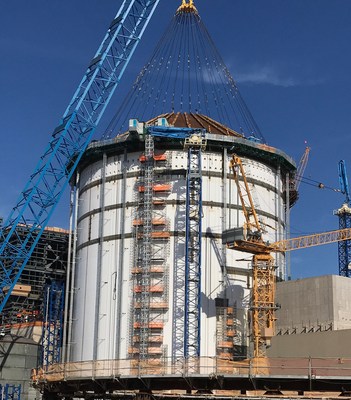
Vogtle Unit 4 shield building roof set

Building provides protection for the containment vessel that houses the reactor

Hot Functional Testing last major test remaining for Unit 3 ahead of fuel load

PR Newswire

ATLANTA, Dec. 11, 2020 /PRNewswire/ — The two-million-pound roof of the Vogtle Unit 4 shield building has been set into place at Georgia Power’s nuclear expansion project near Waynesboro, Georgia. With this placement, there is now one last major crane lift remaining for Vogtle Unit 4, the CB-20 module, which is part of the AP1000 reactor’s advanced passive safety system.

The Vogtle Unit 4 shield building roof placement comes just days after the receipt of the first nuclear fuel shipment for Vogtle Unit 3, representing the first nuclear fuel shipment for the AP1000 reactor in the U.S.

With the receipt of the first nuclear fuel assemblies, the site is preparing for the last major test remaining for Unit 3, hot functional testing, ahead of initial fuel load. This series of tests is the last critical step before fuel load and ultimately in-service operation for Unit 3.

The Unit 4 shield building roof measures 135 feet in diameter, 37 feet tall and weighs more than two fully-loaded jumbo jets. This placement follows the setting of the Unit 4 containment vessel top from earlier this year. The shield building is a unique feature of the AP1000 reactor design for Vogtle 3 & 4, providing an additional layer of safety around the containment vessel and nuclear reactor to protect the structure from any potential impacts. 


2020 Milestones Achieved

  • Completion of Cold Hydro Testing for Unit 3 – Confirmed the reactor’s coolant system functions as designed and verified the welds, joints, pipes and other components of the coolant system and associated high-pressure systems do not leak when under pressure.
  • Emergency Preparedness Drill – Vogtle 3 & 4 completed a required emergency preparedness exercise for a simulated emergency event for Vogtle Unit 3. Teams participated in the simulation and demonstrated their ability to effectively and efficiently respond and protect the health and safety of the public.
  • Vogtle 3 & 4 Operators Receive Licenses – The Nuclear Regulatory Commission (NRC) issued the first operator licenses to 62 Reactor and Senior Reactor Operators for Vogtle 3 & 4. To receive a nuclear operator license from the NRC, license holders must demonstrate they possess the required knowledge, skills and abilities to safely and effectively operate the plant.
  • Completion of Closed Vessel Testing – The completion of this milestone prepared Unit 3 for cold hydro testing. Closed vessel testing verified the pipes and valves in the Unit 3 reactor coolant system were installed as designed and helped ensure safety systems function properly.
  • Completion of the Structural Integrity Test and Integrated Leak Rate Test – Both tests were completed in succession and demonstrated the Unit 3 containment vessel meets construction quality and design requirements.
  • Placement of the final module for Unit 3 – The water tank that sits atop the containment vessel and shield building roof, known as module CB-20, is a major part of the AP1000 reactor’s advanced safety system and will hold approximately 750,000 gallons of water ready to flow down in the unlikely event of an emergency to help cool the reactor.
  • Placement of the Unit 3 integrated head package (IHP) atop the reactor vessel – Standing 48 feet tall, weighing 475,000 pounds and containing more than three miles of electrical cables, the IHP will eventually be used by highly-trained nuclear operators to monitor and control the nuclear reaction that will occur inside the Unit 3 reactor vessel.
  • Completion of Open Vessel Testing for Unit 3 – This successfully demonstrated how water flows from the key safety systems into the reactor vessel ensuring the paths are not blocked or constricted, and confirmed the pumps, motors, valves, pipes and other components of the systems function as designed.
  • Placement of the polar crane and containment vessel top for Unit 4 – This signified that all major lifts inside the containment vessels for both units are complete.

With more than 7,000 workers on site, and more than 800 permanent jobs available once the units begin operating, Vogtle 3 & 4 is currently the largest jobs-producing construction project in the state of Georgia.


Photos Highlight Progress

Follow the progress being made at the site of the nation’s first new nuclear units in more than 30 years through the Plant Vogtle 3 & 4 Online Photo Gallery and Georgia Power’s YouTube channel.


About Georgia Power

Georgia Power is the largest electric subsidiary of Southern Company (NYSE: SO), America’s premier energy company. Value, Reliability, Customer Service and Stewardship are the cornerstones of the company’s promise to 2.6 million customers in all but four of Georgia’s 159 counties. Committed to delivering clean, safe, reliable and affordable energy at rates below the national average, Georgia Power maintains a diverse, innovative generation mix that includes nuclear, coal and natural gas, as well as renewables such as solar, hydroelectric and wind. Georgia Power focuses on delivering world-class service to its customers every day and the company is recognized by J.D. Power as an industry leader in customer satisfaction. For more information, visit www.GeorgiaPower.com and connect with the company on Facebook (Facebook.com/GeorgiaPower), Twitter (Twitter.com/GeorgiaPower) and Instagram (Instagram.com/ga_power).


Cautionary Note Regarding Forward-Looking Statements

Certain information contained in this release is forward-looking information based on current expectations and plans that involve risks and uncertainties. Forward-looking information includes, among other things, statements concerning the expected schedule for completion of construction and start-up of Plant Vogtle units 3 and 4, and expected job creation. Georgia Power cautions that there are certain factors that can cause actual results to differ materially from the forward-looking information that has been provided. The reader is cautioned not to put undue reliance on this forward-looking information, which is not a guarantee of future performance and is subject to a number of uncertainties and other factors, many of which are outside the control of Georgia Power; accordingly, there can be no assurance that such suggested results will be realized. The following factors, in addition to those discussed in Georgia Power’s Annual Report on Form 10-K for the year ended December 31, 2019, Quarterly Reports on Form 10-Q for the quarters ended March 31, 2020, June 30, 2020, and September 30, 2020, and subsequent securities filings, could cause actual results to differ materially from management expectations as suggested by such forward-looking information: the potential effects of the continued COVID-19 pandemic, including, but not limited to, extended disruptions to supply chains and further reduced labor availability and productivity, which could have a variety of adverse impacts, including a negative impact on the ability to develop, construct, and operate facilities, including, but not limited to, Plant Vogtle Units 3 and 4; the ability to control costs and avoid cost and schedule overruns during the development, construction, and operation of facilities or other projects, including Plant Vogtle Units 3 and 4, which includes components based on new technology that only within the last few years began initial operation in the global nuclear industry at this scale, and including changes in labor costs, availability and productivity, challenges with management of contractors or vendors, subcontractor performance, adverse weather conditions, shortages, delays, increased costs, or inconsistent quality of equipment, materials, and labor, contractor or supplier delay, delays due to judicial or regulatory action, nonperformance under construction, operating, or other agreements, operational readiness, including specialized operator training and required site safety programs, engineering or design problems, design and other licensing-based compliance matters, including, for nuclear units, the timely submittal by Southern Nuclear of the Inspections, Tests, Analyses, and Acceptance Criteria documentation for each unit and the related reviews and approvals by the NRC necessary to support NRC authorization to load fuel, challenges with start-up activities, including major equipment failure, or system integration, and/or operational performance; the ability to overcome or mitigate the current challenges at Plant Vogtle Units 3 and 4, including, but not limited to, those related to COVID-19, that could further impact the cost and schedule for the project; legal proceedings and regulatory approvals and actions related to construction projects, such as Plant Vogtle Units 3 and 4, including Public Service Commission approvals and NRC actions; under certain specified circumstances, a decision by holders of more than 10% of the ownership interests of Plant Vogtle Units 3 and 4 not to proceed with construction and the ability of other Vogtle owners to tender a portion of their ownership interests to Georgia Power following certain construction cost increases; the ability to construct facilities in accordance with the requirements of permits and licenses (including satisfaction of NRC requirements), to satisfy any environmental performance standards and the requirements of tax credits and other incentives, and to integrate facilities into the Southern Company system upon completion of construction; the inherent risks involved in operating and constructing nuclear generating facilities; the ability of counterparties of Georgia Power to make payments as and when due and to perform as required; the direct or indirect effect on Georgia Power’s business resulting from cyber intrusion or physical attack and the threat of physical attacks; catastrophic events such as fires, earthquakes, explosions, floods, tornadoes, hurricanes and other storms, droughts, pandemic health events or other similar occurrences; and the direct or indirect effects on Georgia Power’s business resulting from incidents affecting the U.S. electric grid or operation of generating or storage resources. Georgia Power expressly disclaims any obligation to update any forward–looking information.

Cision View original content to download multimedia:http://www.prnewswire.com/news-releases/vogtle-unit-4-shield-building-roof-set-301191464.html

SOURCE Georgia Power

Altimar Acquisition Corporation Announces the Separate Trading of its Class A Ordinary Shares and Warrants Commencing December 14, 2020

PR Newswire

NEW YORK, Dec. 11, 2020 /PRNewswire/ — Altimar Acquisition Corporation (NYSE: ATAC.U) (the “Company”) announced today that, commencing December 14, 2020, holders of the units sold in the Company’s initial public offering of 27,500,000 units (including the 2,500,000 units sold when the underwriter partially exercised the over-allotment option on November 5, 2020), completed on October 27, 2020, may elect to separately trade the Class A ordinary shares and warrants included in the units. Those units not separated will continue to trade on the New York Stock Exchange (“NYSE”) under the symbol “ATAC.U,” and the Class A ordinary shares and warrants that are separated will trade on the NYSE under the symbols “ATAC” and “ATAC WS,” respectively. Holders of units will need to have their brokers contact Continental Stock Transfer & Trust Company, the Company’s transfer agent, in order to separate the units into Class A ordinary shares and warrants.

The units were initially offered by the Company in an underwritten offering. Goldman Sachs & Co. LLC served as sole book-running manager for the offering. A registration statement relating to the units and the underlying securities was declared effective by the Securities and Exchange Commission (the “SEC”) on October 22, 2020.

This press release shall not constitute an offer to sell or the solicitation of an offer to buy the securities of the Company, nor shall there be any sale of these securities in any state or jurisdiction in which such offer, solicitation or sale would be unlawful prior to registration or qualification under the securities laws of any such state or jurisdiction. The offering was made only by means of a prospectus. Copies of the prospectus may be obtained from Goldman Sachs & Co. LLC Attn: Prospectus Department, 200 West Street, New York, NY 10282; telephone: 1-866-471-2526; email: [email protected].

About Altimar Acquisition Corporation

The Company is sponsored by Altimar Sponsor, LLC, an affiliate of HPS Investment Partners, LLC, and is led by Tom Wasserman as Chief Executive Officer and Chairman. The Company is a blank check company formed for the purpose of effecting a merger, share exchange, asset acquisition, share purchase, reorganization or business combination with one or more businesses.

Forward-Looking Statements

This press release may include “forward-looking statements” within the meaning of Section 27A of the Securities Act of 1933, as amended, and Section 21E of the Securities Exchange Act of 1934, as amended. All statements other than statements of historical fact included in this press release are forward-looking statements. When used in this press release, words such as “anticipate,” “believe,” “estimate,” “expect,” “intend” and similar expressions, as they relate to us or our management team, identify forward-looking statements. Such forward-looking statements are based on the beliefs of management, as well as assumptions made by, and information currently available to, the Company’s management. Actual results could differ materially from those contemplated by the forward-looking statements as a result of certain factors detailed in the Company’s filings with the SEC. All subsequent written or oral forward-looking statements attributable to us or persons acting on our behalf are qualified in their entirety by this paragraph. Forward-looking statements are subject to numerous conditions, many of which are beyond the control of the Company, including those set forth in the Risk Factors section of the Company’s registration statement and prospectus relating to the Company’s initial public offering filed with the SEC. The Company undertakes no obligation to update these statements for revisions or changes after the date of this release, except as required by law.

Media inquiries:

[email protected]


Cision View original content:http://www.prnewswire.com/news-releases/altimar-acquisition-corporation-announces-the-separate-trading-of-its-class-a-ordinary-shares-and-warrants-commencing-december-14-2020-301191397.html

SOURCE Altimar Acquisition Corporation

Canada’s unions welcome federal government commitments on climate change

OTTAWA, Dec. 11, 2020 (GLOBE NEWSWIRE) — Coming on the heels of the government’s climate accountability legislation, today’s 2030 climate emissions reduction plan contains significant announcements for working people.

Expanded investments in energy efficiency, conservation and large-scale retrofitting of residential and commercial structures will create significant numbers of new jobs and require expanded investments in skills training and growing Canada’s construction trades.

Green and climate-resilient infrastructure investments will also mean an expanded skilled trades workforce.

“Labour will be looking to the federal government to make good on its commitment to supporting local job creation, skills training, apprenticeships and decent wages for workers, especially to those historically underrepresented in the skilled trades sector, including Indigenous workers, racialized workers and women,” said Hassan Yussuff, President of the Canadian Labour Congress. “Canada needs strong Just Transition measures to assist workers in resource communities and fossil fuel-dependent economies to access new job opportunities in clean energy, green transportation, efficient buildings and conservation if Canada hopes to meet and exceed the targets and prevent the worst outcomes of climate change.”

Canada’s unions welcome the government’s emphasis on domestic manufacturing, including developing Canadian supply chains for low-emission building materials, clean tech, and aerospace and automotive investments, and leveraging the power of public procurement. Additionally, unions are noting the crucial commitments made today towards bringing Indigenous communities into the process.

Despite today’s heavy emphasis on market signals and the private sector, public investment and planning will be vital to meeting Canada’s emissions-reduction targets.

“Today’s commitments towards public transit, including the domestic procurement of ZEV public transit and school buses, demonstrate progress,” added Yussuff.

As for increases on the price of carbon, unions are urging the government to ensure that the burden is fairly distributed, with low- and modest-income families protected.

Furthermore, the CLC welcomes the Government of Canada’s commitment to deliver on the country’s G20 commitment to phase-out all inefficient fossil fuel subsidies by 2025 and its commitment to explore border carbon adjustments on imports.

To read more about the directed investments the CLC is calling for, visit canadianplan.ca.

To arrange an interview, please contact:

CLC Media Relations
[email protected]
613-526-7426 


Kayne Anderson Closed-End Funds Announce the Board’s Approval of Amended and Restated Bylaws

HOUSTON, Dec. 11, 2020 (GLOBE NEWSWIRE) — KA Fund Advisors, LLC (“Kayne Anderson”), which serves as the adviser to Kayne Anderson Energy Infrastructure Fund, Inc. (NYSE: KYN) and Kayne Anderson NextGen Energy & Infrastructure, Inc. (NYSE: KMF) (each a “Company”) announced today that each Company has adopted Amended and Restated Bylaws (“Bylaws”). Under the new Bylaws, each Company has elected to be subject to the Maryland Control Share Acquisition Act (“MSCAA”). The MSCAA seeks to limit the ability of an acquiring person to achieve a short-term gain at the expense of the Company’s ability to pursue its investment objective and policies and to seek long-term value for the rest of the Company’s stockholders.

The MCSAA protects the interests of all stockholders of a Maryland corporation by providing that any holder of “control shares” acquired in a “control share acquisition” will not be entitled to vote its shares unless the other stockholders of the corporation reinstate those voting rights at a meeting of stockholders by a vote of two-thirds of the votes entitled to be cast on the matter, excluding the “acquiring person” (i.e. the holder or group of holders acting in concert that acquires, or proposes to acquire, “control shares” and any other holders of “interested shares” as defined in the MCSAA). Generally, “control shares” are shares that, when aggregated with shares already owned by an acquiring person, would entitle the acquiring person to exercise 10% or more, 33% or more, or a majority of the total voting power of shares entitled to vote in the election of directors.

The above description of the MCSAA election and amendments to the Bylaws, is only a high-level summary and does not purport to be complete. Investors should refer to the actual provisions of the MCSAA and each Company’s Bylaws for more information, including definitions of key terms, various exclusions and exemptions from the statute’s scope, and the procedures by which stockholders may approve the reinstatement of voting rights to holders of “control shares.” Each Company’s Bylaws are available in the Governance section of each Company’s webpage at www.kaynefunds.com.

Kayne Anderson Energy Infrastructure Fund, Inc. (NYSE: KYN) is a non-diversified, closed-end management investment company registered under the Investment Company Act of 1940, as amended, whose common stock is traded on the NYSE. The company’s investment objective is to provide a high after-tax total return with an emphasis on making cash distributions to stockholders. KYN intends to achieve this objective by investing at least 80% of its total assets in securities of Energy Infrastructure Companies. See Glossary of Key Terms in the company’s most recent quarterly report for a description of these investment categories and the meaning of capitalized terms.

Kayne Anderson NextGen Energy & Infrastructure, Inc. (NYSE: KMF) is a non-diversified, closed-end management investment company registered under the Investment Company Act of 1940, as amended, whose common stock is traded on the NYSE. The fund’s investment objective is to provide a high level of total return with an emphasis on making cash distributions to its stockholders. KMF seeks to achieve its investment objective by investing at least 80% of its total assets in securities of Energy Companies and Infrastructure Companies. The fund anticipates that the majority of its investments will consist of investments in ”NextGen” companies, which we define as Energy Companies and Infrastructure Companies that are meaningfully participating in, or benefitting from, the Energy Transition. See Glossary of Key Terms in the fund’s most recent quarterly report for a description of these investment categories and the meaning of capitalized terms.

This press release shall not constitute an offer to sell or a solicitation to buy, nor shall there be any sale of any securities in any jurisdiction in which such offer or sale is not permitted. Nothing contained in this press release is intended to recommend any investment policy or investment strategy or take into account the specific objectives or circumstances of any investor. Please consult with your investment, tax, or legal adviser regarding your individual circumstances prior to investing.

CAUTIONARY NOTE REGARDING FORWARD-LOOKING STATEMENTS: This communication contains statements reflecting assumptions, expectations, projections, intentions, or beliefs about future events. These and other statements not relating strictly to historical or current facts constitute forward-looking statements as defined under the U.S. federal securities laws. Forward-looking statements involve a variety of risks and uncertainties. These risks include, but are not limited to, changes in economic and political conditions; regulatory and legal changes; energy industry risk; leverage risk; valuation risk; interest rate risk; tax risk; and other risks discussed in detail in the Company’s filings with the SEC, available at

www.kaynefunds.com

or

www.sec.gov

. Actual events could differ materially from these statements or from our present expectations or projections. You should not place undue reliance on these forward-looking statements, which speak only as of the date they are made. Kayne Anderson undertakes no obligation to publicly update or revise any forward-looking statements made herein. There is no assurance that the Company’s investment objectives will be attained.

Contact: Investor Relations at 877-657-3863 or [email protected]


Destination XL Group, Inc. Looks to Fiscal 2021 for Continued Recovery

CANTON, Mass., Dec. 11, 2020 (GLOBE NEWSWIRE) — Destination XL Group, Inc. (NASDAQ: DXLG), the largest omni-channel specialty retailer of big and tall men’s clothing, continues to believe a path for recovery for fiscal year 2021 is in view given its actions and performance to date from the COVID-19 Pandemic.

“Since the start of COVID-19, we have been aggressively positioning our Company to withstand the economic downturn in the apparel sector, to maintain our liquidity, and to serve our customers wherever and whenever he wishes to shop. As we prepare to turn the page on fiscal 2020 and look forward to fiscal 2021, I wanted to share with you, at a high level, our belief in fiscal 2021 of continued recovery. The steps we have taken in 2020 to manage inventory, restructure occupancy costs, and reduce our selling, general and administrative costs create greater operating leverage on a reduced sales base in our business model. These actions have also helped us to preserve liquidity. At November month-end, we had $20.6 million in cash and availability remaining under our credit facility of $13.6 million,” said President and Chief Executive Officer Harvey Kanter.

“We announced separately today that the Company has begun the process of transferring from the Nasdaq Capital Market to the OTCQX market. In light of that announcement, we felt it was important to share more broadly our financial targets for fiscal 2021, which will be presented in mid-January, along with an early release of our Holiday Results. At that time we will present our targets for Sales, Adjusted EBITDA and Cash Flow metrics as well as the strategic and more detailed elements of our 2021 financial goals.

We expect to achieve results through continued penetration of our direct business, a modest recovery in store traffic during the course of the year, and a slight improvement in our wholesale business. Year-to-date through November, our DXL.com sales were up 41% over fiscal 2019 levels, and we expect the growth trend in this channel to continue in fiscal 2021. We also expect our stores to continue their trend of being down compared to fiscal 2019 levels,” Kanter concluded.

In mid-January, the Company is planning to announce its sales results for the 9-week Holiday period ending January 2, 2021. The Company is also planning to comment more broadly on its strategic plan for fiscal 2021 at that time.


About Destination XL Group, Inc.

Destination XL Group, Inc. is the largest retailer of men’s clothing in sizes XL and up, with operations throughout the United States as well as in Toronto, Canada. In addition to DXL Big + Tall retail and outlet stores, subsidiaries of Destination XL Group, Inc. also operate Casual Male XL retail and outlet stores, and e-commerce sites, including DXL.com. DXL.com offers a multi-channel solution similar to the DXL store experience with the most extensive selection of online products available anywhere for Big + Tall men. The Company is headquartered in Canton, Massachusetts, and its common stock is listed on the NASDAQ Capital Market under the symbol “DXLG.” For more information, please visit the Company’s investor relations website: https://investor.dxl.com.

Forward-Looking Statements

Certain statements and information contained in this press release constitute forward-looking statements under the federal securities laws, including statements regarding the Company’s expectations with respect to fiscal 2021, including continued recovery, greater operating leverage on reduced sales, modest improvement in store traffic, slight improvement in wholesale business, and an expected decrease in store sales and increase in DXL.com sales as compared to fiscal 2019. These statements are based upon management’s current expectations surrounding the COVID-19 pandemic, including stores remaining open, the stability of its supply chain, and the ability to order and receive the necessary merchandise and the ability to achieve projected margins in order to support planned performance in fiscal 2021. These forward-looking statements and the actual implementation of its plans for fiscal 2021 may differ materially from the forward-looking statements made by the Company. The Company encourages readers of forward-looking information concerning the Company to refer to its filings with the Securities and Exchange Commission, including without limitation, its Annual Report on Form 10-K filed on March 19, 2020, its Quarterly Reports on Form 10-Q and other filings with the Securities and Exchange Commission that set forth certain risks and uncertainties that may have an impact on future results and direction of the Company, including risks relating to the COVID-19 pandemic and its impact on the Company’s results of operations, the Company’s execution of its DXL strategy and ability to grow its market share, predict customer tastes and fashion trends, forecast sales growth trends and compete successfully in the United States men’s big and tall apparel market. Forward- looking statements contained in this press release speak only as of the date of this release. Subsequent events or circumstances occurring after such date may render these statements incomplete or out of date. The Company undertakes no obligation and expressly disclaims any duty to update such statements.

Investor Relations Contact:
[email protected]
603-933-0541


ROSEN, GLOBAL INVESTOR COUNSEL, Reminds Citigroup Inc. Investors of Important December 29 Deadline in Securities Class Action; Encourages Investors with Losses in Excess of $100K to Contact the Firm – C

PR Newswire

NEW YORK, Dec. 11, 2020 /PRNewswire/ — Rosen Law Firm, a global investor rights law firm, reminds purchasers of the securities of Citigroup Inc. (NYSE: C) between January 15, 2016 and October 12, 2020, inclusive (the “Class Period”), of the important December 29, 2020 lead plaintiff deadline in the securities class action lawsuit. The lawsuit seeks to recover damages for Citigroup investors under the federal securities laws.

To join the Citigroup class action, go to http://www.rosenlegal.com/cases-register-1999.html or call Phillip Kim, Esq. toll-free at 866-767-3653 or email [email protected] or [email protected] for information on the class action.

According to the lawsuit, defendants throughout the Class Period made false and/or misleading statements and/or concealed and/or failed to disclose: (1) Citigroup’s failure to implement and maintain an enterprise-wide risk management and compliance risk management program, internal controls, or a data governance program commensurate with the Company’s size, complexity, and risk profile; (2) Citigroup’s failure to establish an effective risk governance framework; (3) Citigroup’s failure to establish enterprise-wide risk management policies, standards, and frameworks necessary to adequately identify, measure, monitor, and control risks; (4) Citigroup’s failure to establish effective front-line units, independent risk management, internal audit, and control functions; (5) Citigroup’s failure to develop and execute on a comprehensive plan to address data governance deficiencies, including data quality errors and failure to produce timely and accurate management and regulatory reporting; (6) that Citigroup had failed to make the investments required to address its regulatory shortcomings; (7) that Citigroup had failed to implement and establish the requisite internal controls, risk management and data governance processes to comply with regulatory requirements, existing consent orders, and applicable laws and regulations; (8) that Citigroup was currently exposed to significant financial and operational risk, including risk from outdated and manual processes that left Citigroup susceptible to material accounting errors; (9) that Citigroup was currently suffering from material deficiencies in its policies, procedures and practices applicable to data integrity and data governance and had failed to develop and execute on a plan to address these deficiencies as required by regulators; (10) that Citigroup lacked the required personnel with appropriate training, experience and authority to implement the required risk management and internal controls; and (11) that as a result of the foregoing, Citigroup had engaged in unsafe and unsound business practices that exposed it to heightened regulatory, legal, business and reputational risks. When the true details entered the market, the lawsuit claims that investors suffered damages.

A class action lawsuit has already been filed. If you wish to serve as lead plaintiff, you must move the Court no later than December 29, 2020. A lead plaintiff is a representative party acting on behalf of other class members in directing the litigation. If you wish to join the litigation, go to http://www.rosenlegal.com/cases-register-1999.html or to discuss your rights or interests regarding this class action, please contact Phillip Kim, Esq. of Rosen Law Firm toll free at 866-767-3653 or via e-mail at [email protected] or [email protected].

NO CLASS HAS YET BEEN CERTIFIED IN THE ABOVE ACTION. UNTIL A CLASS IS CERTIFIED, YOU ARE NOT REPRESENTED BY COUNSEL UNLESS YOU RETAIN ONE. YOU MAY RETAIN COUNSEL OF YOUR CHOICE. YOU MAY ALSO REMAIN AN ABSENT CLASS MEMBER AND DO NOTHING AT THIS POINT. AN INVESTOR’S ABILITY TO SHARE IN ANY POTENTIAL FUTURE RECOVERY IS NOT DEPENDENT UPON SERVING AS LEAD PLAINTIFF.

Follow us for updates on LinkedIn: https://www.linkedin.com/company/the-rosen-law-firm, on Twitter: https://twitter.com/rosen_firm or on Facebook: https://www.facebook.com/rosenlawfirm/.

Rosen Law Firm represents investors throughout the globe, concentrating its practice in securities class actions and shareholder derivative litigation. Rosen Law Firm was Ranked No. 1 by ISS Securities Class Action Services for number of securities class action settlements in 2017. The firm has been ranked in the top 3 each year since 2013. Rosen Law Firm has achieved the largest ever securities class action settlement against a Chinese Company. Rosen Law Firm’s attorneys are ranked and recognized by numerous independent and respected sources. Rosen Law Firm has secured hundreds of millions of dollars for investors. Attorney Advertising. Prior results do not guarantee a similar outcome.

——————————-

Contact Information:

      Laurence Rosen, Esq.
      Phillip Kim, Esq.
      The Rosen Law Firm, P.A.
      275 Madison Avenue, 40th Floor
      New York, NY 10016
      Tel: (212) 686-1060
      Toll Free: (866) 767-3653
      Fax: (212) 202-3827
      [email protected]
      [email protected]
      [email protected]
      www.rosenlegal.com


Cision View original content to download multimedia:http://www.prnewswire.com/news-releases/rosen-global-investor-counsel-reminds-citigroup-inc-investors-of-important-december-29-deadline-in-securities-class-action-encourages-investors-with-losses-in-excess-of-100k-to-contact-the-firm–c-301191463.html

SOURCE Rosen Law Firm, P.A.