InDex Pharmaceuticals gets patent for additional DIMS compounds granted in Europe

PR Newswire

STOCKHOLM, April 7, 2021 /PRNewswire/ — InDex Pharmaceuticals Holding AB (publ) today announced that a patent covering 19 compounds from the company’s DIMS platform has been granted by the European Patent Office.

InDex has a preclinical portfolio of more than 150 DNA-based ImmunoModulatory Sequences (DIMS), several of which are already protected by approved composition-of-matter patents. The new European patent, entitled Biologically active oligonucleotides capable of modulating the immune system (patent number 3165607), covers both the composition-of-matter and method-of-use of 19 different DIMS compounds for the treatment of inflammatory diseases, cancer and infectious diseases. The patent was filed in 2011 and provides an exclusivity period until December 2031, with the possibility of up to 5 years term extension after market approval.

“We continue the work to broaden our preclinical DIMS portfolio in parallel with the phase III clinical development of our lead drug candidate cobitolimod,” said Peter Zerhouni, CEO of InDex Pharmaceuticals. “This patent has previously been granted in the US and Canada, and we are very pleased that also the European Patent Office confirms the novelty of our DIMS platform.”

InDex’s DIMS compounds are synthetic oligonucleotides that function as immunomodulatory agents by targeting Toll-like receptor 9 (TLR9). DIMS mimic bacterial DNA, without being harmful, and stimulate immune cells to produce beneficial cytokines. This opens opportunities for the treatment of different immunological diseases, in which the immune responses are imbalanced. The company’s lead asset is the drug candidate cobitolimod, which is in late stage clinical development for the treatment of moderate to severe ulcerative colitis. Besides cobitolimod, InDex is testing a selected number of DIMS candidates in models of other inflammatory diseases. InDex has been awarded a grant of SEK 2.0 million for this development from the Swedish innovation agency Vinnova.

For more information:

Peter Zerhouni

CEO
Phone: +46 8 122 038 50
E-mail: [email protected] 

Publication

The information was submitted for publication through the agency of the contact person set out above at 8:00 CET on April 7, 2021.

InDex Pharmaceuticals in brief

InDex is a pharmaceutical development company focusing on immunological diseases where there is a high unmet medical need for new treatment options. The company’s lead asset is the drug candidate cobitolimod, which is in late stage clinical development for the treatment of moderate to severe ulcerative colitis – a debilitating, chronic inflammation of the large intestine. InDex has also developed a platform of patent protected discovery stage substances, so called DNA based ImmunoModulatory Sequences (DIMS), with the potential to be used in the treatment of various immunological diseases.

InDex is based in Stockholm, Sweden. The company’s shares (ticker INDEX) are traded on Nasdaq First North Growth Market. Redeye AB with email address [email protected] and phone number +46 8 121 576 90 is the company’s Certified Adviser. For more information, please visit www.indexpharma.com.

This information was brought to you by Cision http://news.cision.com

https://news.cision.com/index-pharmaceuticals/r/index-pharmaceuticals-gets-patent-for-additional-dims-compounds-granted-in-europe,c3320610

The following files are available for download:

https://mb.cision.com/Main/9612/3320610/1397895.pdf

InDex Pharmagets patent for additional DIMS compounds granted in Europe


Cision View original content:http://www.prnewswire.com/news-releases/index-pharmaceuticals-gets-patent-for-additional-dims-compounds-granted-in-europe-301263777.html

SOURCE Index Pharmaceuticals

Seoul Semiconductor Achieves Historical High First Quarter Revenues Increased by 28.3% YoY

Seoul Semiconductor Achieves Historical High First Quarter Revenues Increased by 28.3% YoY

  • Continued to record over KRW 300 billion for three consecutive quarters
  • Recorded the highest first quarter consolidated revenue at KRW 312 billion
  • Expected to grow by another double-digit in the second quarter
  • Secured a foundation for sustainable growth with leading 2nd generation patented LED technologies
  • Company will report details of the first quarter earnings and a sales guidance for the second quarter at the end of April


ANSAN, South Korea–(BUSINESS WIRE)–Seoul Semiconductor Co., Ltd. (“Seoul”) (KOSDAQ 046890), a leading global LED product and technology provider, today announced KRW 312 billion of consolidated revenues for the first quarter, growing 28.3% year on year. Recovering from COVID-19 pandemic impact in the first half last year, Seoul continued to record over KRW 300 billion quarterly revenues for the past three consecutive quarters, which has achieved the historical highest first quarter of 2021 revenues since the company establishment.

This press release features multimedia. View the full release here: https://www.businesswire.com/news/home/20210406006215/en/

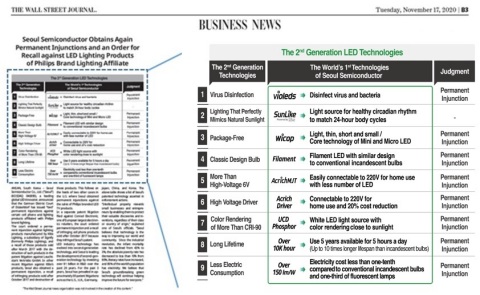
Seoul Semiconductor’s world’s first leading 2nd generation technologies (Graphic: Business Wire)

Seoul Semiconductor’s world’s first leading 2nd generation technologies (Graphic: Business Wire)

Despite the low seasonality in the LED industry, Seoul’s strong performance in the first quarter will lead to a higher expectation for financial results of the fiscal year 2021. The financial results including revenues and profit analysis will be released at the end of April.

“Manufacturing transition to Vietnam, which has been started from 2017, entered the stabilization stage. Seoul expects further profitability for the year by delivering superior cost advantage and pricing competitiveness. We also expect exceptional revenue growth in the 2nd half as mass production of mini LEDs, one of the core next generation display technologies, starts,” said an officer at Seoul.

Seoul’s mini LED uses package-less WICOP products, the world’s first revolutionary technology directly mounting LED chips onto a substrate.

About Seoul Semiconductor

Seoul Semiconductor is the world’s second-largest global LED manufacturer, a ranking excluding the captive market, and has more than 14,000 patents. Based on a differentiated product portfolio, Seoul offers a wide range of technologies, and mass produces innovative LED products for indoor and outdoor lighting, automotive, IT products, such as mobile phones, computer displays, and other applications. The company’s world’s first technologies are becoming LED industry standard and leading global market with a package-free LED, WICOP; a high-voltage AC-driven LED, Acrich; a LED with 10X the output of a conventional LED, nPola; a ultraviolet clean technology LED, Violeds; an all direction light emitting technology, filament LED; a natural spectrum LED, SunLike; and more. For more information, please visit www.seoulsemicon.com/en.

Seoul Semiconductor Co., Ltd.

Jeonghee Kim

Tel: +82-70-4391-8311

Email: [email protected]

KEYWORDS: South Korea Viet Nam Asia Pacific

INDUSTRY KEYWORDS: Semiconductor Hardware Manufacturing Other Manufacturing Technology

MEDIA:

Logo
Logo
Photo
Photo
Seoul Semiconductor’s world’s first leading 2nd generation technologies (Graphic: Business Wire)

S&P Dow Jones Indices Launches First SPIVA Scorecard for the MENA Region

PR Newswire

LONDON, April 7, 2021 /PRNewswire/ — S&P Dow Jones Indices (“S&P DJI”), the world’s leading index provider, today announced the inaugural publication of the S&P Indices Versus Active Funds (SPIVA®) Scorecard, measuring the performance of equity funds domiciled in the Middle East and North Africa (MENA).

Starting with this reporting cycle, the SPIVA MENA Scorecard will be published bi-annually and tracks the performance of actively managed MENA equity funds denominated in local currencies against the performance of their respective S&P DJI indices over one, three, five and 10-year time horizons.

The SPIVA MENA Scorecard found that in 2020, 68% of MENA active equity funds underperformed the S&P Pan Arab Composite Index. This number rose to 93% over the 10-year period. Similarly, the SPIVA MENA Scorecard also showed that 58% of Gulf Cooperation Council (GCC)-focused active funds underperformed the S&P GCC Composite Index over the one-year period. Saudi Arabian equity funds performed relatively better than their regional fund peers with 23% underperforming the S&P Saudi Arabia Index in 2020. However, when the time horizon is extended to 10 years, 78% of Saudi Arabian equity funds also underperformed their benchmark.

“We are very excited to introduce and extend our global SPIVA Scorecard to our clients and market participants in the MENA region. S&P DJI is committed to offering timely and relevant research, data and insights as global investors continue to grapple with and recover from the adverse impact of the COVID-19 pandemic and economic slowdown on financial markets,” said Charbel Azzi, Head of Middle East, Africa & CIS at S&P Dow Jones Indices.

For nearly two decades, S&P DJI has published research and data surveying more than 10,000 actively managed funds globally. Beginning with the launch of the SPIVA® U.S. Scorecard in 2002, the scorecards also track fund performance in countries such as Australia, Canada, Europe, India, Japan, Latin America and South Africa. While the results vary each year based on market conditions, certain themes have emerged over time including actively managed funds across different countries and regions underperforming their benchmarks over short- and long-term periods.

For more information about the SPIVA Scorecards and its methodology, visit https://www.spglobal.com/spdji/en/spiva/#/  and to access S&P DJI’s research and commentaries, please go to https://www.spglobal.com/spdji/en/ 

ABOUT S&P DOW JONES INDICES
S&P Dow Jones Indices is the largest global resource for essential index-based concepts, data and research, and home to iconic financial market indicators, such as the S&P 500® and the Dow Jones Industrial Average®. More assets are invested in products based on our indices than products based on indices from any other provider in the world. Since Charles Dow invented the first index in 1884, S&P DJI has been innovating and developing indices across the spectrum of asset classes helping to define the way investors measure and trade the markets.

S&P Dow Jones Indices is a division of S&P Global (NYSE: SPGI), which provides essential intelligence for individuals, companies, and governments to make decisions with confidence. For more information, visit www.spdji.com.

Cision View original content:http://www.prnewswire.com/news-releases/sp-dow-jones-indices-launches-first-spiva-scorecard-for-the-mena-region-301263679.html

SOURCE S&P Dow Jones Indices

Visible gold with intersection of 7.2m at 258g/t gold underpins further exploration success at São Domingos.

For immediate release

            7 April 2021

Serabi Gold plc

(“Serabi” or the “Company”)

Visible gold with intersection of 7.2m at 258g/t gold underpins further exploration success at São Domingos.

Serabi Gold plc (AIM:SRB, TSX:SBI), the Brazilian-focused gold mining and development company, is pleased to announce highly encouraging exploration drilling results from the Toucano trend at its São Domingos project, as well as very encouraging results from its regional geochemical survey also at São Domingos. 

A PDF version of this announcement, including all images, can be accessed using the following link – https://bit.ly/31UTcdv

Highlights

  • Visible gold was identified in hole 21-SD-010 which returned a number of intersections including 7.15 metres at 258.24 grammes per tonne (“g/t”) of gold.
  • Drilling on the Toucano trend at São Domingos has intersected three mineralised structures, all hosted within a mineralised alteration zone with a true width of 50 metres.
  • Mineralisation is confirmed along at least a 400 metre strike length and remains open at depth and along strike.
  • Significant new results received include.
  • 21-SD-010 – 7.40m @ 1.95/t Au from 141.00m, including 1.90m @ 5.12g/t Au
  • 21-SD-010 – 7.00m @ 9.68g/t Au from 151.55m, including 1.40m @ 26.24g/t Au
  • 21-SD-010 – 7.15m @ 258.24g/t Au from 172.85m, including 3.55m @ 519.45g/t Au
  • 21-SD-005 – 0.80m @ 89.03g/t Au from 140.00m
  • 21-SD-005 – 4.70m @ 1.42g/t Au from 76.00m
  • 21-SD-003 – 0.50m @ 6.22g/t Au from 42.00m
  • 21-SD-003 – 1.80m @ 3.77/t Au from 67.25m
  • A Soil Sample geochemical survey, undertaken in the eastern area of the São Domingos tenement that runs into the western part of the Sao Chico Mining License, has defined multiple areas of anomalous gold in soils.  These gold in soil anomalies are coincidental with and supported by other multi-element anomalies.

Mike Hodgson, CEO of Serabi, commented:

“These are an excellent set of further results and follow up on the maiden press release for exploration at São Domingos issued on 22 January 2021.  Holes 21-SD-003 and 21-SD-010, together with the previously reported hole 21-SD-001, have all been drilled on the same drill cross section and the collective results are building a very encouraging picture.  We have identified multiple high-grade veins, of which at least 3 are significant, in a 50 metre wide, sub-vertical, mineralised alteration zone.  Hole 010 is the current highlight, where a drilled width totalling 70 metres of alteration was cut, within which multiple high-grade intersections including 9.68 g/t Au over 7.0 metres, 26.24 g/t Au over 1.40 metres and 258.24 g/t Au over 7.15 metres including 519.45 g/t Au over 3.55 metres were recorded.  Visible gold was recorded in this last intersection (see Figure 1).  

“With holes 21-SD-005 and 21-SD-002, drilled on the next step out section, 200 metres to the north east along strike, returning further encouraging intersections including gold grades of up to 89 g/t, we are very encouraged with how Toucano is evolving.  The plan is to complete the drilling along section 1 (see Figure 2) over the Toucano pit area to establish the full strike width of the mineralised zone, before moving along strike to the north east and south west, and repeating the drilling on a series of parallel sections.  With artisanal activity and initial drilling already in place, we have a potential strike of 600 metres, and the plan is to replicate the drill coverage undertaken on the central section over that entire strike length.    

To view the image of visible gold from hole 21-SD-010, please click on this link –

https://bit.ly/2OplxW4


Figure 1 – Visible Gold from 21-SD-010 @ 175.40m down hole depth.

To view the image of the São Domingos drill plan, please click on this link –

https://bit.ly/2RgVoKp


Figure 2 – São Domingos drill plan and results for the Toucano trend.

To view the image of the São Domingos drill section 1, please click on this link –

https://bit.ly/3utPqnu


Figure 3 – São Domingos drill section 1 on the Toucano trend.

DRILLING RESULTS

Drilling in the São Domingos prospect has focussed on the Toucano trend, with assay results received from 10 of the holes completed. The Toucano trend is defined by a broad 50 metre true width hydrothermal alteration zone with anomalous gold mineralisation in which Serabi geologists have interpreted a series of quartz veined fault structures containing higher grade zones.

Significant new drilling results are set out in the table below:

Hole East West RL Depth (m) Dip/Azm From To Width (m) Gold Grade    
(WGS84) (WGS84) (°/°UTM) (m) (m) (Au g/t)    
20-SD-002 604161 9290883 219.82 135.25 -45/150 106.00 107.00 1.00 1.36    
            109.80 110.10 0.30 2.28    
20-SD-003 604081 9290682 244.16 151.00 -65/290 42.00 42.50 0.50 6.22    
            47.55 49.50 1.95 1.84    
            57.50 62.80 5.30 0.72    
            59.00 60.70 1.70 1.08    
            64.50 65.00 0.50 0.51    
            67.25 69.05 1.80 3.77    
            71.50 72.00 0.50 0.56    
            133.00 134.00 1.00 0.91    
         
Incl.
133.65 134.00 0.35 1.15    
            137.00 137.50 0.50 0.84    
            143.00 144.00 1.00 0.56    
            145.50 146.50 1.00 2.83    
21-SD-004 604108 9290799 226.00 156.01 -50/140 0.00 1.90 1.90 1.92    
         
Incl.
0.00 1.00 1.00 2.84    
21-SD-005 604169 9290876 229.00 166.57 -55/143 1.2 2.4 1.2 3.27    
            51.40 52.30 0.90 2.94    
            76.00 80.70 4.70 1.42    
         
Incl.
76.00 77.50 1.50 2.82    
            101.00 101.50 0.50 0.56    
            140.00 140.80 0.80 89.03    
21-SD-006 604229 9290958 216.00 208.14 -45/140 173.55 175.00 1.45 1.02    
         
Incl.
174.25 175.00 0.75 1.16    
21-SD-010 603988 9290764 232.00 239.93 -50/138 133.45 134.30 0.85 0.77    
            135.75 136.25 0.50 0.79    
            139.00 139.50 0.50 2.62    
            141.00 148.40 7.40 1.95    
         
Incl.
146.50 148.40 1.90 5.12    
            151.55 158.55 7.00 9.68    
         
Incl.
156.60 158.00 1.40 26.24    
            161.00 164.00 3.00 1.17    
         
Incl.
162.50 163.00 0.50 4.80    
            172.85 180.00 7.15 258.24    
         
Incl.
175.00 178.55 3.55 519.45    
            181.50 185.00 3.50 0.90    
         
Incl.
182.00 183.70 1.70 1.27    
            191.00 191.50 0.50 0.58    
Reported intercepts calculated based on a minimum weighted average grade of 0.5g/t Au using a 0.5g/t Au weighted average lower cut and a maximum internal waste interval of 1.2m based on ALS and Serabi´s on-site lab reported analyses. The majority of the assay results reported within this release are those provided by the Company’s own on-site laboratory facilities at Palito and have not yet been independently verified.  Serabi closely monitors the performance of its own facility against results from independent laboratory analysis for quality control purpose.  As a matter of normal practice, the Company sends duplicate samples derived from a variety of the Company’s activities to accredited laboratory facilities for independent verification. Since mid-2019, over 10,000 exploration drill core samples have been assayed at both the Palito laboratory and certified external laboratory, in most cases the ALS laboratory in Belo Horizonte, Brazil.  When comparing significant assays with grades exceeding 1 g/t gold, comparison between Palito versus external results record an average over-estimation by the Palito laboratory of 6.7% over this period.   Based on the results of this work, the Company’s management are satisfied that the Company’s own facility shows sufficiently good correlation with independent laboratory facilities for exploration drill samples. The Company would expect that in the preparation of any future independent Reserve/Resource statement undertaken in compliance with a recognised standard, the independent authors of such a statement would not use Palito assay results without sufficient duplicates from an appropriately certificated laboratory.    
   

SOIL GEOCHEMICAL SAMPLING

Geochemical data from soil sampling in the Fofoca area was integrated with historical data from the São Domingos area, and delineated multiple areas of anomalous gold in soils, supported by multi-element anomalism.

Three significant targets have evolved from this new soil geochemistry data and integration exercise.

  • The three-kilometre-long gold in soil “Pedro Trend” is interpreted as a strike extension of the Fofoca mineralisation in the adjacent tenement and is supported by a copper/arsenic/antimony anomalism.  Multiple gold in soil anomalies nearby with similar orientations, suggest parallel mineralised structures.
  • The one-kilometre-long gold in soil “Messias Trend” is interpreted as a strike extension to the high-grade Messias garimpo in the south east of the São Domingos area and is supported by copper/molybdenum/bismuth/antimony anomalism.
  • A 1 kilometre by 1.5-kilometre gold in soil anomaly of more than 30ppb, occurs two kilometres directly west of the Cicada target. This new target contains a strong copper/molybdenum/gold/tungsten core, with distal gold/antimony/tellurium/bismuth, a geochemical signature characteristic of oxidised Intrusion Related Gold Systems. The absence of artisanal mining over the target suggests a disseminated style of mineralisation and this intrusive centre may be interpreted as a potential source for mineralisation at the nearby Abelha, Besouro and Cicada targets.


To view and image of the Sao Domingos soil geochemistry please click on this link –

https://bit.ly/3ukG0e6


Figure 4 – Sao Domingos gold and multi-element soil geochemistry.

This announcement is inside information for the purposes of Article 7 of Regulation 596/2014.

The person who arranged for the release of this announcement on behalf of the Company was Clive Line, Director.

Enquiries:

Serabi Gold plc  
Michael Hodgson Tel: +44 (0)20 7246 6830
Chief Executive Mobile: +44 (0)7799 473621
   
Clive Line Tel: +44 (0)20 7246 6830
Finance Director Mobile: +44 (0)7710 151692
   
Email: [email protected]  
Website:  www.serabigold.com  
   
Beaumont Cornish Limited
Nominated Adviser and Financial Adviser
 
Roland Cornish Tel: +44 (0)20 7628 3396
Michael Cornish Tel: +44 (0)20 7628 3396
   
Peel Hunt LLP
UK Broker
 
Ross Allister Tel: +44 (0)20 7418 8900

Copies of this announcement are available from the Company’s website at www.serabigold.com.

Neither the Toronto Stock Exchange, nor any other securities regulatory authority, has approved or disapproved of the contents of this announcement.

GLOSSARY OF TERMS

Ag means silver.
Au means gold.
assay in economic geology, means to analyse the proportions of metal in a rock or overburden sample; to test an ore or mineral for composition, purity, weight or other properties of commercial interest.
CIM means the Canadian Institute of Mining, Metallurgy and Petroleum.
chalcopyrite” is a sulphide of copper and iron.
Cu means copper.
cut-off grade the lowest grade of mineralised material that qualifies as ore in a given deposit; rock of the lowest assay included in an ore estimate.
“dacite porphyry intrusive” a silica-rich igneous rock with larger phenocrysts (crystals) within a fine-grained matrix
deposit is a mineralised body which has been physically delineated by sufficient drilling, trenching, and/or underground work, and found to contain a sufficient average grade of metal or metals to warrant further exploration and/or development expenditures; such a deposit does not qualify as a commercially mineable ore body or as containing ore reserves, until final legal, technical, and economic factors have been resolved.
electromagnetics is a geophysical technique tool measuring the magnetic field generated by subjecting the sub-surface to electrical currents.
“garimpo” is a local artisanal mining operation
garimpeiro is a local artisanal miner.
geochemical refers to geological information using measurements derived from chemical analysis.
geophysical refers to geological information using measurements derived from the use of magnetic and electrical readings.
geophysical techniques include the exploration of an area by exploiting differences in physical properties of different rock types. Geophysical methods include seismic, magnetic, gravity, induced polarisation and other techniques; geophysical surveys can be undertaken from the ground or from the air.
gossan is an iron-bearing weathered product that overlies a sulphide deposit.
grade is the concentration of mineral within the host rock typically quoted as grams per tonne (g/t), parts per million (ppm) or parts per billion (ppb).
g/t means grams per tonne.
“granodiorite” is an igneous intrusive rock similar to granite.
hectare” or a “ha is a unit of measurement equal to 10,000 square metres.
“igneous” is a rock that has solidified from molten material or magma.
IP refers to induced polarisation, a geophysical technique whereby an electric current is induced into the sub-surface and the conductivity of the sub-surface is recorded.
“intrusive” is a body of rock that invades older rocks.
“Indicated Mineral Resource is that part of a Mineral Resource for which quantity, grade or quality, densities, shape and physical characteristics can be estimated with a level of confidence sufficient to allow the appropriate application of technical and economic parameters, to support mine planning and evaluation of the economic viability of the deposit. The estimate is based on detailed and reliable exploration and testing information gathered through appropriate techniques from locations such as outcrops, trenches, pits, workings and drill holes that are spaced closely enough for geological and grade continuity to be reasonably assumed.
“Inferred Mineral Resource” is that part of a Mineral Resource for which quantity and grade or quality can be estimated on the basis of geological evidence and limited sampling and reasonably assumed, but not verified, geological and grade continuity. The estimate is based on limited information and sampling gathered through appropriate techniques from locations such as outcrops, trenches, pits, workings and drill holes.
“Inferred Mineral Resource” ‟ is that part of a Mineral Resource for which quantity and grade or quality can be estimated on the basis of geological evidence and limited sampling and reasonably assumed, but not verified, geological and grade continuity. The estimate is based on limited information and sampling gathered through appropriate techniques from locations such as outcrops, trenches, pits, workings and drill holes.
“mineralisation” the concentration of metals and their chemical compounds within a body of rock.
“mineralised” refers to rock which contains minerals e.g. iron, copper, gold.
“Mineral Resource” is a concentration or occurrence of diamonds, natural solid inorganic material, or natural solid fossilized organic material including base and precious metals, coal, and industrial minerals in or on the Earth’s crust in such form and quantity and of such a grade or quality that it has reasonable prospects for economic extraction. The location, quantity, grade, geological characteristics and continuity of a Mineral Resource are known, estimated or interpreted from specific geological evidence and knowledge.
“Mineral Reserve” is the economically mineable part of a Measured or Indicated Mineral Resource demonstrated by at least a Preliminary Feasibility Study. This Study must include adequate information on mining, processing, metallurgical, economic and other relevant factors that demonstrate, at the time of reporting, that economic extraction can be justified. A Mineral Reserve includes diluting materials and allowances for losses that may occur when the material is mine
“Mo-Bi-As-Te-W-Sn” Molybdenum-Bismuth-Arsenic-Tellurium-Tungsten-Tin
“monzogranite” a biotite rich granite, often part of the later-stage emplacement of a larger granite body.
“mt” means million tonnes.
“ore” means a metal or mineral or a combination of these of sufficient value as to quality and quantity to enable it to be mined at a profit.
“oxides” are near surface bed-rock which has been weathered and oxidised by long term exposure to the effects of water and air.
“ppm” means parts per million.
“Probable Mineral Reserve” is the economically mineable part of an Indicated and, in some circumstances, a Measured Mineral Resource demonstrated by at least a Preliminary Feasibility Study. This Study must include adequate information on mining, processing, metallurgical, economic, and other relevant factors that demonstrate, at the time of reporting, that economic extraction can be justified.
“Proven Mineral Reserve” is the economically mineable part of a Measured Mineral Resource. A Proven Mineral Reserve implies a high degree of confidence in the Modifying Factors
“saprolite” is a weathered or decomposed clay-rich rock.
sulphide refers to minerals consisting of a chemical combination of sulphur with a metal.
vein is a generic term to describe an occurrence of mineralised rock within an area of non-mineralised rock.
VTEM refers to versa time domain electromagnetic, a particular variant of time-domain electromagnetic geophysical survey to prospect for conductive bodies below surface.

Assay Results

The assay results reported within this release are those provided by the Company’s own on-site laboratory facilities at Palito and have not been independently verified.  Serabi closely monitors the performance of its own facility against results from independent laboratory analysis for quality control purpose.  As a matter of normal practice, the Company sends duplicate samples derived from a variety of the Company’s activities to accredited laboratory facilities for independent verification. Based on the results of this work, the Company’s management are satisfied that the Company’s own facility shows good correlation with independent laboratory facilities. The Company would expect that in the preparation of any future independent Reserve/Resource statement undertaken in compliance with a recognised standard, the independent authors of such a statement would not use Palito assay results but only use assay results reported by an appropriately certificated laboratory.

Qualified Persons Statement

The scientific and technical information contained within this announcement has been reviewed and approved by Michael Hodgson, a Director of the Company. Mr Hodgson is an Economic Geologist by training with over 26 years’ experience in the mining industry. He holds a BSc (Hons) Geology, University of London, a MSc Mining Geology, University of Leicester and is a Fellow of the Institute of Materials, Minerals and Mining and a Chartered Engineer of the Engineering Council of UK, recognising him as both a Qualified Person for the purposes of Canadian National Instrument 43-101 and by the AIM Guidance Note on Mining and Oil & Gas Companies dated June 2009.

Forward Looking Statements

Certain statements in this announcement are, or may be deemed to be, forward looking statements. Forward looking statements are identified by their use of terms and phrases such as ‘‘believe’’, ‘‘could’’, “should” ‘‘envisage’’, ‘‘estimate’’, ‘‘intend’’, ‘‘may’’, ‘‘plan’’, ‘‘will’’ or the negative of those, variations, or comparable expressions, including references to assumptions. These forward-looking statements are not based on historical facts but rather on the Directors’ current expectations and assumptions regarding the Company’s future growth, results of operations, performance, future capital and other expenditures (including the amount, nature and sources of funding thereof), competitive advantages, business prospects and opportunities. Such forward looking statements reflect the Directors’ current beliefs and assumptions and are based on information currently available to the Directors. A number of factors could cause actual results to differ materially from the results discussed in the forward-looking statements including risks associated with vulnerability to general economic and business conditions, competition, environmental and other regulatory changes, actions by governmental authorities, the availability of capital markets, reliance on key personnel, uninsured and underinsured losses and other factors, many of which are beyond the control of the Company. Although any forward-looking statements contained in this announcement are based upon what the Directors believe to be reasonable assumptions, the Company cannot assure investors that actual results will be consistent with such forward looking statements.

ENDS


Norsk Hydro: Hydro to explore hydrogen opportunities

Hydro is exploring the potential for developing and operating hydrogen facilities to meet large internal demand as well as serving an external market, leveraging the company’s industrial and renewable power expertise.

“We see a substantial potential for industrial hydrogen consumption. Taking a developer and operator role in the hydrogen sector represents an opportunity for Hydro to reduce industrial CO2 emissions and develop a profitable and sustainable business based on hydrogen,” says Hilde Merete Aasheim, President and CEO in Hydro.

Hydro has set out a clear strategic direction toward 2025 and aims to strengthen its position in low-carbon aluminium, while exploring new growth opportunities in recycling and new energy.

“Hydro has unique capabilities that set us apart from other industrial players due to our own renewable power positions and competence, and large internal demand for gas that can be replaced by green hydrogen solutions. We can therefore build and develop a complete value chain for green hydrogen in Norway,” Aasheim says.

A developer and operator role for Hydro is in line with the company’s internal pipeline of possible hydrogen projects and would likely entail a full or partial switch from gas to hydrogen in plants in several locations. A probable start to this process would be to switch from gas to hydrogen at some of Hydro’s aluminum plants in Norway.

“We have large internal demand for gas used for heating in our casthouses and anode production, and a hydrogen production facility could be placed near the consumption. For Hydro it would contribute to our target of reducing our own CO2 emissions by 30% by 2030,” Aasheim says.

Hydrogen technologies and their applications have been on Hydro’s agenda multiple times for several decades. Several elements have changed over the last years, lifting the profitability in switching from gas to hydrogen at Hydro’s plants. EU and Norway’s ambitions to decarbonize the economy by 2050 require hydrogen as an important energy carrier, and support schemes are being put in place. Additionally, technology cost is coming down and Norway is well-suited for hydrogen development and use due to its attractive, renewable power.  

Hydro will revert with more information about the options under evaluation and the way forward at the company’s first-quarter strategic update and results presentation on April 27.

Investor contact:  
Line Haugetraa  
+47 41406376  
[email protected]  

Media contact:  
Halvor Molland  
+47 92979797  
[email protected] 


Shell first quarter 2021 update note

The Hague, April 7, 2021 − This is an update to the first quarter 2021 outlook provided in the fourth quarter results announcement on February 4, 2021. The impacts presented here may vary from the actual results and are subject to finalisation of the first quarter 2021 results. Unless otherwise indicated, presented impacts relate to Adjusted Earnings on a post-tax basis.

The Texas winter storm had an impact on our operations and is expected to have an aggregate adverse impact of up to $200 million on Adjusted Earnings, individual segmental impacts are further detailed below.

INTEGRATED GAS

  • Production is expected to be between 920 and 960 thousand barrels of oil equivalent per day.
  • LNG liquefaction volumes are expected to be between 7.8 and 8.4 million tonnes.
  • Pre-tax depreciation is expected to be between $1.3 and $1.4 billion.
  • Trading and optimisation results are expected to be significantly below average.
  • Approximately 80% of our term sales of LNG in 2020 have been oil price linked with a price-lag of up to 6 months. The volatility of the JKM spot price in January had limited impact on Adjusted Earnings.
  • Operational and net financial impact from the Texas winter storm is expected to be limited as trading margins are offset by provisions due to related counterparty credit risk.
  • CFFO is expected to be impacted by a working capital outflow driven by increased receivables reflecting the higher commodity price environment.
  • CFFO excluding working capital is expected to be not significantly impacted by cash flows related to commodity derivatives.

UPSTREAM

  • Adjusted Earnings are expected to be positive in the first quarter 2021, capturing the upside from the current commodity price environment.
  • Production is expected to be between 2,400 and 2,475 thousand barrels of oil equivalent per day, including 10 to 20 thousand barrels per day lower production due to the Texas winter storm.
  • Total Adjusted Earnings are expected to be adversely impacted by up to $40 million due to operational impacts of the Texas winter storm.
  • Pre-tax depreciation is expected to be between $3.1 and $3.4 billion.
  • Currency effects are expected to adversely impact Adjusted Earnings by up to $200 million.
  • Tax expenses are expected to be between $700 and $1,100 million.
  • Tax paid is expected to be between $500 and $750 million.
  • Working capital outflows as expected due to increased receivables reflecting the higher commodity price environment.

OIL PRODUCTS

  • Refinery utilisation is expected to be between 71% and 75%. Latest refinery crude distillation capacities are provided in the 2020 Annual Report, replacing calendar-day with stream day.
  • Refining indicative margin is around $2.6/bbl, slightly improved from $1.6/bbl in the fourth quarter 2020. Definition and formula are provided at the end of this release.
  • Trading and optimisation results are expected to be average and higher than the fourth quarter 2020.
  • Sales volumes are expected to be between 3,700 and 4,700 thousand barrels per day.
  • Marketing results are expected to be higher compared with the fourth quarter 2020, as higher margins and lower costs are more than offsetting lower sales volumes.
  • Pre-tax depreciation is expected to be between $0.9 and $1.1 billion.
  • Total Adjusted Earnings are expected to be adversely impacted by up to $80 million due to operational impacts of the Texas winter storm.
  • Working capital outflows are expected due to the higher commodity price environment.
  • CFFO excluding working capital is expected to be positively impacted by the lower cash cost of sales.

 CHEMICALS

  • Chemicals Adjusted Earnings are expected to be positively impacted by improved base margins and slightly higher intermediate margins compared with the fourth quarter 2020.
  • Chemicals manufacturing plant utilisation is expected to be between 77% and 81%.
  • Chemicals sales volumes are expected to be between 3,500 and 3,700 thousand tonnes.
  • Pre-tax depreciation is expected to be between $250 and $350 million.
  • Total Adjusted Earnings are expected to be adversely impacted by around $60 million due to operational impacts of the Texas winter storm.
  • CFFO is expected to be negatively impacted by $150 to $250 million due to timing effect of dividends received from Joint Ventures & Associates.

 CORPORATE

  • Corporate segment Adjusted Earnings are expected to be a net expense of $600 to $700 million for the first quarter. This excludes the impact of currency exchange effects.


Shell enhancing financial disclosures

At our first quarter 2021 results announcement we are planning to provide enhanced voluntary disclosures in a Quarterly Databook, to be available on www.shell.com/investors. The disclosures will cover Integrated Gas, Upstream, Refining & Trading, Marketing and Chemicals. The publication of the enhanced disclosures will be followed by a webcast on the 4th of May 2021, with an opportunity for Q&A.

Full-year price and margin sensitivities

The Adjusted Earnings and CFFO price and margin sensitivities are indicative and in relation to the full-year results. These exclude the short-term impacts from working capital movements, cost-of-sales adjustments and derivatives. Sensitivity accuracy is subject to trading and optimisation performance, including short-term opportunities, depending on market conditions. 

$ million Adjusted Earnings CFFO
Integrated Gas    
+$10/bbl Brent 1,100 1,200
+$10/bbl Japan Customs-cleared Crude – 3 months 1,100 1,200
Upstream    
+$10/bbl Brent 3,000 4,000
+$1/mmbtu Henry Hub 350 450
+$1/mmbtu EU TTF 150 200
Refining    
+$1/bbl indicative refining margin 500

Indicative refining margin

The indicative margin is an approximation of Shell’s global net realised refining margin, calculated using price and margin markers from third parties’ databases. It is based on an approximation of Shell’s crude intake and production from refinery units. The actual margins realised by Shell may vary due to factors including specific local market effects, refinery configuration, crude diet, operating decisions and production.

Q1 2021: $2.65/bbl

Q4 2020: $1.59/bbl

Q3 2020: $0.84/bbl

The formula provided will be reviewed and updated annually, reflecting any changes in our refining portfolio.

Calculation formula ($/bbl) – note that brackets indicate a negative sign

Brent*(25%) + MSW*(11%) + LLS*(24.5%) + Dubai*(24.5%) + Urals CIF EU*(13%) + NWE Naphtha (RDAM FOB Barge)*8% + NWE Mogas premium unleaded*12.50% + NWE Kero*11.50% + NWE AGO*24.5% + NWE Benzene*1% + Sing Fueloil 380 cst*6.50% + Edmonton ULG Reg*3.50% + Edmonton ULSD*3.50% + USGC Normal Butane*1.50% + USGC LS No 2 Gasoil*7% + USGC Natural Gas*(2%) + USGC CBOB*15% + RINS*(20.50%) + NWE Propylene Platts*0.50% – $1.7/bbl


Consensus

The consensus collection for quarterly Adjusted Earnings and CFFO excluding working capital movements, managed by VARA research, will be published on 22 April 2021.


Contacts

Media International: +44 (0) 207 934 5550

Media Americas: +1 832 337 4355


Cautionary Note

The companies in which Royal Dutch Shell plc directly and indirectly owns investments are separate legal entities. In this announcement “Shell”, “Shell Group” and “Group” are sometimes used for convenience where references are made to Royal Dutch Shell plc and its subsidiaries in general. Likewise, the words “we”, “us” and “our” are also used to refer to Royal Dutch Shell plc and its subsidiaries in general or to those who work for them. These terms are also used where no useful purpose is served by identifying the particular entity or entities. “Subsidiaries”, “Shell subsidiaries” and “Shell companies” as used in this announcement refer to entities over which Royal Dutch Shell plc either directly or indirectly has control. Entities and unincorporated arrangements over which Shell has joint control are generally referred to as “joint ventures” and “joint operations”, respectively. Entities over which Shell has significant influence but neither control nor joint control are referred to as “associates”. The term “Shell interest” is used for convenience to indicate the direct and/or indirect ownership interest held by Shell in an entity or unincorporated joint arrangement, after exclusion of all third-party interest.

This announcement contains the following forward-looking Non-GAAP measure: Adjusted Earnings.We are unable to provide a reconciliation of these forward-looking Non-GAAP measures to the most comparable GAAP financial measures because certain information needed to reconcile the above Non-GAAP measure to the most comparable GAAP financial measure is dependent on future events some which are outside the control of the company, such as oil and gas prices, interest rates and exchange rates. Moreover, estimating such GAAP measures with the required precision necessary to provide a meaningful reconciliation is extremely difficult and could not be accomplished without unreasonable effort. Non-GAAP measures in respect of future periods which cannot be reconciled to the most comparable GAAP financial measure are calculated in a manner which is consistent with the accounting policies applied in Royal Dutch Shell plc’s consolidated financial statements.

This announcement contains forward-looking statements (within the meaning of the U.S. Private Securities Litigation Reform Act of 1995) concerning the financial condition, results of operations and businesses of Royal Dutch Shell. All statements other than statements of historical fact are, or may be deemed to be, forward-looking statements. Forward-looking statements are statements of future expectations that are based on management’s current expectations and assumptions and involve known and unknown risks and uncertainties that could cause actual results, performance or events to differ materially from those expressed or implied in these statements. Forward-looking statements include, among other things, statements concerning the potential exposure of Royal Dutch Shell to market risks and statements expressing management’s expectations, beliefs, estimates, forecasts, projections and assumptions. These forward-looking statements are identified by their use of terms and phrases such as “aim”, “ambition”, “anticipate”, “believe”, “could”, “estimate”, “expect”, “goals”, “intend”, “may”, “objectives”, “outlook”, “plan”, “probably”, “project”, “risks”, “schedule”, “seek”, “should”, “target”, “will” and similar terms and phrases. There are a number of factors that could affect the future operations of Royal Dutch Shell and could cause those results to differ materially from those expressed in the forward-looking statements included in this announcement, including (without limitation): (a) price fluctuations in crude oil and natural gas; (b) changes in demand for Shell’s products; (c) currency fluctuations; (d) drilling and production results; (e) reserves estimates; (f) loss of market share and industry competition; (g) environmental and physical risks; (h) risks associated with the identification of suitable potential acquisition properties and targets, and successful negotiation and completion of such transactions; (i) the risk of doing business in developing countries and countries subject to international sanctions; (j) legislative, fiscal and regulatory developments including regulatory measures addressing climate change; (k) economic and financial market conditions in various countries and regions; (l) political risks, including the risks of expropriation and renegotiation of the terms of contracts with governmental entities, delays or advancements in the approval of projects and delays in the reimbursement for shared costs; (m) risks associated with the impact of pandemics, such as the COVID-19 (coronavirus) outbreak; and (n) changes in trading conditions. No assurance is provided that future dividend payments will match or exceed previous dividend payments. All forward-looking statements contained in this announcement are expressly qualified in their entirety by the cautionary statements contained or referred to in this section. Readers should not place undue reliance on forward-looking statements. Additional risk factors that may affect future results are contained in Royal Dutch Shell’s Form 20-F for the year ended December 31, 2020 (available at www.shell.com/investors and www.sec.gov). These risk factors also expressly qualify all forward-looking statements contained in this announcement and should be considered by the reader. Each forward-looking statement speaks only as of the date of this announcement, April 7, 2021. Neither Royal Dutch Shell plc nor any of its subsidiaries undertake any obligation to publicly update or revise any forward-looking statement as a result of new information, future events or other information. In light of these risks, results could differ materially from those stated, implied or inferred from the forward-looking statements contained in this announcement.

LEI number of Royal Dutch Shell plc: 21380068P1DRHMJ8KU70


Elliptic Labs Expands Collaboration with Qualcomm for Windows Laptops and Tablets Powered by Snapdragon Compute Platforms

Elliptic Labs Expands Collaboration with Qualcomm for Windows Laptops and Tablets Powered by Snapdragon Compute Platforms

OSLO, Norway–(BUSINESS WIRE)–Elliptic Labs (EuroNext Growth: ELABS.OL), a global AI software company and the world leader in Virtual Smart Sensors, is announcing the expansion of its collaboration with Qualcomm Technologies, Inc. to make available Elliptic’s AI Virtual Smart Sensor Platform for Windows based Always Connected PCs powered by Qualcomm® Snapdragon compute platforms. As a result, Elliptic Labs’ AI Virtual Smart Sensor Platform is available to OEMs designing laptop and tablet devices powered by the latest Snapdragon compute platforms, which deliver leading efficiency and battery life, extreme performance, advanced AI capabilities, and built-in 5G and 4G cellular connectivity for thin, fanless designs.

Elliptic Labs’ AI Virtual Smart Sensor Platform utilizes patented algorithms, proprietary machine learning (ML) tools and sensor fusion to create AI Virtual Smart Sensors. Today’s news will enable OEMS to deliver innovative user experiences like presence and touchless gesture detection to their Windows devices powered by Snapdragon compute platforms. By coupling their innovations in user experiences with cutting-edge mobile computing solutions from Qualcomm Technologies, Elliptic looks forward to the growth opportunity of the Windows-based laptop and tablet market.

The strong cooperation between Elliptic Labs and Qualcomm Technologies has created purposeful impact. Elliptic’s AI Virtual Smart Sensor Platform has already shipped on over 150 million units. OEMs support Elliptic Labs and Qualcomm Technologies’ commitment to making devices smarter, with features such as touchless gestures, presence detection, and enhanced security. OEMs also take advantage of lower costs while increasing sustainability through more efficient use of hardware sensors reliant on precious metals. Elliptic Labs’ AI Virtual Smart Sensor Platform further enhances the productivity and entertainment experiences for consumer, education, and enterprise users enabled by Snapdragon compute platforms.

“Due to the increased market demand to make devices more intelligent and powerful, we are excited to announce our expanded collaboration with Qualcomm Technologies to support Windows based systems, which will lead to more and more joint design wins with laptop and tablet OEMs,” said Laila Danielsen, Elliptic Labs CEO. “Combining our AI Virtual Smart Sensor Platform with the advanced capabilities of Snapdragon compute platforms which are transforming the PC industry as well as how the world connects, will enable exciting and industry defining devices. Growing our relationship with Qualcomm Technologies and taking advantage of Snapdragon compute platform capabilities help make our products even more attractive to leading OEMs.”

“Expanding our collaboration with Elliptic Labs further demonstrates the performance and applications of Snapdragon compute platforms. Working closely with innovative companies like Elliptic Labs expands the capabilities and features our customers can bring to end users across Snapdragon 8cx, 8c, and 7c based-systems,” said Paul Hwang, Director, Product Management, Qualcomm Technologies, Inc.

Elliptic Labs has already shipped its Virtual Proximity Sensor INNER BEAUTY® on Xiaomi’s Mi 11, the commercially and critically successful flagship smartphone based on the Snapdragon 888 mobile platform. Further commercial launches of devices based on Snapdragon 888 mobile platform with Elliptic Labs’ AI Virtual Smart Sensor Platform are anticipated throughout 2021. This relationship between Elliptic Labs and Qualcomm Technologies anticipates future premium experiences on Snapdragon mobile platforms.

To learn more about Qualcomm Technologies’ suite of Snapdragon compute platforms, click here.

About Elliptic Labs

Elliptic Labs is headquartered in Norway with presence in the USA, China, South-Korea, Taiwan, and Japan. Founded in 2006 as a research spin-off from Norway’s Oslo University, Elliptic Labs filed its IPO with the Euronext Growth Market in October, 2020. Elliptic Labs is now a global enterprise targeting the smartphone, laptop, IoT, and automotive markets. The Company’s patented AI software combines ultrasound and sensor-fusion algorithms to deliver intuitive 3D gesture, proximity, and presence sensing experiences. Its scalable AI Virtual Smart Sensor Platform creates software-only sensors that are sustainable, eco-friendly, and already deployed in over 150 million devices. Elliptic Labs is the only software company in the market that has delivered detection capabilities using AI software, ultrasound and sensor-fusion deployed at scale. Elliptic Labs’ technology and IP are developed in Norway and solely owned by the Company.

Qualcomm and Snapdragon are trademarks or registered trademarks of Qualcomm Incorporated.

Qualcomm Snapdragon is a product of Qualcomm Technologies, Inc. and/or its subsidiaries.

PR Contacts:

Patrick Tsui

[email protected]

Investor Relations:

Thor A. Talhaug

[email protected]

KEYWORDS: Norway Europe

INDUSTRY KEYWORDS: Semiconductor Consumer Electronics Technology Mobile/Wireless Software Hardware

MEDIA:

Logo
Logo

Musk Metals Acquires the Pakeagama Lithium Claims in the “Electric Avenue” Pegmatite Field, Northwestern Ontario

VANCOUVER, British Columbia, April 07, 2021 (GLOBE NEWSWIRE) — Musk Metals Corp. (“Musk Metals” or the “Company”) (CSE: MUSK) (OTC: EMSKF) (FSE: 1I30) is pleased to announce that it has entered into an agreement to acquire a 100% interest in the Pakeagama Lithium claims, located in the “Electric Avenue” pegmatite field of northwestern Ontario. The property consists of four contiguous mining claims covering approximately 1,490 hectares. Musk’s Pakeagama property is contiguous to Frontier Lithium’s claim group and only 3km south of the “PAK” and “SPARK” lithium deposits (see Figure 1).

The nearby PAK Lithium deposit contains one of North America’s highest-grade, large tonnage hard-rock lithium resources in the form of a rare low-iron spodumene. The PAK deposit has a mineral reserve in the proven and probable categories of 5.77 MT averaging 2.06% Li2O and hosts a rare technical/ceramic grade spodumene with low inherent iron (below 0.1% Fe2O3). The Spark Deposit, located 2.5km northwest of the PAK, was winner of the “2019 Discovery of the Year Award”. The Spark Deposit has a mineral resource estimate of 3.2 MT averaging 1.59% Li2O (indicated) and 12.2 MT averaging 1.36% Li2O (inferred). Frontier Lithium recently completed a Preliminary Economic Assessment that outlines life of project revenue of $8.52 billion over 26-year total project life, and a chemical plant producing 23,174 tonnes of battery-quality lithium hydroxide monohydrate (LiOH-H2O) per year (See FL: TSX.V news dated February 16th 2021).

Figure 1. Proximity of Musk Metals claims to the PAK and Spark lithium deposits of Frontier Lithium is available at https://www.globenewswire.com/NewsRoom/AttachmentNg/bab11b74-b907-4bf8-8d65-c01d795339a4


Musk Metals CEO and Director, Nader Vatanchi states,

“Musk’s second lithium project acquisition is situated next to
one of North America’s highest-grade, large tonnage hard-rock lithium resources in Ontario’s Electric Avenue.
Musk Metals has continued to diversify its portfolio of highly prospective exploration projects to include the “Pakeagama” lithium property as the Company continues to maximize shareholder value by participating in the battery revolution.

The Electric Avenue is host to four known lithium bearing pegmatite deposits thus far, all occurring in a northwest trending belt proximal to the Bear Head Fault (Figure 1). The Bear Head Fault is a regional crustal scale structure that is traceable for over 400km through Ontario and Manitoba and is associated with the emplacement of peraluminous fertile granites host to the spodumene-rich lithium bearing pegmatites. Studies by Breaks et al. (OFR6000) in 1998 concluded that the Pakeagama Lake pegmatite field was one of the largest and most evolved rare-element pegmatite systems in the Superior Province of Ontario. Within Musk’s Pakeagama lithium claims are six pegmatic granite occurrences that have been mapped by the Ontario Geological Survey (Map P3224). The property is also strategically located along the Sandy Lake First Nations winter road and the PAK lithium deposit winter road.

Figure 2. Musk Metals Pakeagama lithium claim location along the Electric Avenue, northwestern Ontario is available at https://www.globenewswire.com/NewsRoom/AttachmentNg/bde99d8a-055e-46dc-b96c-be9b6cf04316

Acquisition Terms

The Company has entered into an option agreement with two arm’s length parties pursuant to which the Company has agreed to the following terms: (a) payment of $8,000 and issuance of 300,000 common shares of the Company within three business days of signing the option agreement; (b) payment of $12,000 and issuance of 300,000 common shares of the Company on the first-year anniversary; (c) payment of $20,000 on the second-year anniversary; and (d) payment of $30,000 on the third-year anniversary. The property is subject to a 1.5% Net Smelter Return (“NSR”) to the Vendor of which the Company has the right to purchase a 0.5% NSR for $500,000. The agreement is subject to normal course due diligence and applicable regulatory approval.

Qualified Person

Mike Kilbourne, P. Geo, an independent qualified person as defined in National Instrument 43-101, has reviewed and approved the technical contents of this news release on behalf of the Company.

Make sure to follow the Company on Twitter, Instagram and Facebook as well as subscribe for Company updates at www.muskmetals.ca


About Musk Metals Corp.


Musk Metals is a publicly traded exploration company focused on the development of highly prospective, discovery-stage mineral properties located in some of Canada’s top mining jurisdictions. The growing portfolio of mineral properties exhibit favorable geological characteristics in underexplored areas within the prolific “Electric Avenue” pegmatite field of northwestern Ontario, the “Abitibi Lithium Camp” of southwestern Quebec, the “Golden Triangle” district of British Columbia, the mineral-rich “Red Lake” mining camp of Northwestern Ontario and the “Chapais-Chibougamau” mining camp, the second largest mining camp in Quebec, Canada.

ON BEHALF OF THE BOARD


Nader Vatanchi


CEO & Director


For more information on Musk Metals, please contact:

Phone: 604-717-6605
Corporate e-mail: [email protected]
Website: www.muskmetals.ca
Corporate Address: 303 – 570 Granville Street, Vancouver, BC, V6C 2P1

Neither Canadian Securities Exchange (CSE) nor its Regulation Services Provider (as that term is defined in the policies of the Canadian Securities Exchange) accepts responsibility for the adequacy or accuracy of this release.


Artios Pharma Announces Collaboration with Novartis to Create Next Generation DDR Cancer Therapies

  • Novartis to leverage Artios’ discovery platform to identify DDR targets for use with Novartis’ proprietary radioligand therapies.
  • Artios to receive US$20 million up-front payment in addition to near term research funding to support the collaboration.
  • Artios eligible to receive up to $1.3 billion in discovery, development, regulatory and sales-based milestones in addition to royalty payments.

CAMBRIDGE, United Kingdom and NEW YORK, April 07, 2021 (GLOBE NEWSWIRE) — Artios Pharma Limited (Artios), a leading DNA Damage Response (DDR) company exploiting synthetic lethality to develop a broad pipeline of precision medicines for the treatment of cancer, today announced a global research collaboration with Novartis to discover and validate next generation DDR targets to enhance Novartis’ Radioligand Therapies (RLT).

Under the three-year collaboration, Artios and Novartis will perform target discovery and validation, and Novartis will select up to three exclusive DDR targets, and receive worldwide rights on these targets to be utilized with its RLT’s.

Dr. Niall Martin, Chief Executive Officer at Artios Pharma, said: “This collaboration expands the reach of our discovery platform, leveraging our DDR expertise and target knowledge to enhance the potential of radioligand therapies. We are thrilled to work with Novartis, and this combined with our recent collaboration with Merck KGaA provides important validation of the power of the internal discovery capabilities at Artios. From a strategic perspective, this collaboration is an ideal fit which maximizes the application of our platform to areas beyond our current focus as we independently advance our pipeline of novel DDR candidates. We look forward to continued momentum as a clinical-stage precision medicine company, building upon our recently initiated Phase 1 study of ART0380, our potential best-in-class ATR inhibitor, with the expected entry of our first-in-class Pol Theta program into the clinic before year end.”

Under the terms of the agreement, Novartis will make an up-front payment of US$20 million and provide near term research funding to support the collaboration. Artios will be eligible to receive discovery, development, regulatory and sales-based milestones, in addition to royalty payments on net sales of products commercialized by Novartis. The collaboration does not include Artios’ lead programs, ART0380, which is currently in clinical development, or ART4215, a first-in-class Pol Theta inhibitor.

Novartis’ RLT delivers targeted radiation to a specific subset of cancer cells, with minimal effect on surrounding healthy cells. RLT has been shown to improve overall survival and quality of life, particularly in the setting of cancers with bone metastases.

For more information, please contact:

Investor Contact:

Abid Ansari, Chief Financial Officer
E: [email protected]

Media Contacts:

LifeSci Advisors
Ligia Vela Reid
E: [email protected]

Notes to Editors

About Artios Pharma Limited

Artios is a leading DNA Damage Response (DDR) company focused on developing first-in-class treatments for cancer. The Company is led by an experienced scientific and leadership team with proven expertise in DDR drug discovery, including the identification and development of the PARP inhibitor olaparib. It has a unique partnership with Cancer Research UK (CRUK), and collaborations with leading DNA repair researchers worldwide, such as The Institute of Cancer Research (ICR), London, the Netherlands Cancer Institute (NKI) and the Crick Institute, London. Artios is building a pipeline of next-generation DDR programmes to target hard to treat cancers, including Phase I/IIa clinical studies in 2021 for its ATR inhibitor ART0380 in treating DDR defective tumours, and the first-in-class Pol theta inhibitor ART4215 for mono therapy and combination treatments. In December 2020, Artios entered into a collaboration agreement with Merck KGaA, Darmstadt, Germany to identify and develop precision oncology medicines targeting nucleases. Merck KGaA, Darmstadt, Germany has the right to opt into exclusive development and commercialization of compounds on up to eight targets and Artios to receive up to US$860 million total milestones per target. It is backed by blue chip investors including: AbbVie Ventures, Andera Partners, Arix Bioscience plc, IP Group plc, Life Science Partners (LSP), M Ventures, Novartis Venture Fund (NVF), Pfizer Ventures and SV Health Investors. Artios is based at the Babraham Research Campus in Cambridge, UK, with an office in New York City, USA. www.artiospharma.com


Industry’s first DC/DC controllers with an integrated active EMI filter enable engineers to achieve the smallest low-EMI power designs

Designers can optimize the size and EMI of the power supply in industrial and automotive electronics with new buck controllers from TI

PR Newswire

DALLAS, April 7, 2021 /PRNewswire/ — Texas Instruments (TI) (Nasdaq: TXN) today introduced a new family of synchronous DC/DC buck controllers that enable engineers to shrink the size of the power-supply solution and lower its electromagnetic interference (EMI). Featuring an integrated active EMI filter (AEF) and dual-random spread-spectrum (DRSS) technology, the LM25149-Q1 and LM25149 enable engineers to cut the area of the external EMI filter in half, lower the conducted EMI of the power design by as much as 55 dBµV across multiple frequency bands, or achieve a combination of reduced filter size and low EMI. For more information, see www.ti.com/LM25149-Q1-pr and www.ti.com/LM25149-pr.

Reducing EMI in the power supply is a growing design challenge, especially as electronic content increases in advanced driver assistance systems (ADAS), automotive infotainment and cluster, building automation, and aerospace and defense designs. A traditional way to ensure that a design meets conducted EMI specifications involves increasing the size of the external passive EMI filter, which in turn increases the overall power supply solution size. By integrating the AEF, the LM25149-Q1 and LM25149 buck controllers enable engineers to meet EMI standards while increasing their design’s power density. To learn how an integrated AEF works, read the technical article, “How to reduce EMI and shrink power-supply size with an integrated active EMI filter.

Reduce conducted EMI across the entire CISPR 25 Class 5 frequency spectrum

The most stringent industry requirements for low-EMI designs are Comité International Spécial des Perturbations Radioélectriques (CISPR) 25 Class 5 automotive EMI specifications. The LM25149-Q1 and LM25149 buck controllers help engineers meet those requirements by mitigating conducted EMI across multiple frequency bands. The integrated AEF helps detect and reduce conducted EMI in the low-frequency band of 150 kHz to 10 MHz, enabling engineers to attenuate EMI by up to 50 dBµV at a switching frequency of 440 kHz, relative to a design with the AEF disabled, or as much as 20 dBµV when compared to a design with a typical passive filter. In both design scenarios, the DRSS technology helps mitigate EMI by an additional 5 dBµV across low- and high-frequency bands.

To further reduce EMI, both buck controllers feature frequency synchronization to an external clock, helping engineers mitigate undesired beat frequencies in applications sensitive to EMI. To learn more about EMI mitigation techniques, read the white paper, “Time-Saving and Cost-Effective Innovations for EMI Reduction in Power Supplies.

Shrink the external EMI filter while minimizing solution cost

Maintaining low EMI in the power supply and achieving a small solution size are usually at odds in switching power-supply designs. The LM25149-Q1 and LM25149 buck controllers allow engineers to meet challenging EMI standards and shrink solution size by reducing the area and volume of the passive EMI filter. Compared to competing solutions, engineers can achieve maximum savings of nearly 50% in area and over 75% in volume of the front-end EMI filter at 440 kHz. By lessening the filtering burden on the passive elements, the integrated AEF reduces their size, volume and cost, enabling engineers to achieve the smallest possible low-EMI power design.

The LM25149-Q1 and LM25149 controllers further increase power density by enabling interleaved dual-phase operation and by integrating the bootstrap diode, loop compensation and output-voltage feedback components, which in turn reduces design complexity and cost. Engineers also have an option to use external feedback and loop compensation to further optimize their designs.

Package, availability and pricing

Preproduction quantities of the 42-V LM25149-Q1 and LM25149 are available now, only on TI.com, in a 3.5-mm-by-5.5-mm thermally enhanced, 24-pin very thin quad flat no-lead (VQFN) package. Pricing starts at US$1.42 and US$1.20 in 1,000-unit quantities, respectively. The LM25149-Q1EVM-2100 evaluation module is available on TI.com for US$75. Multiple payment and shipping options are available on TI.com. TI expects both devices to be available in volume production in the fourth quarter of 2021. In addition, TI is also working on a pin-to-pin compatible 80-V version of both devices.

About Texas Instruments

Texas Instruments Incorporated (Nasdaq: TXN) is a global semiconductor company that designs, manufactures, tests and sells analog and embedded processing chips for markets such as industrial, automotive, personal electronics, communications equipment and enterprise systems. Our passion to create a better world by making electronics more affordable through semiconductors is alive today, as each generation of innovation builds upon the last to make our technology smaller, more efficient, more reliable and more affordable – making it possible for semiconductors to go into electronics everywhere. We think of this as Engineering Progress. It’s what we do and have been doing for decades. Learn more at TI.com.

Trademarks

All registered trademarks and other trademarks belong to their respective owners.


Cision View original content to download multimedia:http://www.prnewswire.com/news-releases/industrys-first-dcdc-controllers-with-an-integrated-active-emi-filter-enable-engineers-to-achieve-the-smallest-low-emi-power-designs-301263671.html

SOURCE Texas Instruments