
Precision BioSciences Announces New and Late-Breaking PBGENE-HBV Clinical Data from the ELIMINATE-B Study at European Association for the Study of the Liver Congress 2026
– New biopsy data demonstrate thatPBGENE-HBV directly eliminated cccDNA through its primary mechanism leading to a 1-log (10-fold) reduction in cccDNA-derived transcripts –
– In the <1% of cccDNA remaining, PBGENE-HBV indels permanently inactivated viral replication by knocking out polymerase function –
– pgRNA established as the biomarker to directly reflect cccDNA elimination by PBGENE-HBV –
– New clinical data demonstrate that PGENE-HBV achieved pgRNA loss in 100% of patients with detectable pgRNA at baseline –
– PBGENE-HBV has a clear therapeutic window with a well-characterized and manageable safety profile across multiple dosing cohorts –
– Investor webcast with investigators and key opinion leaders today at 8:00 AM EDT –
DURHAM, N.C.–(BUSINESS WIRE)–
Precision BioSciences, Inc. (Nasdaq: DTIL), a clinical stage gene editing company utilizing its novel proprietary ARCUS® platform to develop in vivo gene editing therapies for high unmet need diseases, today announced the presentation of new and late-breaking clinical data from the ELIMINATE-B study evaluating PBGENE-HBV at the European Association for the Study of the Liver (EASL) Annual Congress 2026. The late-breaking data, titled ‘First evidence of elimination and inactivation of cccDNA in liver biopsies collected from patients with chronic hepatitis B treated with PBGENE-HBV’ was presented by Man Fung Yuen MD, Ph.D., Chair Professor of The University of Hong Kong and Li Shu Fan Medical Foundation Professor in Medicine, and the Chief of the Division of Gastroenterology and Hepatology, Queen Mary Hospital, Hong Kong.
This press release features multimedia. View the full release here: https://www.businesswire.com/news/home/20260526374454/en/
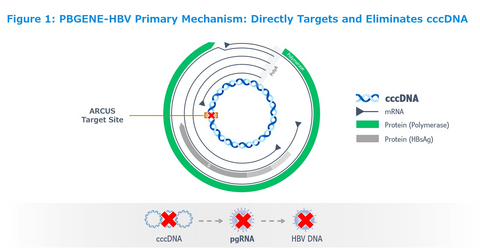
These data represent the first ever clinical evidence for a therapeutic agent’s elimination and inactivation of cccDNA in liver biopsies collected from treated patients with chronic hepatitis B. These data provide compelling evidence supporting PBGENE-HBV’s primary mechanism, direct antiviral targeting and elimination of cccDNA (see Figure 1). To date, this has not been previously achievable with other commercial or development-stage modalities.
“The data we are presenting today represent a transformational step forward in the hepatitis B field, as we now have the first data in patients supporting the ability of PBGENE-HBV to directly target and eliminate cccDNA driving viral destruction,” said Michael Amoroso, President and Chief Executive Officer of Precision BioSciences. “We believe these data indicate that hepatitis B may be approaching a turning point where chronic care moves from lifelong suppression of an active virus toward a finite, biomarker-guided complete viral cure. There has never been a treatment that could directly target and eliminate the root source of hepatitis B viral replication and now there is. The elimination mechanism of action for PBGENE-HBV directly aligns with the current FDA guidance that eradication of HBV DNA is the optimal endpoint for approval. As we expand enrollment in the trial and advance toward the next phase, we look forward to providing additional updates building on these encouraging data results.”
As of the data cut off on May 4, 2026, 38 doses have been administered to 16 patients across 5 cohorts. Multiple datasets support cccDNA targeting, elimination and permanence of effect by PBGENE-HBV.
Efficacy Highlights
Liver Biopsies: Confirmation of cccDNA Elimination and Polymerase Inactivation
Liver biopsy analysis using long-read transcript sequencing, which enables distinct characterization of PBGENE-HBV’s effect on cccDNA versus integrated hepatitis DNA, demonstrated a 1-log (10-fold) reduction in cccDNA transcripts through its primary mechanism, cccDNA elimination, after only two dose administrations at the 0.4 mg/kg dose (see Figure 2). These results represent the first evidence of cccDNA elimination by a direct targeting treatment modality.
Following the elimination edits, further editing of the remaining <1% of cccDNA occurred via the secondary mechanism of action, cccDNA indels. These indels permanently inactivate viral replication in the cccDNA by knocking out polymerase function. Both of these cccDNA editing outcomes result in viral destruction.
Additional biopsy evidence of cumulative PBGENE-HBV effect after repeat dose administrations was also observed, with editing reaching 80% of the remaining cccDNA after 3 administrations. These data suggest additional PBGENE-HBV administrations drive cumulative editing and a greater benefit of permanent viral eradication.
Identification of pgRNA Blood Biomarker Confirms cccDNA Editing By PBGENE-HBV
The new EASL data support pgRNA as the most relevant and specific serum biomarker as it comes exclusively from cccDNA and is the necessary precursor for HBV DNA viral production. Durable loss of blood pgRNA was demonstrated in 100% of patients treated with PBGENE-HBV (n=6) who had detectable levels pre-treatment (see Figure 3). These landmark results were achieved across four distinct dosing cohorts, providing a clear therapeutic window with multiple paths to be explored through ongoing clinical development. Complete loss of detectable blood pgRNA directly corresponded to undetectable pgRNA in post-treatment liver biopsy, further supporting pgRNA as the appropriate clinical biomarker for assessing PBGENE-HBV effect on cccDNA in the liver. Published literature has demonstrated that loss of pgRNA supports an approximately 10-fold increased probability of cure after discontinuation of nucleoside analog therapy (Terrault NA, et al. J Infectious Disease. 2025;231:1290–8).
HBsAg: Substantial Antiviral Activity in All Patients
100% of patients (n=15) experienced substantial HBsAg declines demonstrating broad activity of PBGENE-HBV across all dose levels. Declines in HBsAg are consistent with PBGENE-HBV’s elimination of cccDNA as validated in new biopsy data being presented at EASL 2026. Duration of response is ongoing and ranges across varying patient follow up from 1.5 to 12+ months across all patients who received repeat administrations (n=13), at data cutoff. These results were observed and consistent across a heterogeneous population spanning geographies, baseline HBsAg levels, and multiple HBV genotypes. In the first patient treated and PBGENE-HBV’s longest clinical exposure to date, durable HBsAg decline for more than 1 year after initial dose supports the permanence of PBGENE-HBV gene editing elimination mechanism which is critical for complete viral cure.
Safety Highlights
As of data cutoff, 38 doses have been administered across 16 patients in 5 cohorts for the safety analysis. No dose limiting toxicities were observed. The most common adverse events include infusion-related reactions consistent with LNP effects, with onset and resolution within 24 hours of infusion. While transient, ≥ Grade 3 reversible ALT/AST lab abnormalities have been observed, they were asymptomatic with no elevated bilirubin, and no Hy’s law in any patient at any dose level. Grade 3 hypotension was observed during dose escalation, and one patient in the highest dose cohort (0.8 mg/kg) experienced two SAEs after the second LNP administration. One of the events was deemed treatment related and mechanistically related to hypotension. The patient is ambulatory, home, and stable. The etiology of hypotension following subsequent doses of LNP is now understood and simple measures such as slower infusion rate and increased steroid doses have been implemented. Up to 20% of the doses delivered in the ELIMINATE-B trial have now been administered under the mitigation protocol and no≥ Grade 3 hypotension events or ≥ Grade 3 LNP-related ALT/AST lab abnormalities have been observed since the implementation. These data will be reviewed in more detail during the investor webcast and posted on our website under the Investor Relations webpage here.
“The quest for a highly effective treatment for hepatitis B has been frustrating and perplexing, for both patients and clinicians, because we have never had a treatment that directly targets the root cause of viral DNA replication. This exciting biopsy data from the ELIMINATE-B trial represents a first for the field. Now that we have evidence that PBGENE-HBV is eliminating cccDNA as designed and has a clear therapeutic window, I look forward to finishing the dose and schedule optimization, stopping nucleoside analog treatment and testing for viral cure,” said, Man Fung Yuen, MD , Ph.D., Chair Professor of The University of Hong Kong and Li Shu Fan Medical Foundation Professor in Medicine, and the Chief of the Division of Gastroenterology and Hepatology, Queen Mary Hospital, Hong Kong and ELIMINATE-B investigator.
Next Steps
The next steps for the ELIMINATE-B trial are to treat more patients under current cohorts in Part 1 of the trial increasing the size and strength of the data set. Precision expects to collect additional biopsy data to support the direct targeting and elimination of cccDNA. Precision is working with global investigators to create the future framework for nucleoside analog withdrawal and expansion into Part 2 of the ELIMINATE-B trial. The current and future dataset is expected to inform selection of the optimal dosing schedule for Part 2 expansion. Precision expects to provide additional updates on the ELIMINATE-B trial by the end of 2026.
Investor Event Today at 8 AM EDT
The investor event discussing the data will be webcast today, May 27th, 2026 at 8:00 AM EDT. Registration for the event can be found here.
A replay of the webcast will be available on the Investors section of the Company’s website at investor.precisionbiosciences.com following the event.
About PBGENE-HBV, A Viral Elimination Program
PBGENE-HBV is Precision’s wholly owned in vivo gene editing program under investigation in a global first-in-human clinical trial, which is designed to be a potentially curative treatment for chronic hepatitis B infection. PBGENE-HBV is the first and only potentially curative gene editing program to enter the clinic that is specifically designed to eliminate the root cause of chronic hepatitis B, cccDNA. Elimination of cccDNA results in HBV viral cure as cccDNA is the only source of infectious replication (HBV DNA). The ELIMINATE-B trial is investigating PBGENE-HBV at multiple dose levels across a number of administrations per dose level in patients with chronic hepatitis B. PBGENE-HBV has been granted Fast Track designation by the FDA.
PBGENE-HBV is the only clinical stage program directly targeting the elimination of cccDNA leading to sustained loss of pgRNA and therefore HBV DNA. The FDA has previously provided guidance that undetectable HBV DNA is the desired approvable endpoint for chronic hepatitis B.
Further details on the trial can be found on Precision’s website and on clinicaltrials.gov identifier NCT06680232.
About Precision BioSciences, Inc.
Precision BioSciences, Inc. is a clinical stage gene editing company dedicated to improving life (DTIL) with its novel and proprietary ARCUS® genome editing platform that differs from other technologies in the way it cuts, its smaller size, and its simpler structure. These features are intended for ARCUS nucleases to drive more defined therapeutic outcomes. Using ARCUS, the Company’s pipeline is comprised of clinical stage in vivo gene editing candidates designed to deliver lasting cures for the broadest range of genetic and infectious diseases where no adequate treatments exist. For more information about Precision BioSciences, please visit www.precisionbiosciences.com.
The ARCUS® platform is being used to develop in vivo gene editing therapies for sophisticated gene edits, including gene elimination (removing a viral genome e.g. viral DNA such as in the Company’s PBGENE-HBV program), and excision (removing a large portion of a defective gene by delivering two ARCUS nucleases in a single AAV such as in the Company’s PBGENE-DMD program) and gene insertion (inserting DNA into gene to cause expression/add function).
Forward-Looking Statements
This press release contains forward-looking statements within the meaning of the Private Securities Litigation Reform Act of 1995. All statements contained in this press release that do not relate to matters of historical fact should be considered forward-looking statements, including, without limitation, statements regarding PBGENE-HBV being the only potentially curative program designed to permanently eliminate cccDNA and inactivate integrated HBV DNA; expectations around HBV at a turning point from lifelong suppression toward finite, biomarker-guided complete viral cure; statements regarding PBGENE-HBV’s primary mechanism for eliminating cccDNA and inactivating integrated HBV DNA, secondary mechanism of indels resulting in complete viral inactivation in any edited DNA and reducing HBsAg from both cccDNA and integrated DNA; statements that late breaking data proves PBGENE-HBV directly targets and eliminates cccDNA providing a path toward viral cure and FDA approval; statements that pgRNA is the most relevant and specific blood biomarker and comes exclusively cccDNA elimination in the blood; statements that there has never been a treatment that could directly target and eliminate the root source of hepatitis B viral replication and now there is; expectations about FDA guidance focused on destruction of HBV DNA, which results from cccDNA elimination, as the optimal endpoint for approval; expectations about operational initiatives, strategies, further development, or timing of additional updates or data releases of PBGENE-HBV; expectations around the durability of pgRNA loss and sustained HBsAg reduction in patients treated with PBGENE-HBV; expectations around permanent and/or cumulative gene editing in patients treated with PBGENE-HBV; statements that liver biopsies in combination with key biomarkers reflect cccDNA elimination and support increased probability of cure after treatment with PBGENE-HBV; expectations that the etiology of hypotension is now understood and simple measures have ameliorated clinically significant decreases in blood pressure; expectations that ALT/AST lab abnormalities were transient and asymptomatic not clinically significant; expectations that the Company will treat more patients in Part 1 of the trial to increase the size and strength of the data set, including collecting additional biopsy data to support direct targeting and elimination of cccDNA; expectations around creating the future framework for nucleoside analog withdrawal and expansion into Part 2 of the ELIMINATE-B trial with investigators; expectations around selecting the optimal dosing schedule for Part 2 expansion; and statements that the next PBGENE-HBV update will take place by year end 2026. In some cases, you can identify forward-looking statements by terms such as “aim,” “anticipate,” “approach,” “belief”, “believe,” “contemplate,” “could,” “design,” “designed,” “estimate,” “expect,” “goal,” “intend,” “look,” “may,” “mission,” “path”, “plan,” “possible,” “potential,” “predict,” “project,” “pursue,” “should,” “strive,” “suggest,” “target,” “toward”, “will,” “would,” or the negative thereof and similar words and expressions
Forward-looking statements are based on management’s current expectations, beliefs, and assumptions and on information currently available to us. These statements are neither promises nor guarantees, and involve a number of known and unknown risks, uncertainties and assumptions, and actual results may differ materially from those expressed or implied in the forward-looking statements due to various important factors, including, but not limited to, our ability to become profitable; our ability to procure sufficient funding to advance our programs; risks associated with our capital requirements, anticipated cash runway, requirements under our current debt instruments and effects of restrictions thereunder, including our ability to raise additional capital due to market conditions and/or our market capitalization; our operating expenses and our ability to predict what those expenses will be; our limited operating history; the progression and success of our programs and product candidates in which we expend our resources; our limited ability or inability to assess the safety and efficacy of our product candidates; the risk that other genome-editing technologies may provide significant advantages over our ARCUS technology; our dependence on our ARCUS technology; the initiation, cost, timing, progress, achievement of milestones and results of research and development activities and preclinical and clinical studies, including clinical trial and investigational new drug applications; public perception about genome editing technology and its applications; competition in the genome editing, biopharmaceutical, and biotechnology fields; our or our collaborators’ or other licensees’ ability to identify, develop and commercialize product candidates; pending and potential product liability lawsuits and penalties against us or our collaborators or other licensees related to our technology and our product candidates; the U.S. and foreign regulatory landscape applicable to our and our collaborators’ or other licensees’ development of product candidates; our or our collaborators’ or other licensees’ ability to advance product candidates into, and successfully design, implement and complete, clinical trials; potential manufacturing problems associated with the development or commercialization of any of our product candidates; delays or difficulties in our and our collaborators’ and other licensees’ ability to enroll patients; changes in interim “top-line” and initial data that we announce or publish; if our product candidates do not work as intended or cause undesirable side effects; risks associated with applicable healthcare, data protection, privacy and security regulations and our compliance therewith; our or our licensees’ ability to obtain orphan drug designation or fast track designation for our product candidates or to realize the expected benefits of these designations; our or our collaborators’ or other licensees’ ability to obtain and maintain regulatory approval of our product candidates, and any related restrictions, limitations and/or warnings in the label of an approved product candidate; the rate and degree of market acceptance of any of our product candidates; our ability to effectively manage the growth of our operations; our ability to attract, retain, and motivate executives and personnel; effects of system failures and security breaches; insurance expenses and exposure to uninsured liabilities; effects of tax rules; effects of any pandemic, epidemic, or outbreak of an infectious disease; the success of our existing collaboration and other license agreements, and our ability to enter into new collaboration arrangements; our current and future relationships with and reliance on third parties including suppliers and manufacturers; our ability to obtain and maintain intellectual property protection for our technology and any of our product candidates; potential litigation relating to infringement or misappropriation of intellectual property rights; effects of natural and manmade disasters, public health emergencies and other natural catastrophic events; effects of sustained inflation, supply chain disruptions and major central bank policy actions; market and economic conditions; risks related to ownership of our common stock, including fluctuations in our stock price; our ability to meet the requirements of and maintain listing of our common stock on Nasdaq or other public stock exchanges; and other important factors discussed under the caption “Risk Factors” in our Quarterly Report on Form 10-Q for the quarterly period ended March 31, 2026, as any such factors may be updated from time to time in our other filings with the SEC, which are accessible on the SEC’s website at www.sec.gov and the Investors page of our website under SEC Filings at investor.precisionbiosciences.com.
All forward-looking statements speak only as of the date of this press release and, except as required by applicable law, we have no obligation to update or revise any forward-looking statements contained herein, whether as a result of any new information, future events, changed circumstances or otherwise.
View source version on businesswire.com: https://www.businesswire.com/news/home/20260526374454/en/
Investor and Media Contact:
Naresh Tanna
Vice President of Investor Relations
[email protected]
KEYWORDS: Europe United States North America North Carolina
INDUSTRY KEYWORDS: FDA Other Health Technology Nanotechnology Stem Cells Pharmaceutical Infectious Diseases Genetics Fitness & Nutrition Clinical Trials Science Biotechnology Other Science Health Research
MEDIA:
| Photo |
 |
| Photo |
 |
| Photo |
 |
| Logo |
 |